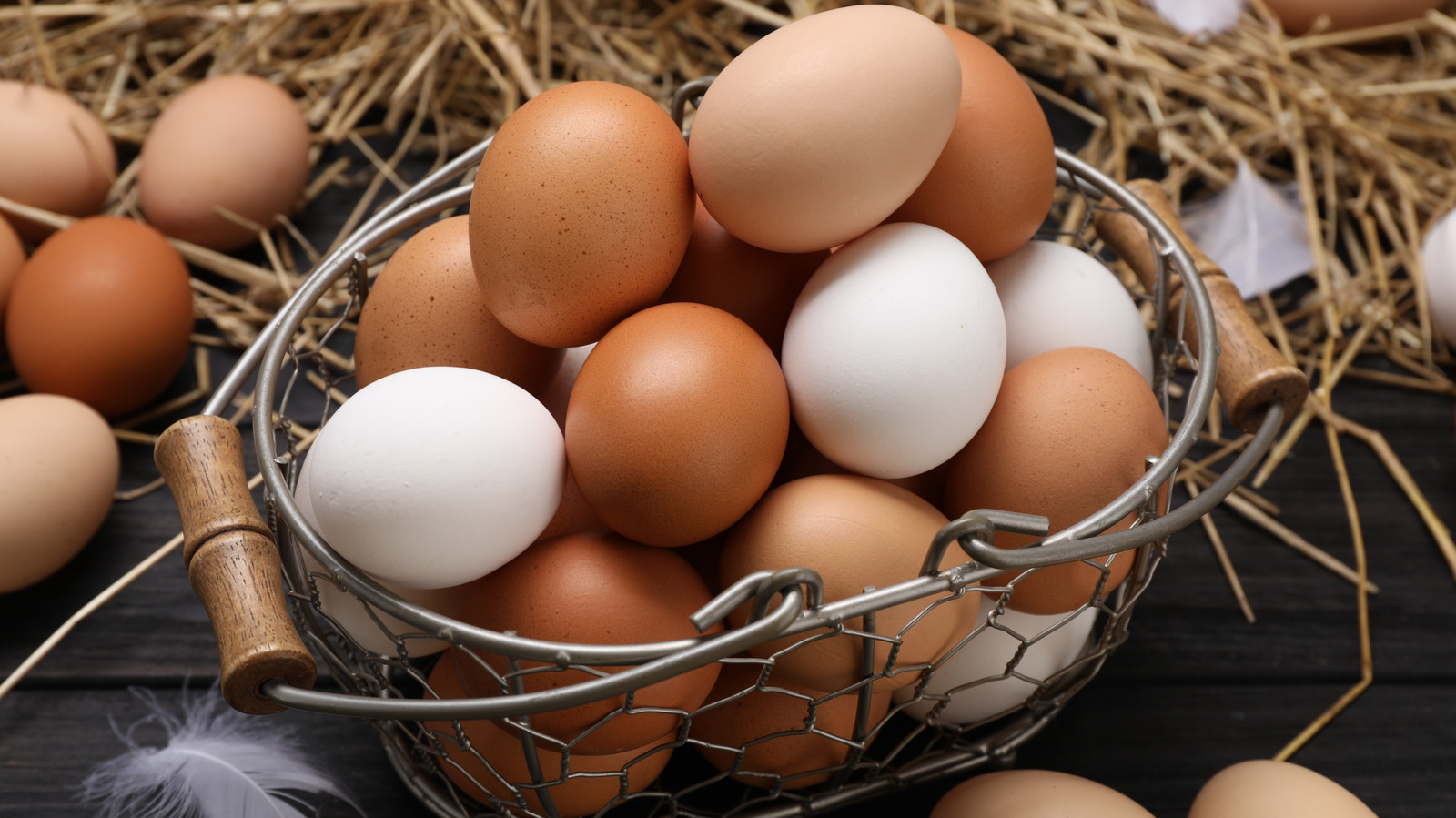
"The first thing you need to know about farm-fresh eggs is that they usually have a protective, slightly glossy outer layer called the "egg bloom". Made up of proteins, lipids, and complex carbs, it's the eggs' first line of natural defense against external contaminants like bacteria and dirt. You won't find this coating with commercial eggs, which are required by the USDA to be sanitized, pasteurized, and refrigerated before hitting the store shelves."
"The bloom also allows the farm-fresh eggs to be kept at room temperature for up to two weeks without risk of spoilage, instead of a few hours like normal raw eggs. Refrigerated, they are good for several months, a stretch longer than the three to five weeks you usually get to store eggs in the fridge. Do note that this timeline only applies when the farm-fresh eggs are unwashed, so until you are ready to eat, keep them as they are."
"Preserving farm-fresh eggs' quality starts from the moment you source them at the farmers' market. Choosing the highest-quality eggs boils down to the same few standards, such as uncracked shells and enough density. In your kitchen, as aforementioned, it's important not to wash away the bloom coating, leaving the eggs more porous and susceptible to contamination. If you've done it by accident, make sure they are thoroughly dried and opt for refrigeration, preferably in closed containers, to minimiz"
Farm-fresh eggs differ from commercial eggs in both protective coating and storage requirements. Farm-fresh eggs typically have a slightly glossy outer layer called egg bloom, made of proteins, lipids, and complex carbs that help defend against bacteria and dirt. Commercial eggs lack this coating because they are sanitized, pasteurized, and refrigerated under USDA requirements. With egg bloom intact, farm-fresh eggs can be kept at room temperature for up to two weeks without spoilage risk, while refrigerated storage can last several months. These timelines apply only when eggs remain unwashed. Storage quality begins at purchase, favoring uncracked shells and good density, and avoiding washing to prevent increased porosity and contamination risk.
Read at Tasting Table
Unable to calculate read time
Collection
[
|
...
]