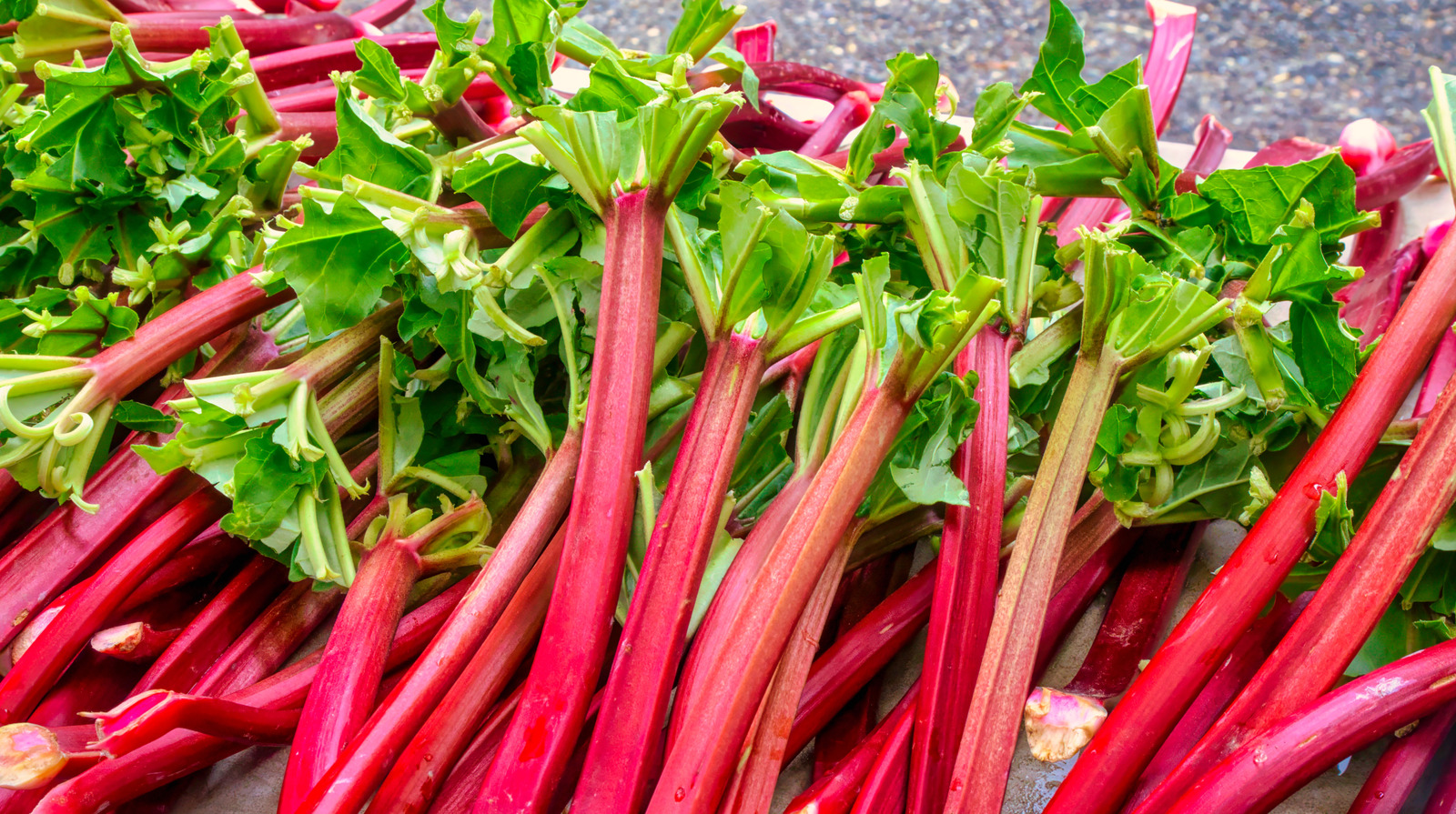
"That is, unless you head to Seattle, where rhubarb is a clearcut favorite on the local fruit scene, despite technically being a vegetable. So the question has to be asked, what makes rhubarb so popular in Seattle? It all comes down to climate and history. Rhubarb grows best between 40 and 75 degrees Fahrenheit, so the Washington climate is ideal. Combined with ample rainfall, Washington has got everything a growing stalk needs."
"Some of the farmers in Washington who grow rhubarb have been doing so for nearly a century. Others have been going even longer and their families run fourth-generation farms that have devised ways to grow the crop all year round in rhubarb hothouses. Rhubarb has become an iconic food of Washington and is as baked into the history of the state as it is into the pies people make there. A 2017 rhubarb census found that Washington grows 275 acres of rhubarb."
"Sumner, Washington, about 30 miles outside of Seattle, calls itself the Rhubarb Pie Capital of the World. Because rhubarb is one of the earliest crops to grow in the spring, and it grows very quickly, it would have been one of the first items Washington locals found in their grocery stores each season. This pattern goes back to 1893 when the earliest farms were shipping fresh rhubarb to Seattle in bags."
Rhubarb is a tart, often baked ingredient that remains niche nationally but thrives in Washington state. Seattle and surrounding areas favor rhubarb because the crop grows best between 40 and 75 degrees Fahrenheit and benefits from ample Northwest rainfall. Washington farmers have long cultivated rhubarb, including fourth-generation operations and growers using hothouses to extend production year-round. The state produces far more rhubarb acreage than any other U.S. state, with a 2017 census reporting 275 acres. Sumner, Washington, brands itself the Rhubarb Pie Capital of the World. Rhubarb is an early, fast-growing spring crop that historically reached Seattle markets as early as 1893.
Read at www.tastingtable.com
Unable to calculate read time
Collection
[
|
...
]