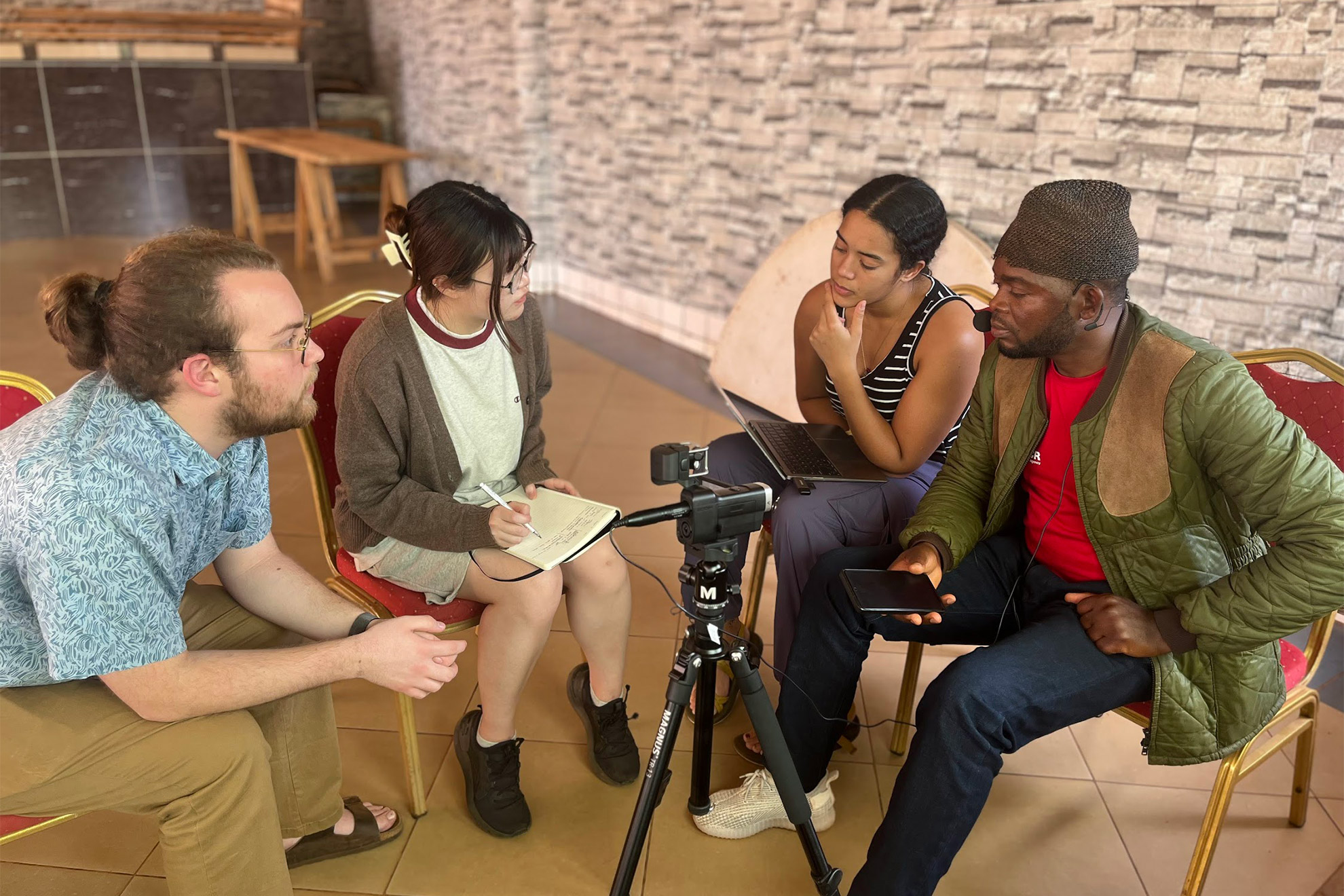
"At slightly larger than California, the African nation of Cameroon is home to roughly 30 million people and more than 300 indigenous languages. But a long-lasting civil war and other humanitarian crises have made the future of those languages uncertain. Today, most Cameroonians in their 40s and 50s are as proficient in their indigenous languages (including Lamnso', Oroko, and Batanga) as they are in a colonial language such as English or French. Their parents, in contrast, spoke indigenous languages more dominantly."
"And for linguists like Assistant Professor of Linguistics Kathryn Franich, the question is whether this trend will accelerate. Quoting Anna Belew of the University of Hawai'i at Mānoa, Franich said many of Cameroon's indigenous languages - which sociolinguist Max Weinreich defined as "a dialect with an army and a navy" defined by political power, national identity, and institutional support - today stand at a "critical tipping point.""
Cameroon hosts roughly 30 million people and more than 300 indigenous languages, but long-lasting civil war and humanitarian crises have put many languages' futures at risk. Generational shifts show people in their 40s and 50s often fluent both in indigenous tongues and in colonial languages, while older generations spoke indigenous languages more dominantly. Multilingualism combined with economic incentives to use English or French increases the likelihood of rapid language loss. Digital documentation projects and audio archives of displaced speakers aim to record native voices, yet even languages with tens of thousands of speakers can lose many within a single generation when parental language choices change.
Read at Harvard Gazette
Unable to calculate read time
Collection
[
|
...
]