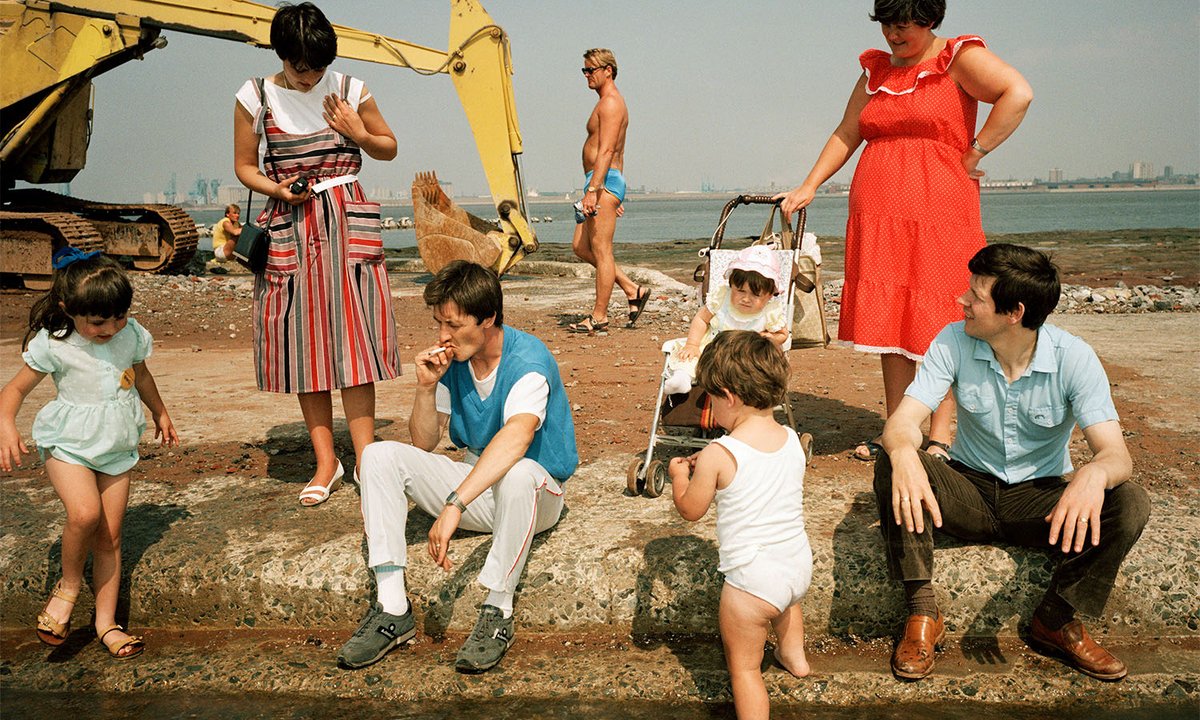
"Forty years after The Last Resort photobook was first published, the photographs that brought the late Martin Parr to international attention-and criticism at home-will be the focus of an exhibition at his foundation in Bristol. Timed to coincide with the anniversary of the photobook and its exhibition at London's Serpentine Gallery in 1986, the show marks the foundation's reopening following the British photographer's death late last year."
"The photographs were different from anything British viewers had seen before-and not just because they were shot in colour with the clarity of medium format, which was more closely associated with commercial imagery at the time. What really irritated some British critics was that Parr appeared to be a middle-class interloper, slumming it in the north of England during the divisive years of Thatcherism, and his pictures did not romanticise."
"Parr's photographs of New Brighton, a beach resort near Liverpool, had been shown alongside Tom Wood's works at the city's Open Eye Gallery the year before, to little controversy. But after the exhibition at the Serpentine, Parr suddenly had access to a much wider audience, gaining new fans abroad while drawing some acerbic criticism at home, accusing him of cruel voyeurism."
An exhibition at Martin Parr's foundation in Bristol will focus on photographs from The Last Resort forty years after its publication. The show coincides with the photobook's anniversary and the 1986 Serpentine exhibition, and marks the foundation's reopening after Parr's death. It presents the full original sequence, extra images omitted from the book, and archival material to provide context. Parr shifted from modest black-and-white series to a bold colour visual language after returning from the West of Ireland with his wife, Susie. The Last Resort images of New Brighton reached an international audience while provoking accusations of cruel voyeurism and domestic criticism for their candid, non-romanticised portrayal of working-class life during Thatcherism.
Read at The Art Newspaper - International art news and events
Unable to calculate read time
Collection
[
|
...
]