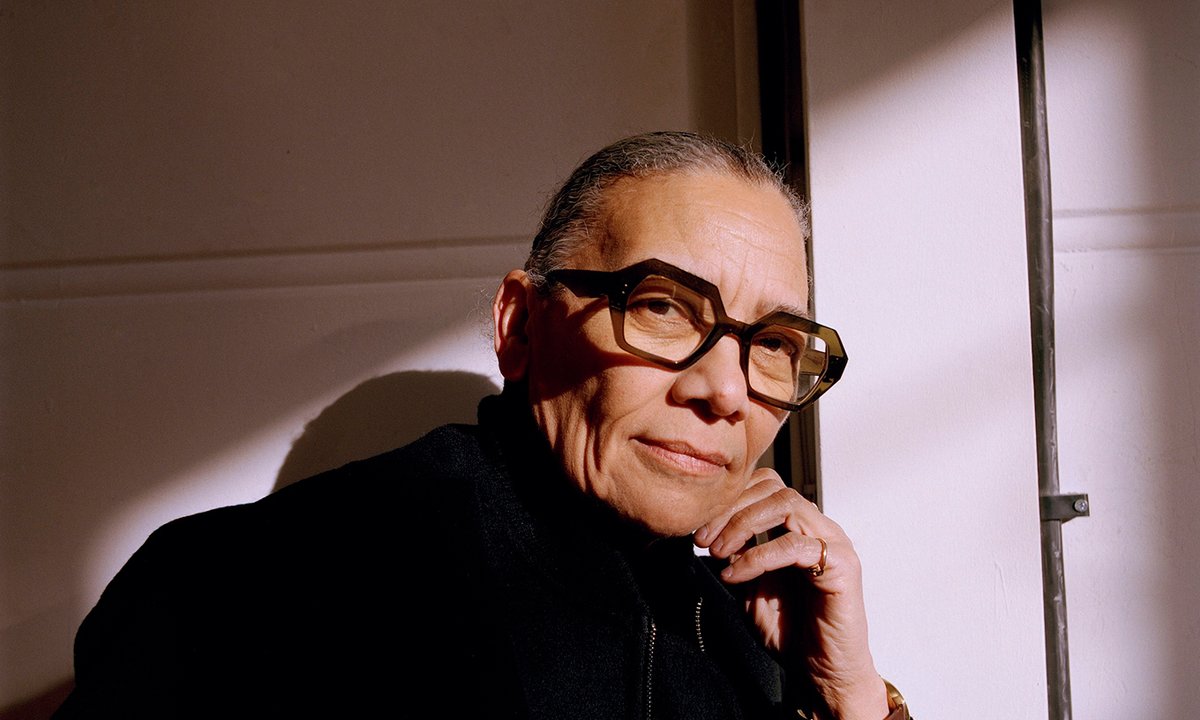
"Trying to take on the mantle of representing Britain feels massive. I've tried to approach it like a footballer would: to think of it as another game and not the World Cup, and just make the best show I can make. I'm trying to make the space even more British than it is, to create a little country that feels the same way as it does for me living here."
"The everydayness of Britain is strangely pleasant, a place where everything is reasonable, calm and equal. But even though I've lived here for 71 years, whether I'm in the north of England or in London, there's a sense of unease: tiny, real things that make me know that, although I'm in the right place, I'm also in the wrong place."
"I'm still trying to paint that gap between a question and an answer. To make paintings in such a way that visitors realise they're bringing a great deal of their own lives into the space with them."
Lubaina Himid, born in Zanzibar in 1954 and a pioneering figure in Britain's Black Arts Movement, has dedicated over three decades to uncovering marginalised histories and cultural narratives. Her practice encompasses paintings, prints, and large-scale cutout installations. She won the Turner Prize in 2017 and has exhibited internationally. Representing Great Britain at the Venice Biennale, Himid approaches the responsibility strategically, aiming to recreate the everydayness of Britain—its reasonableness and calm—while capturing the subtle unease of existing in a place that feels simultaneously right and wrong. Her paintings feature ambiguous encounters and conversations, inviting viewers to project their own experiences into the work.
#lubaina-himid #venice-biennale #british-representation #marginalised-histories #contemporary-art-installations
Read at The Art Newspaper - International art news and events
Unable to calculate read time
Collection
[
|
...
]