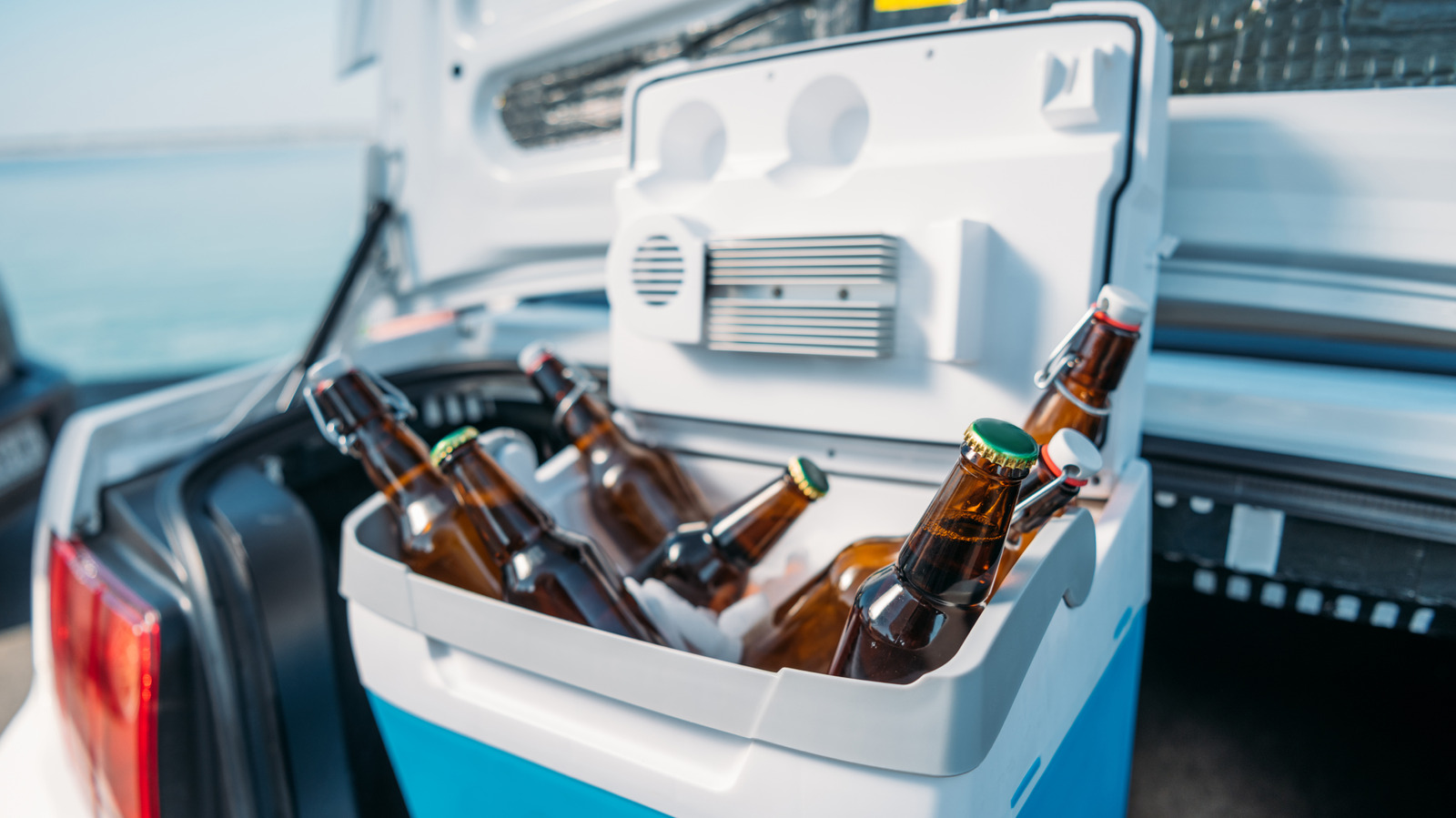
"The myth is that once cold beer warms up, that's it - ruined - only good for trapping snails. This myth is likely a misunderstanding of how beer oxidizes over time. Don't get us wrong - keeping beer cold as much as possible is the best way to keep it tasting its best, but if your frosty brew doesn't stay ice-cold all the way home, all is not lost."
"Beer degrades on a sliding scale, and the main villain that gains momentum as temperatures increase in pasteurized beer (most commercial beer) is the oxidation process. When beer oxidizes, it goes through a chemical process in which electrons play musical chairs across molecules, atoms, or ions, and this can be a result of oxygen or even trace metals in the beer, such as iron, copper, or manganese."
"The result is beer with a stale, muted flavor with notes like cardboard, paper, or even wine or sherry notes (not in a good way). Oxidization can also affect the volatile compounds in hop oils that contribute their tropical, piney, floral, or citrusy aroma and flavor, which is bad news for the fans of the many styles of IPA."
"All beer has the potential to oxidize, but higher temperatures kick this process into higher gear exponentially. There is another axis on the graph of beer oxidation: Time. While it's true that beer stored at 90 degrees Fahrenheit will oxidize much faster than one stored between 50 and 60 degrees, oxidation doesn't happen instantly. Most beer is shelf-stable and can survive if left at room temperature (68-72 degrees) for as long as 120 days, thanks to pasteurization."
Beer does not become unusable the moment it warms. Flavor degradation happens on a sliding scale driven mainly by oxidation, which speeds up as temperature increases. Oxidation involves electron transfer across molecules, triggered by oxygen and sometimes trace metals such as iron, copper, or manganese. The result is muted, stale flavors with notes like cardboard, paper, or wine or sherry-like character. Oxidation can also reduce volatile hop compounds responsible for tropical, piney, floral, and citrus aromas, which is especially harmful for IPA styles. Oxidation is not instantaneous; pasteurized beer can remain shelf-stable for extended periods at typical room temperatures, degrading slowly over time rather than suddenly.
Read at Tasting Table
Unable to calculate read time
Collection
[
|
...
]