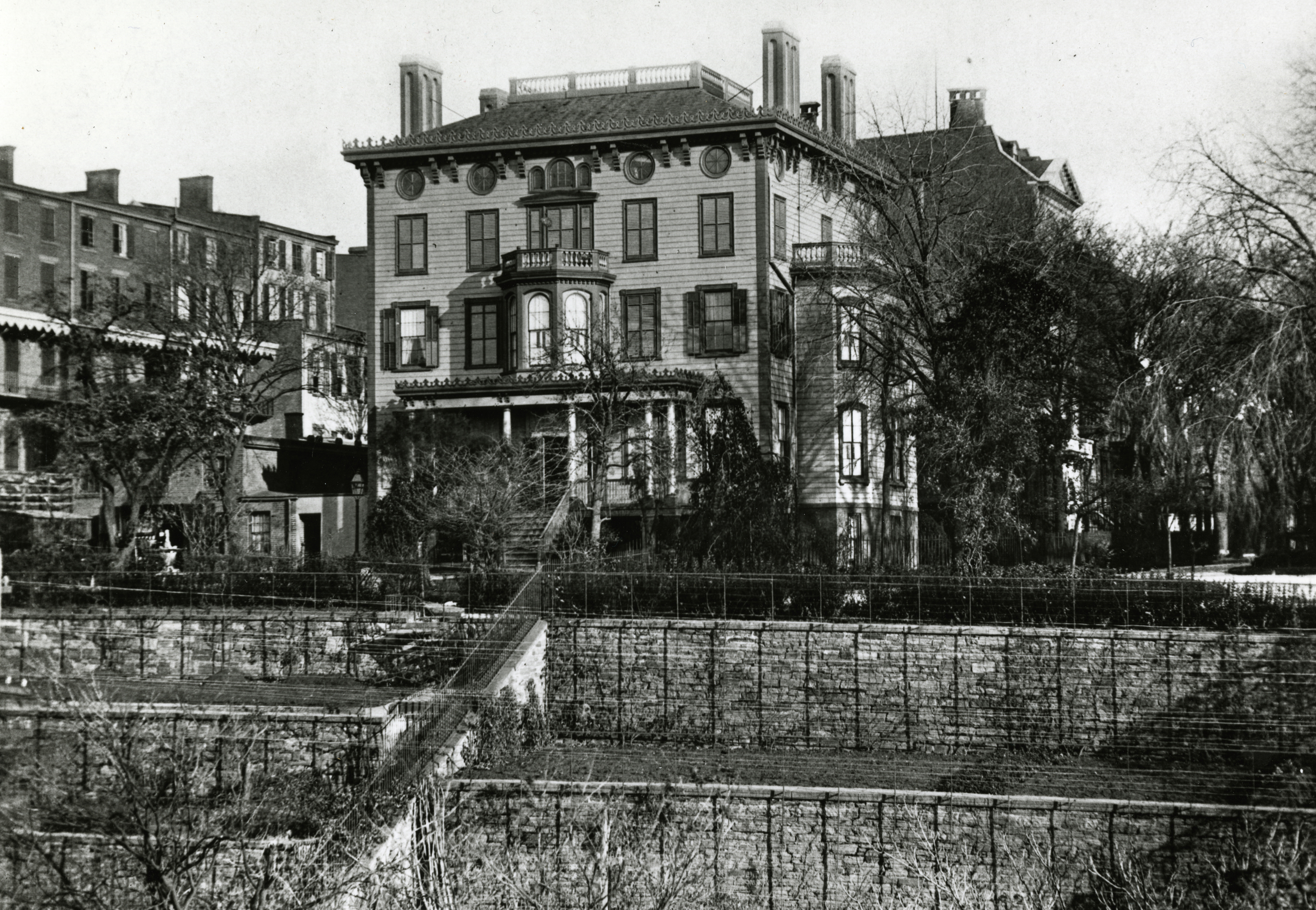
"For centuries before the Europeans, the Lenape people called the bluffs overlooking the East River “Ihpetonga,” the “high sandy bank.” After the Dutch and English pushed them out, the land was seen primarily as farmland. The more important land was below along the river. Some of Brooklyn's oldest families - Benson, DeBevoise, Remsen, and others - established houses and gentlemen's farms in this area, which also provided the owners with such a great view."
"In 1776, during the Revolutionary War, the fort was taken over by the British when they captured and occupied both Brooklyn and Manhattan. One of the signers of the Declaration of Independence, Philip Livingston, had a large estate in the area, and he was forced to abandon it and escape to his holdings in Kingston when the British took over. His house was used as a hospital during the occupation."
"Life went back to normal after the war. The Heights was known locally as “Clover Hill” and remained relatively rural as the harbor below grew busier and more important to Brooklyn's economy. In 1802, Hezekiah Beers Pierrepont, the son of prominent New England shippers and merchants and the grandson of one of the founders of Yale College, came to Brooklyn to recoup his finances."
"His grand vision was to develop his land as a wealthy suburb to Manhattan. He envisioned stately homes for rich merchants and bankers who would be only a ferry ride away from their offices and warehouses in Manhattan. He became a financial backer of Robert Fulton and his ferry, which he knew would make"
The bluffs overlooking the East River were called Ihpetonga, meaning high sandy bank, by the Lenape before European arrival. After the Dutch and English displaced the Lenape, the area was treated mainly as farmland, while more valuable land lay closer to the river. Prominent families built houses and gentlemen’s farms on the Heights, benefiting from extensive views. A small fortification overlooking the river was occupied by the British in 1776 during the Revolutionary War, and Philip Livingston’s estate was abandoned and his house used as a hospital. After the war, the Heights remained relatively rural as the harbor grew. In 1802, Hezekiah Beers Pierrepont bought 60 acres and planned a wealthy suburb with stately homes for merchants and bankers commuting by ferry, including support for Robert Fulton’s ferry.
Read at Brownstoner
Unable to calculate read time
Collection
[
|
...
]