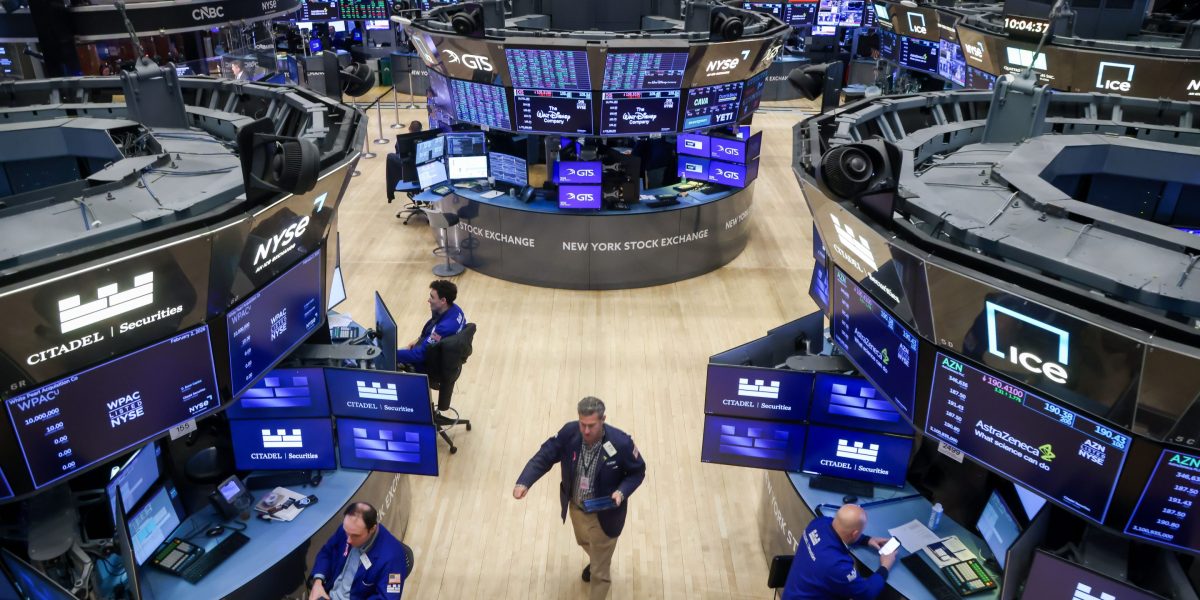
"The giant tech stocks of the Magnificent 7 are making index funds, passive investors' favorite safe investing tool, riskier. While not as high as previous stellar years, the S&P 500, which tracks the broader market, still recorded a double-digit gain last year of 16.39%, several percentage points higher than the index's 10% average annual return, not accounting for inflation, according to now-retired senior index analyst for S&P Dow Jones Indices, Howard Silverblatt."
"In other words, when a few mega-cap stocks do all the heavy lifting, index funds lose their value as a diversified cushion, instead rising and falling based on Big-Tech's fortunes. Partly fueled by the AI frenzy, the Magnificent 7 have grown to account for about a third of the S&P 500. And thanks, in part, to these AI-fueled gains, only seven stocks, including NVIDIA, Alphabet, Microsoft, and Meta Platforms, represented just over half of the S&P 500's annual gains last year,"
The S&P 500 returned 16.39% last year, above the long-term 10% average annual return, not accounting for inflation. A substantial share of the market's gains came from a small group of mega-cap tech companies known as the Magnificent 7. Those companies now make up about one third of the S&P 500 and contributed just over half of the index's annual gains. Rising concentration reduces the diversification benefits of index funds and increases exposure to the fortunes of a few stocks. Early 2026 performance was mixed, with Amazon, Alphabet and Meta showing year-to-date gains.
Read at Fortune
Unable to calculate read time
Collection
[
|
...
]