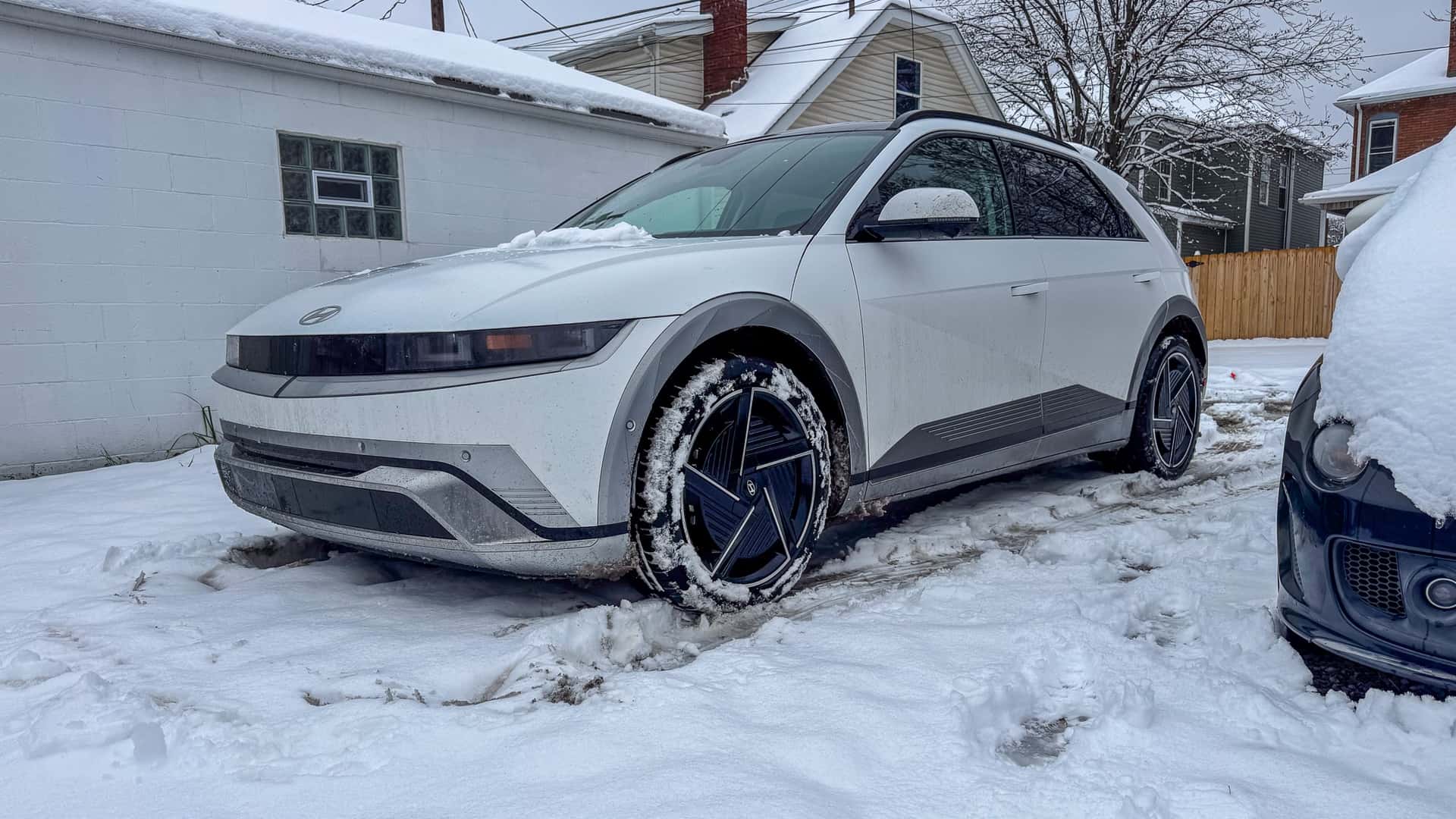
"People say electric car can't handle the winter, but the best car I've ever driven in snow was electric. That car was my now-departed 2012 Mitsubishi i-MiEV. Slow, rear-wheel-drive with narrow tires and a very low-mounted and hefty battery, the i-MiEV's almost Volkswagen Beetle-grade specs made it unstoppable in snow. It wasn't fast, the heater was trash, but its ability to drive with complete confidence even through large snow drifts that stopped the average all-wheel-drive compact crossover dead in its tracks was unrivaled."
"Snow mode dulls throttle inputs and reduces regenerative braking to prevent wheels from locking up. If equipped, Hyundai's snow mode also locks AWD in a 50-50 split. See, traction management is the name of the game when it comes to snow driving. Modern EVs are generally very, very fast vehicles with lots of power; even the slow ones have horsepower counts that challenge high-end sports cars many of us grew up with."
Snow mode in many electric vehicles dulls throttle response, reduces regenerative braking, and can lock all-wheel-drive into an even torque split to improve traction and prevent wheel lockup. The Hyundai Ioniq 5's Snow Mode delivered exceptional performance in heavy snow, combining effective traction control with usable heating. A 2012 Mitsubishi i-MiEV with rear-wheel drive, narrow tires, and a low, heavy battery also showed remarkable snow capability despite low speed and poor heating. Modern EVs deliver immediate torque that necessitates traction management. Snow proficiency varies across electric models and depends on tires, drivetrain, and software calibration.
Read at insideevs.com
Unable to calculate read time
Collection
[
|
...
]