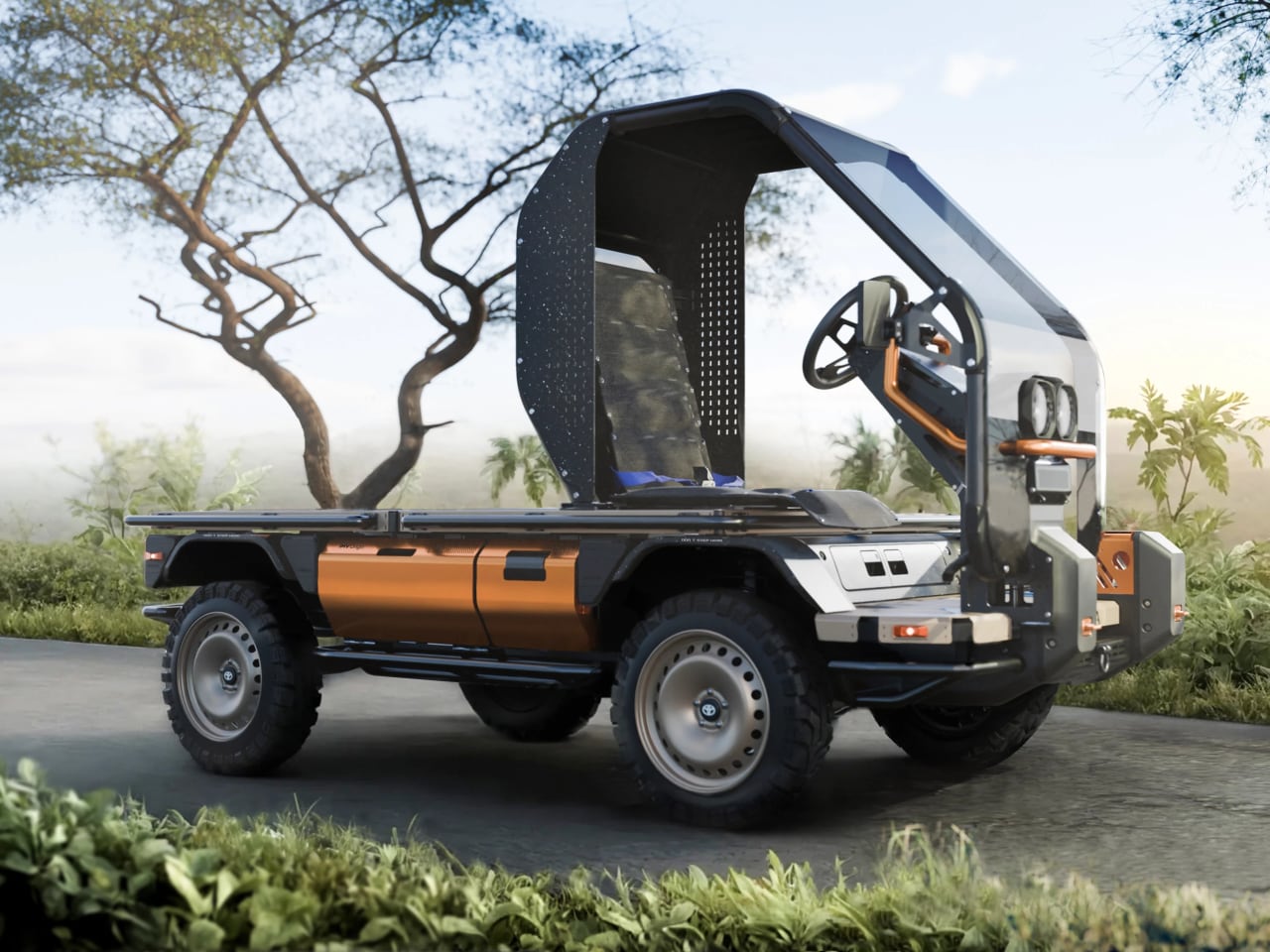
"Where conventional vehicle concepts arrive polished and production ready, the IMV Origin presented itself as a skeletal flatbed with an open air single seat cab, barely recognizable as a truck at all. Toyota's approach here inverts the typical automaker logic: instead of delivering a finished product, the company ships a foundation, a canvas, a system of parts that local communities complete on their own terms."
"The first idea, he explained, was to ship the vehicle unfinished, allowing the local people who receive it to assemble and complete it themselves. The second idea extended that premise further: customers would define the vehicle on their own terms even after assembly, choosing whether it carries people or cargo, boxes or something else entirely. Toyota builds the base, and from there each user completes the vehicle to fit specific needs."
The IMV Origin arrives as a skeletal flatbed with an open-air single-seat cab designed to be shipped unfinished. The vehicle functions as a modular foundation and canvas so local communities can assemble and customize it for cargo, passengers, or other uses. The design draws from Toyota's IMV platform and emphasizes flexibility and regional adaptation in emerging markets. Toyota's leadership states the intent to invert conventional manufacturing by offering a physical system of parts rather than a finished product. Each user or community completes and defines the vehicle post-delivery, turning the base into tailored functional vehicles through local creativity.
Read at Yanko Design - Modern Industrial Design News
Unable to calculate read time
Collection
[
|
...
]