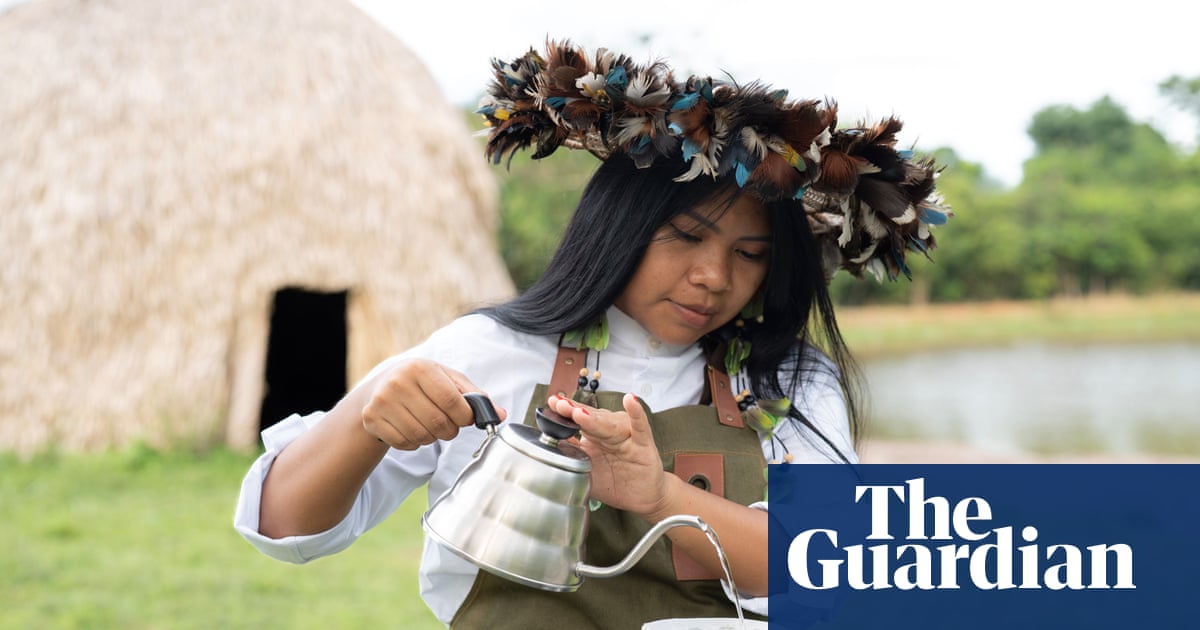
"When the Paiter Surui community expelled the last invaders of their land in 1981, they faced a divisive decision. Should they keep the coffee plantations left by the colonisers? Some destroyed them because of the death and violence contact with the non-Indigenous world had caused. Others felt sorry for the trees and couldn't kill them."
"Today, we use coffee as a way to preserve the forest, says Celeste Paytxayeb Surui, a famous Indigenous barista and coffee producer in Brazil. The award-winning fine coffee she prepares is called Amazonian robusta, and is produced in the Brazilian state of Rondonia in the western Amazon. Nearly 140 Surui families work in small coffee plantations on the Sete de Setembro Indigenous land."
"Improving robusta's quality is not only a matter of taste, but of climate adaptation. Because robusta thrives in higher temperatures than arabica, it will probably be critical to meet global demand. Robusta production has already increased from 28% of total coffee produced in the early 1990s to 44% in 2023."
The Paiter Surui Indigenous community in Brazil's Rondonia region inherited coffee plantations from colonizers after expelling them in 1981. While some destroyed the plantations due to trauma from contact, others preserved them. Today, nearly 140 Surui families cultivate coffee on small plantations within their territory, with award-winning producer Celeste Paytxayeb Surui leading efforts to elevate robusta coffee quality. Robusta thrives in the region's hot, rainy climate similar to its native Congo basin. Historically considered lower-grade, robusta is gaining recognition as a fine coffee. Its cultivation becomes increasingly important for climate adaptation, as robusta tolerates higher temperatures than arabica. Production has risen from 28% to 44% of global coffee since the 1990s, reflecting its growing significance amid climate challenges.
#indigenous-coffee-production #climate-adaptation-agriculture #robusta-coffee-quality #forest-preservation #sustainable-livelihoods
Read at www.theguardian.com
Unable to calculate read time
Collection
[
|
...
]