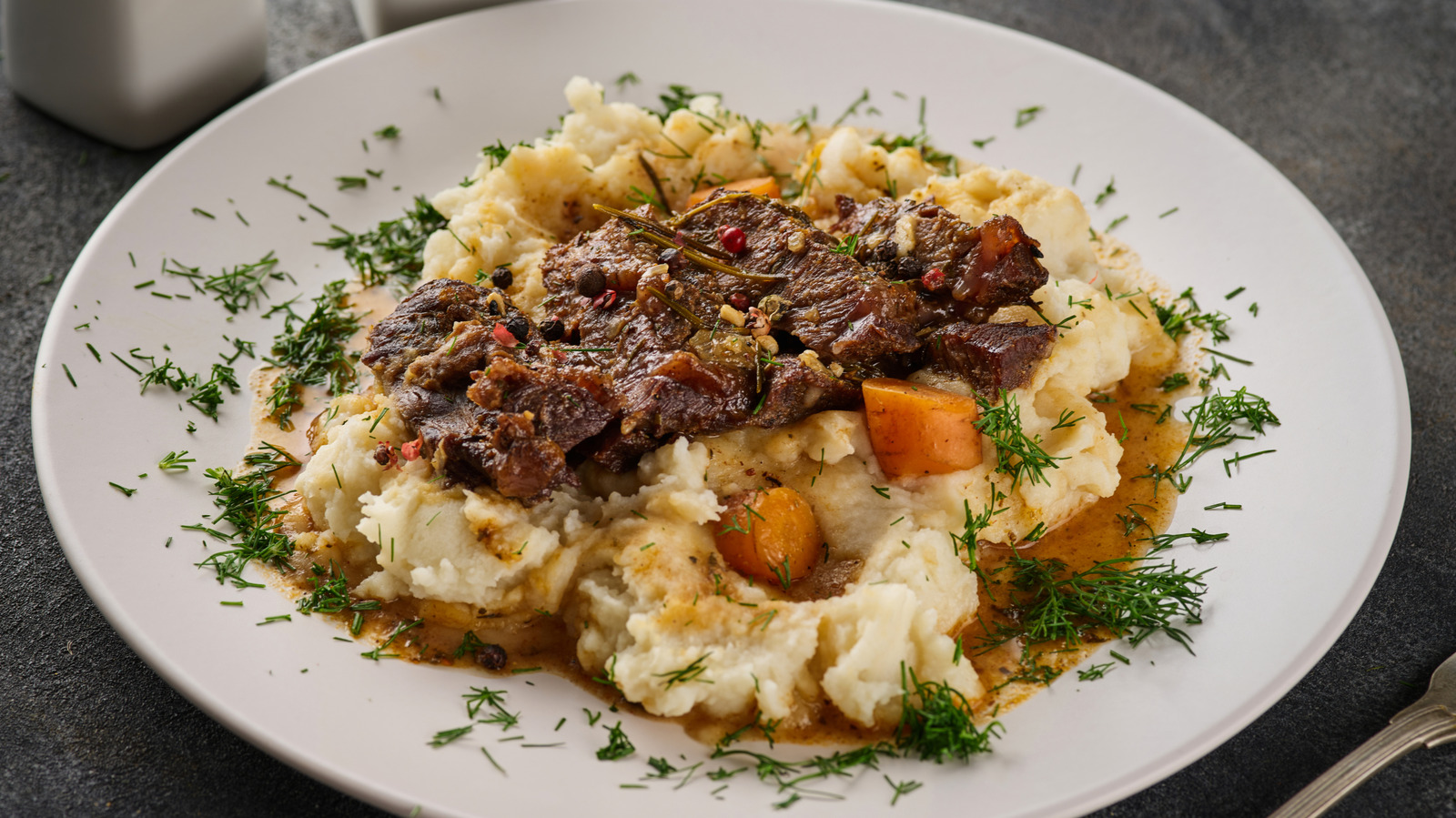
"Slow cookers perform best when they're filled somewhere between halfway and ¾ full, a range that gives the heat enough room to circulate while still providing the thermal mass needed for that low, steady simmer. Most cookers have a max-fill line, but you don't have to reach this limit. This is why a 6-quart cooker is generally a good size for most home kitchens,"
"Smaller slow cookers can fit smaller roasts and require a lighter hand with the vegetables - potatoes and carrots occupy more space than you expect once combined in the pot. Larger, 8-quart cookers are made for wide, heavy cuts that are ideal for feeding a large group. That said, observing how the roast sits in the cooker is actually more important than the exact weight."
Slow cookers perform best when filled between halfway and three-quarters full to allow heat to circulate while retaining enough thermal mass for a low, steady simmer. A 6-quart cooker suits most home kitchens and typically fits a 3- to 4-pound chuck roast with space for vegetables, herbs, and braising liquid. Smaller crocks require lighter vegetable portions because combined produce occupies surprising volume. Eight-quart models accommodate wide, heavy cuts for large groups. How the roast sits matters more than exact weight: a protruding or tilted roast prevents the lid from resting and causes heat loss and drying. Cooker shape affects fit; oval crocks suit long cuts better than round ones.
Read at Tasting Table
Unable to calculate read time
Collection
[
|
...
]