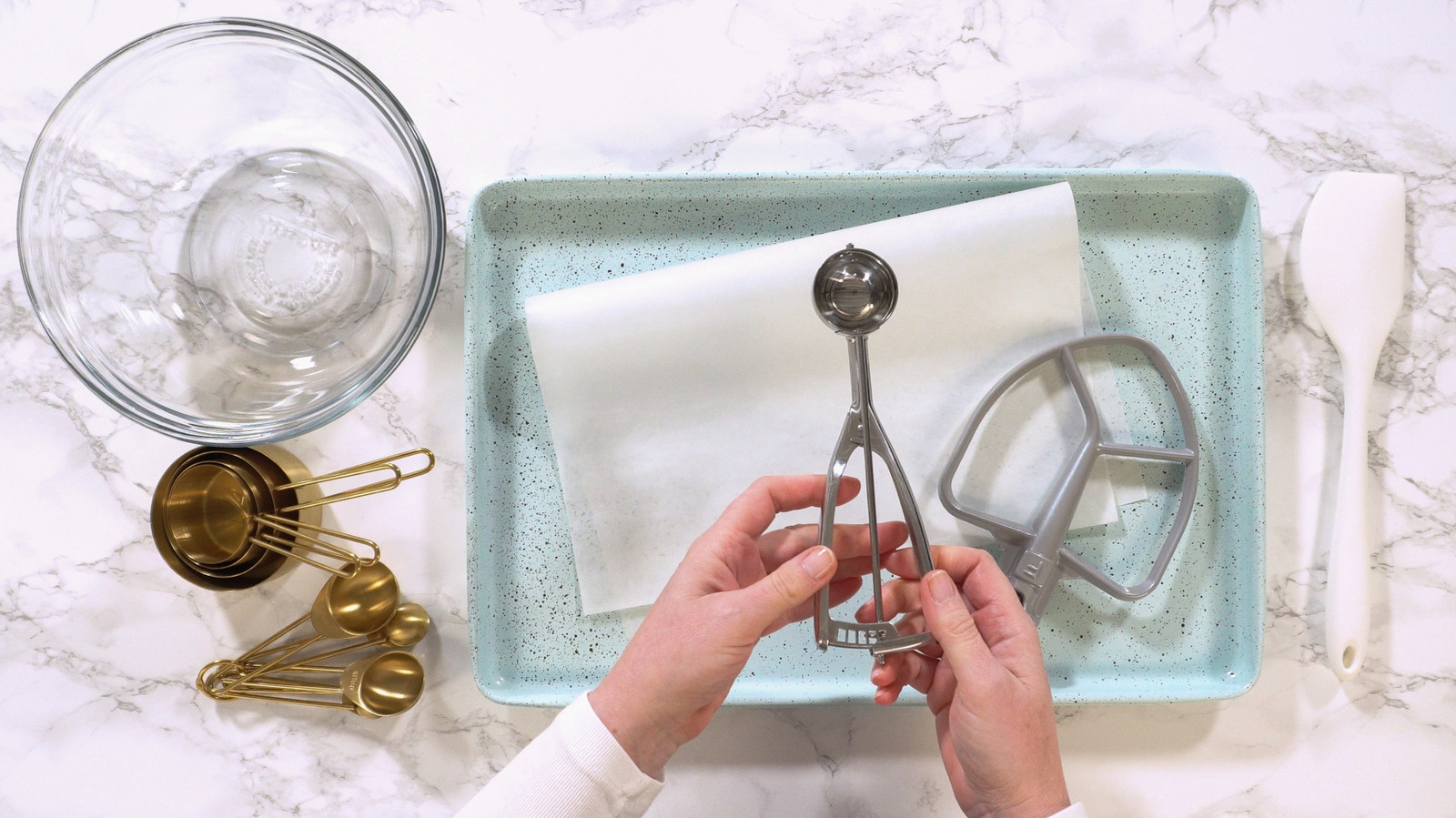
"Bigger scoops mean bigger cookie dough portions, longer baking times, and potentially unevenly baked cookies. When the huge cookie dough balls bake in the oven - each over about 70 grams - you often end up with cookies with set, golden-brown edges while the centers remain gooey or cakey. The middles can remain slightly underbaked and appear paler than the rest of the cookies."
"When the dough portion is too large, the cookie may puff up in the center instead of spreading and cracking properly, leaving you with a cookie that looks domed or has an unsightly hump in the middle rather than those beautiful crinkles."
"When baking cookies at home, I usually reach for my smaller cookie dough scoops, anywhere from 1 teaspoon to about 2 tablespoons. Since I bake a lot of cookies as a cookbook author and for my charity bake sale events, it makes sense to make large batches of smaller cookies. That way, I'm not accidentally giving folks cookies with raw middles."
Cookie dough scoop size significantly impacts baking outcomes. Oversized scoops, such as 4-tablespoon versions producing dough balls over 70 grams, result in cookies with set, golden-brown edges while centers remain gooey, underbaked, or cakey with a paler appearance. For crinkled cookies, oversized portions cause the dough to puff up in the center rather than spread and crack properly, creating domed or humped shapes instead of desired crinkles. Experienced bakers prefer smaller scoops ranging from 1 teaspoon to 2 tablespoons for consistent baking, especially for cookies meant to spread thin and crispy. Smaller portions ensure even baking throughout and prevent raw middles.
Read at Tasting Table
Unable to calculate read time
Collection
[
|
...
]