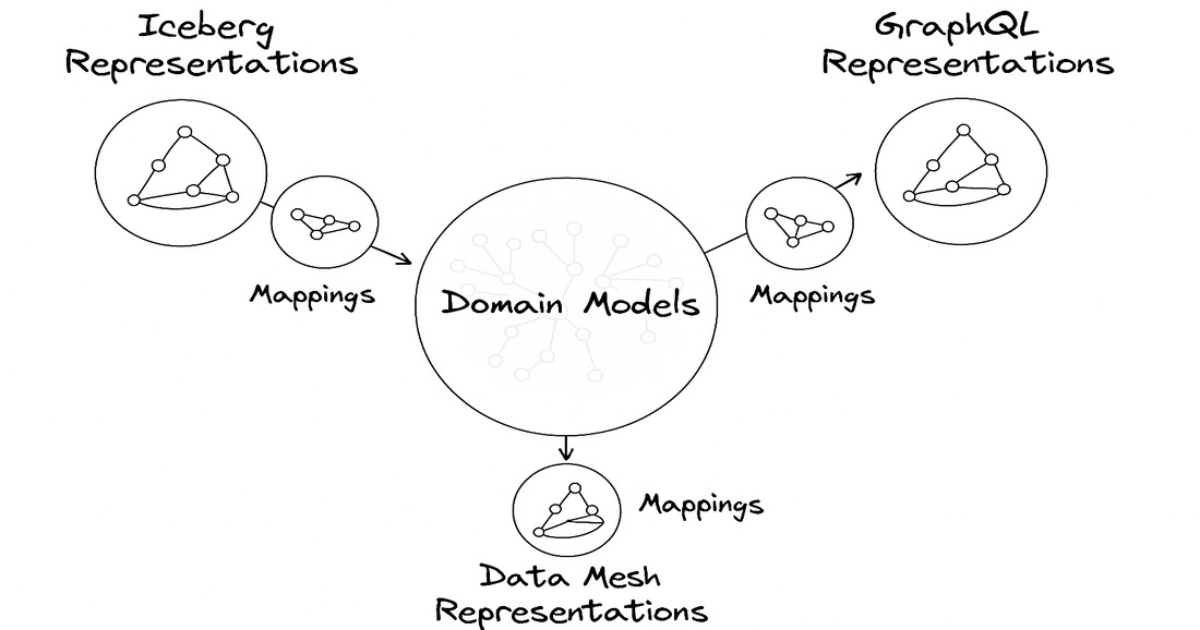
"Upper is based on W3C standards such as RDF for conceptual graph representation and SHACL for validation, and it enables the principle of "model once, represent everywhere" across the data ecosystem.Upper organizes concepts through keyed entities, their attributes, and their relationships across domain boundaries. The modeling grammar and validation structure are designed to maintain consistency as definitions evolve. Keyed concepts can be extended monotonically, allowing new attributes or relationships without modifying existing definitions allowing domains to expand over time without breaking existing models."
"Upper is designed to bootstrap itself through four foundational properties: it's self-describing (defines what a domain model is), self-referencing (models itself as a domain), self-governing (validates itself against its own rules), and federated (closed for modification, open for extension). This self-governing foundation is what enables the governance chain that makes UDA scale. UDA adopts a named-graph-first information model, where each named graph conforms to a governing model within the knowledge graph."
Upper is a unified domain modeling framework built into the Unified Data Architecture to standardize domain definitions across content engineering systems. The framework uses W3C standards such as RDF for conceptual graph representation and SHACL for validation and enables the principle of "model once, represent everywhere" across the data ecosystem. Upper organizes concepts through keyed entities, attributes, and relationships that cross domain boundaries and supports monotonic extension of keyed concepts so new attributes or relationships can be added without modifying existing definitions. Upper bootstraps itself via four properties: self-describing, self-referencing, self-governing, and federated. UDA employs a named-graph-first information model and a knowledge graph composed of Domain Models, Data Container Representations, and Mappings to define concepts, locate data containers, and link concepts to physical data.
Read at InfoQ
Unable to calculate read time
Collection
[
|
...
]