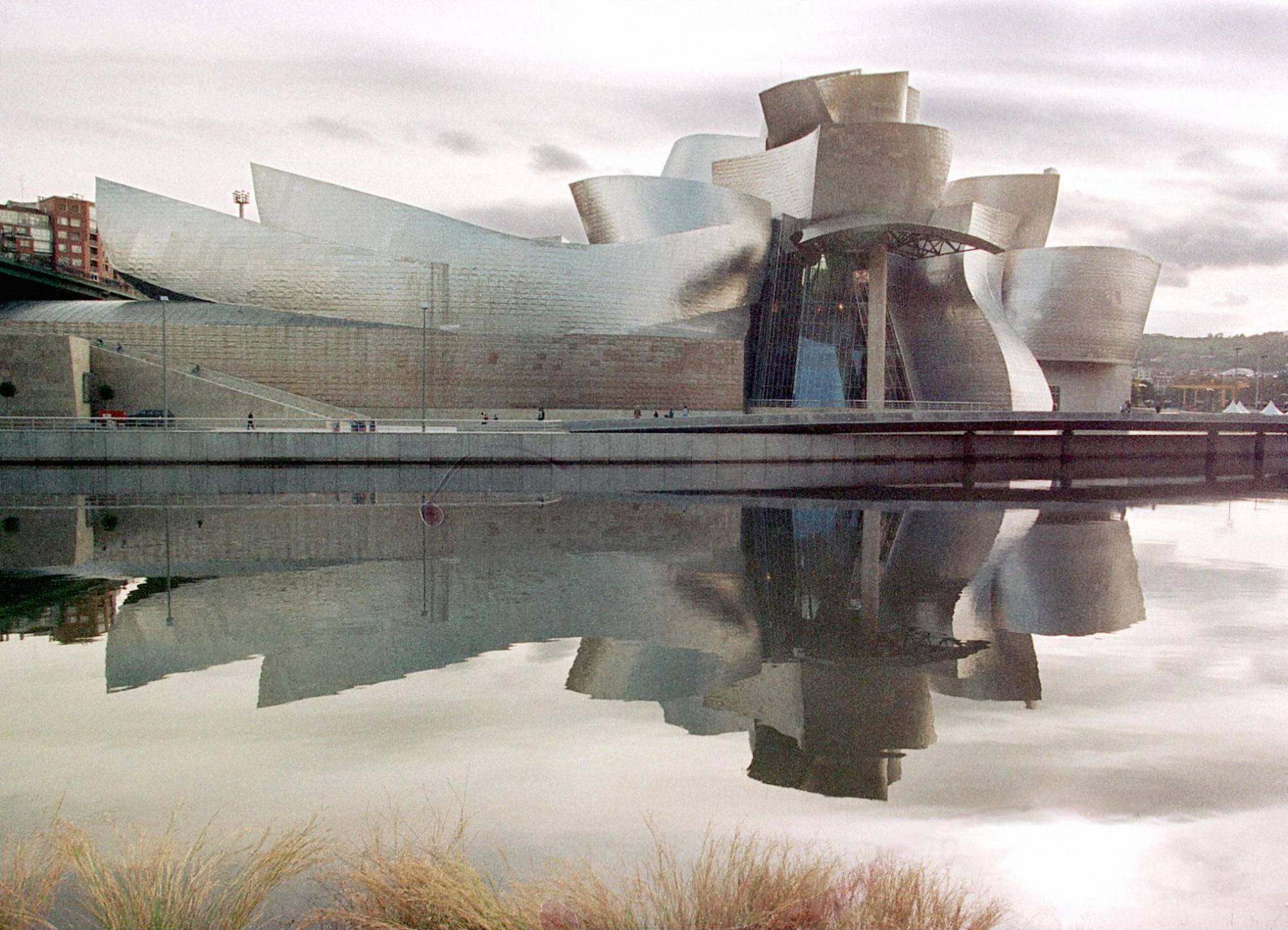
"There was exuberance in his work. The swoops and swirls - made possible with aerospace technology - lifted the spirits of viewers used to post-war modernism - strict, boxy glass and steel buildings that looked imposing and unwelcoming. Gehry says he found that style, cold, inhuman and lifeless. "I thought it was possible to find a way to express feeling and humanistic qualities in a building," Gehry said. "But I wasn't clear about it until I started experimenting, quite accidentally, with fish forms.""
"He drew them all his life, an inspiration that began in his grandmother's bathtub in Toronto. "Every Thursday when I stayed at her house, I'd go with her to the market," he recalled. "And there would be a big bag of some kind filled with water that we would carry home with a big carp in it. We'd put it in the bathtub. I'd sit and watch it and the next day it was gone.""
Frank Gehry pursued exuberant, curvilinear architecture that evoked movement and human feeling in contrast to post-war modernism's strict, boxy glass and steel. Aerospace technology enabled swoops and swirls that lifted viewers' spirits and softened the urban environment. Childhood memories of watching carp in his grandmother's bathtub inspired recurring fish forms and motion in his work. Signature projects like the Guggenheim, Disney Hall and Prague's "Fred and Ginger" towers translate curves into dramatic, sculptural buildings. Viewers responded to the sense of movement and emotion, and the Guggenheim's success drew many commissions while Gehry continued to push his design experimentation forward.
Read at Kqed
Unable to calculate read time
Collection
[
|
...
]