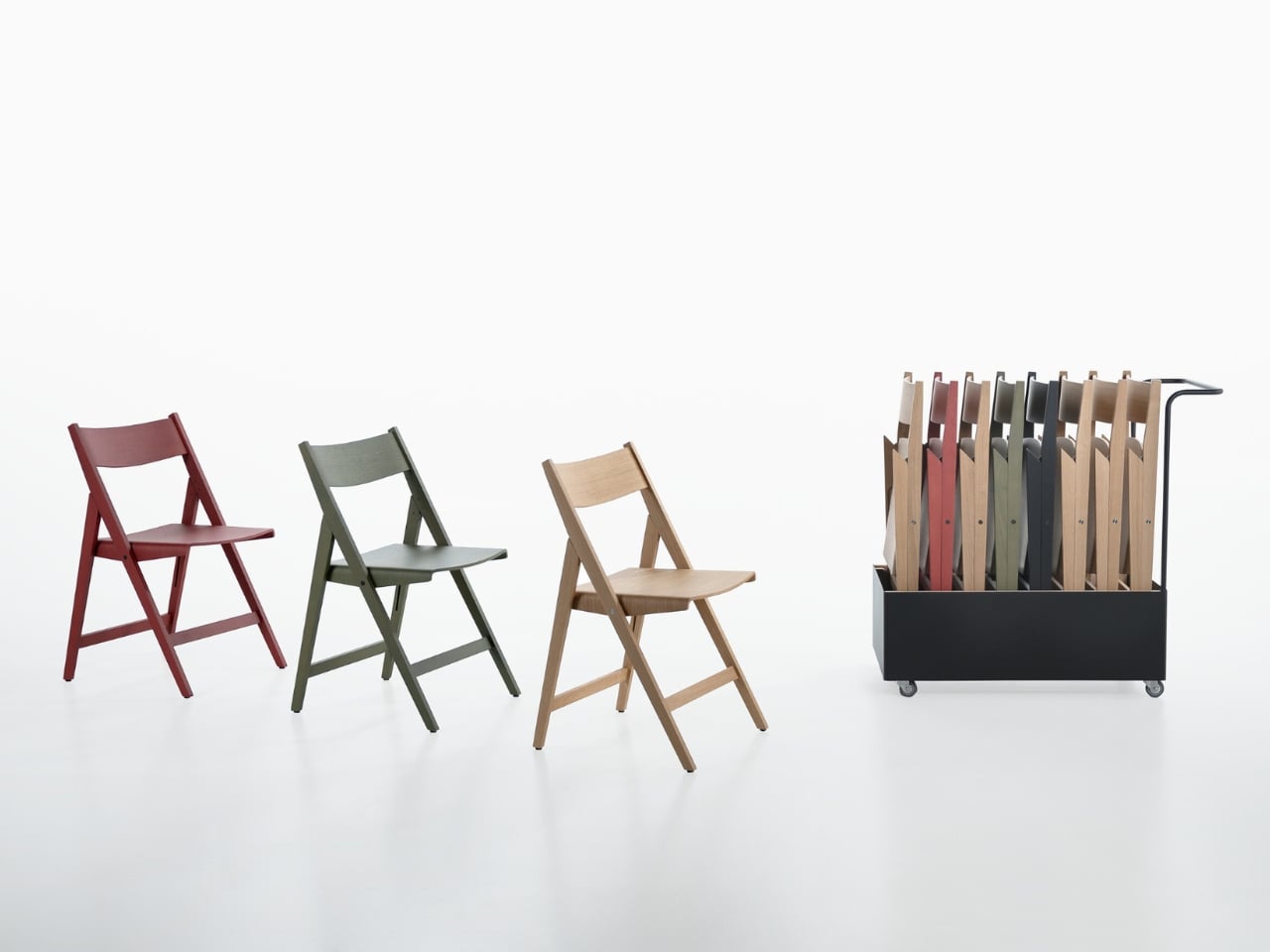
"Folding chairs have a reputation problem. For most of us, they conjure up images of bare banquet halls, plastic legs scraping across gymnasium floors, or that wobbly stack in the back of a relative's garage. They are furniture by necessity, not by choice. So when a design studio manages to make one that you'd genuinely want to keep out in your living room, it's worth paying attention."
"PLANK has been at this since 1953, and that legacy shows in how Theo is built. The frame is solid oak, which already puts it in a different category from the folding chairs most of us know. The seat and backrest are made from molded plywood, shaped with a gentle curve that reads as both ergonomic and graceful. The folding mechanism uses natural or black oxidized stainless steel, and it integrates into the structure so cleanly that you almost forget it's a functional joint and not just a detail."
"I've always believed that the real test of a design isn't how it performs in ideal conditions but how well it disappears into a life that isn't perfectly curated. Most furniture is designed with a room in mind. Theo was designed with reality in mind. It's built for contract spaces, meaning restaurants, event venues, conference rooms, places where chairs get used hard and stored constantly. But the visual language doesn't give that away. If you didn't know, you'd assume it was a permanent resident of whatever room it happened to be in."
Theo folding chair by PLANK uses a solid oak frame and molded plywood seat and backrest shaped with a gentle curve for ergonomic comfort and visual grace. The folding mechanism uses natural or black oxidized stainless steel and integrates cleanly into the structure so the joint feels like a design detail rather than an obvious functional compromise. The chair opens and closes smoothly without awkward fuss. Built for contract spaces such as restaurants, event venues, and conference rooms, it is designed for frequent use and constant storage. Its visual language does not signal that it is temporary, allowing it to appear suitable as a permanent-looking piece in everyday rooms.
Read at Yanko Design - Modern Industrial Design News
Unable to calculate read time
Collection
[
|
...
]