"Most workshop tools haven't changed much in decades, and bench vises are a good example of that. They're big and heavy, and they work well enough when you're clamping flat stock between parallel jaws. But the moment you try to hold something round, irregular, or fragile, a standard vise quickly becomes more of a problem than a solution, and you're left wishing for an extra hand."
"The maker community has grown considerably over the past decade, pulling in everyone from miniature painters and watch tinkerers to 3D printing hobbyists and electronics enthusiasts. These people aren't using industrial-grade machine tools; they're working at a desk, dealing with small parts in odd shapes that standard vises simply weren't designed for. MetMo's Fractal Vise feels like it was built specifically with that reality in mind."
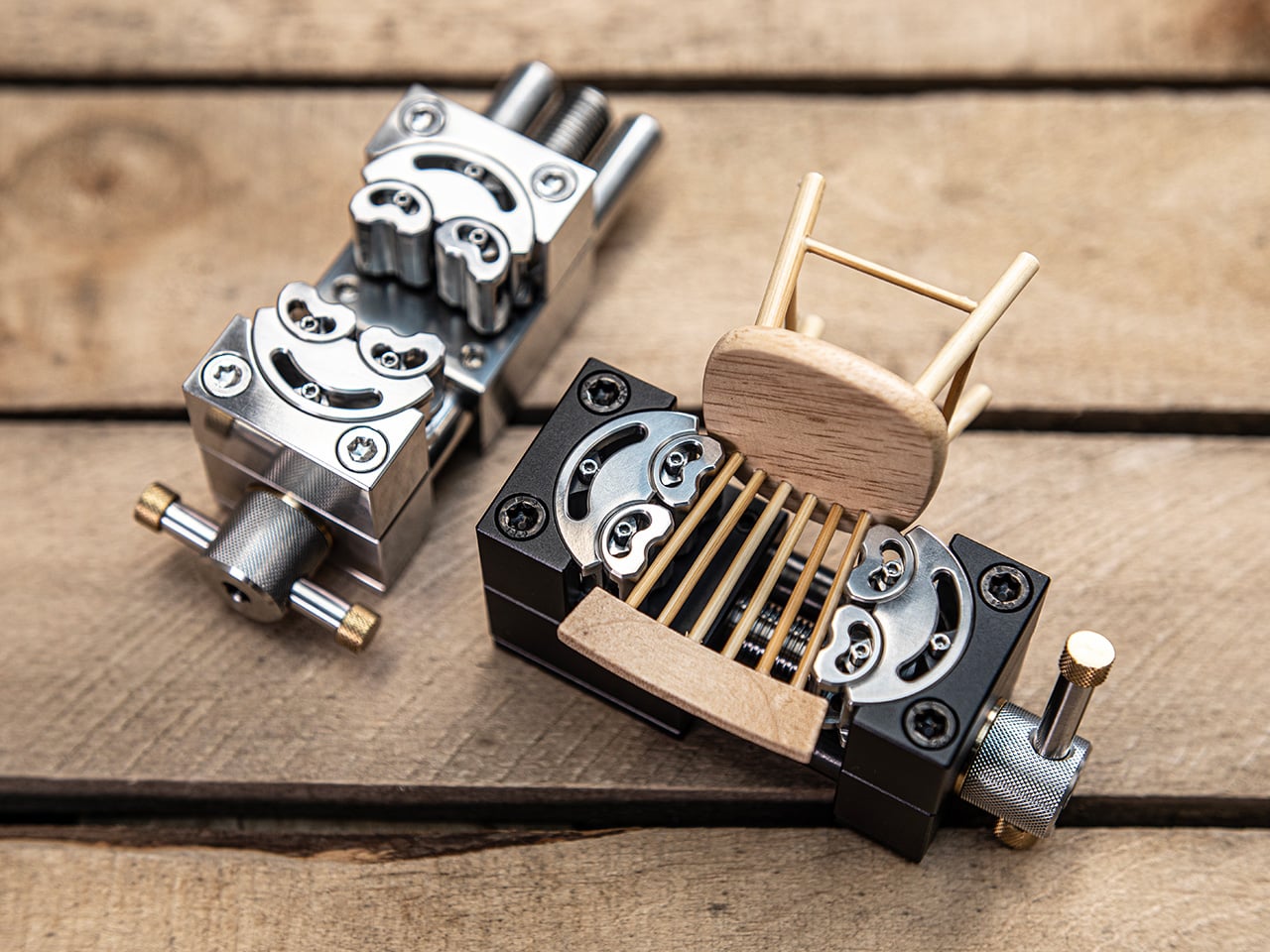
"Instead of two flat clamping surfaces moving in a straight line, the Fractal Vise uses jaws made up of independently articulating segments, six in total, that shift and pivot as they close around an object. That means it can grip round tubes, tapered forms, and irregular parts just as easily as flat ones."
"What makes this even more compelling is how seriously MetMo has approached the construction. The body is machined from aerospace-grade anodized aluminum, the jaws from hardened martensitic stainless steel, and the whole assembly runs on precision-ground linear rails for a backlash-free feel. There's also a fine-threaded adjuster and a hex drive point for when you need more torque tha"
Most workshop vises remain unchanged for decades and work best for flat stock between parallel jaws. Standard vises become difficult when holding round, irregular, or fragile objects. A growing maker community works with small parts at desks and needs clamping tools designed for odd shapes. The Fractal Vise is scaled down from an older 1913 patent concept and built for desktop use. Its jaws consist of six independently articulating segments that shift and pivot as they close, enabling secure gripping of tubes, tapered forms, and irregular parts. The body uses aerospace-grade anodized aluminum, the jaws use hardened martensitic stainless steel, and the mechanism runs on precision-ground linear rails for minimal backlash, with fine adjustment and a hex drive for torque.
Read at Yanko Design - Modern Industrial Design News
Unable to calculate read time
Collection
[
|
...
]