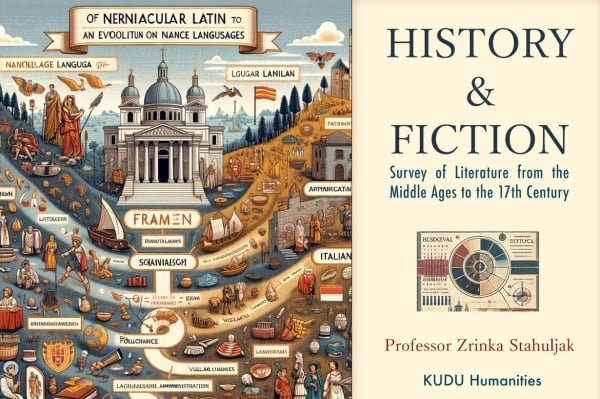
""I was convinced that I could do a much better job of [teaching] this required course, where students are not always interested and motivated," Zrinka Stahuljak, a comparative literature professor at the University of California at Los Angeles, said. "It was a no-brainer that I could use [the AI-assisted textbook] to free up my own time and be a much more effective and approachable and accessible teacher.""
""This is truly bad and makes me wonder if we aren't participating in creating our own replacements at the expense of, well, everyone who cares about teaching and learning," one English professor wrote on social media at the time. Others characterized the move as "flat out stupid," "absolute nonsense" and an idea that takes "the human out of humanities.""
A literature professor introduced an AI-assisted, editable textbook created from provided course materials and rare primary sources. The $25 textbook includes a built-in chatbot that offers clarifications and summaries while being programmed to prevent students from using it to write assignments. The goal was to free instructor time and increase meaningful student discussion in a medieval literature survey course. Many colleagues reacted with skepticism and sharp criticism, calling the move harmful, "flat out stupid," and dehumanizing to the humanities. The professor nevertheless used the textbook and later reflected on its benefits and the obstacles preventing wider faculty adoption of AI in teaching.
Read at Inside Higher Ed | Higher Education News, Events and Jobs
Unable to calculate read time
Collection
[
|
...
]