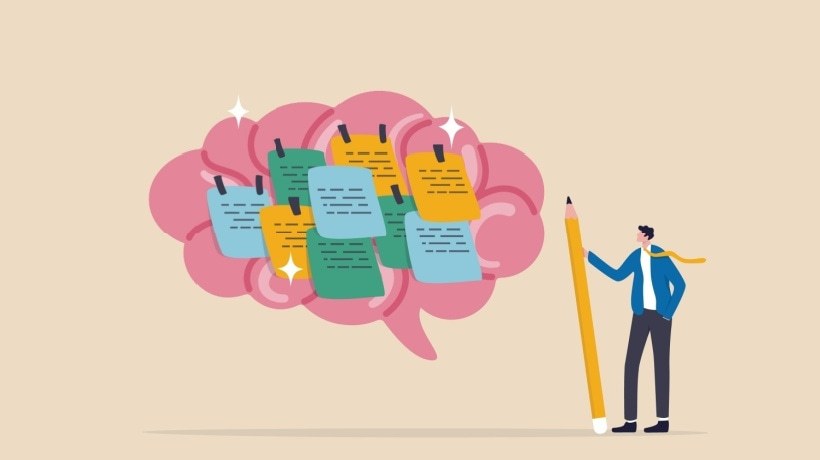
"Memory is not a passive recording device. It does not capture everything presented to it. Memory is selective and constructive. The brain stores information when it is meaningful, when it can be connected to something familiar, and when it can be visualized or experienced. For centuries, one of the most effective methods for strengthening memory has been the memory palace. It is simple, powerful, and deeply aligned with how the human brain evolved to store and retrieve information."
"The memory palace is a mental space. Information is placed within a familiar environment, such as a house, a childhood neighborhood, or a building. Instead of trying to remember a sequence of abstract ideas, the learner recalls the path through the space. Each piece of information is tied to a location along that imagined path. Because humans are extremely good at remembering places, the memory palace uses spatial memory to make abstract content easier to recall."
Memory operates selectively, storing information that is meaningful, connectable to familiar knowledge, or visualizable and experiential. The memory palace assigns information to locations within a mentally familiar environment so recall occurs by retracing an imagined path. Spatial memory is highly developed through evolutionary navigation abilities, making location-based associations especially effective. Tying abstract concepts to spatial landmarks simplifies complex material and accelerates retrieval. The memory palace produces mental clarity, organizes complexity, and enables learners to retrieve information without external aids, remaining valuable alongside modern digital tools and artificial intelligence.
Read at eLearning Industry
Unable to calculate read time
Collection
[
|
...
]