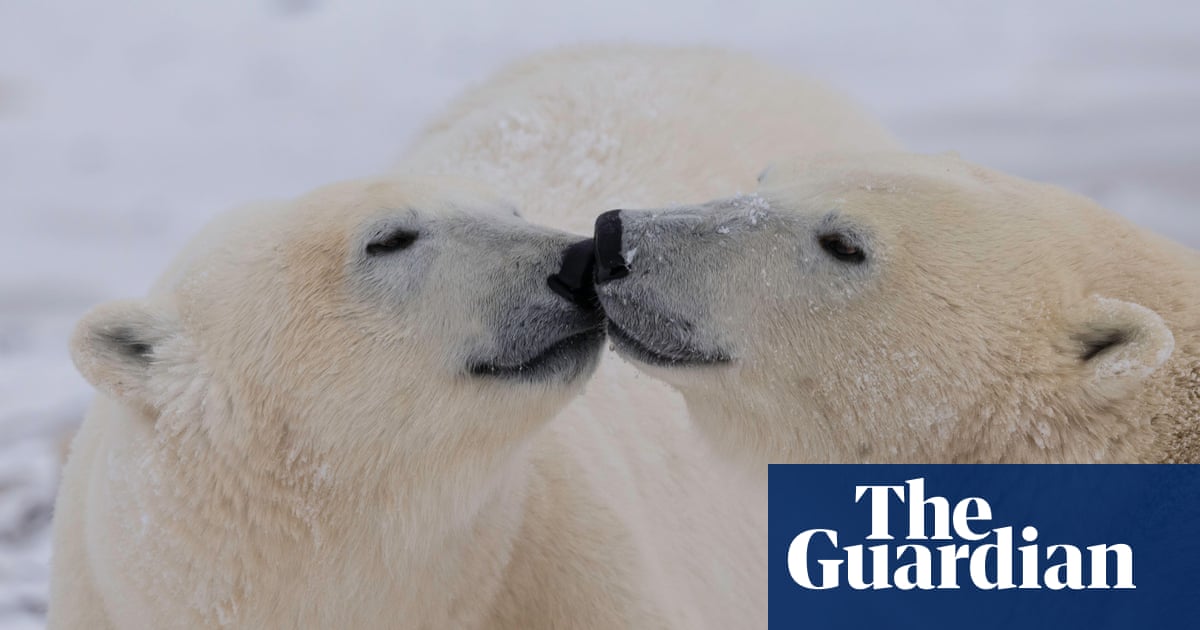
"Now scientists at the University of East Anglia have found that some genes related to heat stress, ageing and metabolism are behaving differently in polar bears living in south-east Greenland, suggesting they may be adjusting to warmer conditions. The researchers analysed blood samples taken from polar bears in two regions of Greenland and compared jumping genes: small, mobile pieces of the genome that can influence how other genes work. Scientists looked at the genes in relation to temperatures in the two regions and at the associated changes in gene expression."
"By comparing these bears' active genes to local climate data, we found that rising temperatures appear to be driving a dramatic increase in the activity of jumping genes within the south-east Greenland bears' DNA. As local climates and diets evolve as a result of changes in habitat and prey forced by global heating, the genetics of the bears appear to be adapting, with the group of bears in the warmest part of the country showing more changes than the communities farther north."
Some polar bear populations in south-east Greenland display altered activity in genes associated with heat stress, ageing and metabolism. Blood samples from two Greenland regions were analysed for transposable elements, or 'jumping genes', and for associated changes in gene expression. Local temperature data were compared with active-gene profiles to identify correlations. Rising temperatures correlate with marked increases in jumping-gene activity in bears from the warmer southeastern region. These genetic changes appear greater in warmer-area populations than in northern communities and may indicate an adaptive genomic response that can inform risk assessment and conservation planning.
Read at www.theguardian.com
Unable to calculate read time
Collection
[
|
...
]