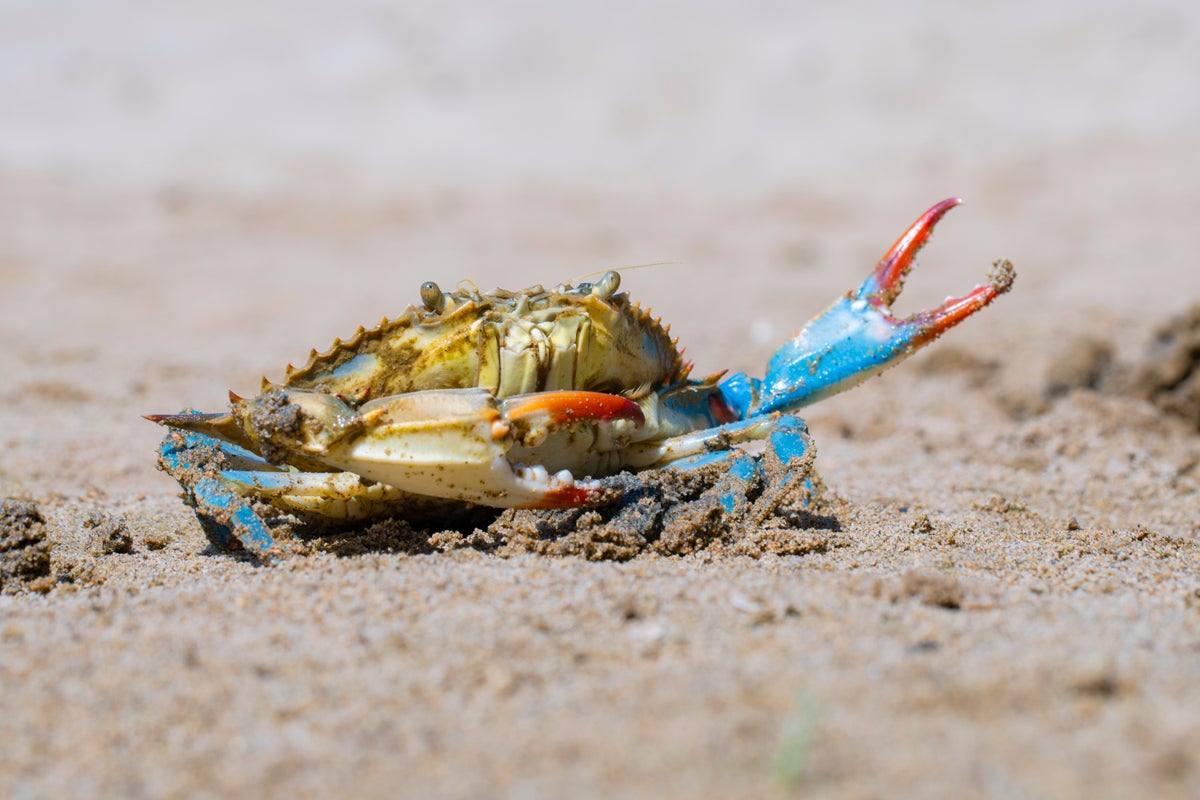
"Between 1989 and 2025, researchers released 2,687 juvenile crabs, tethering them to posts at varying times of the year and at varying depths of Maryland's Rhode River, a tidal estuary in Chesapeake Bay. After about 24 hours, the researchers would look for signs of predation—basically, if the crabs were dead or injured. Incredibly, they found that a whopping 97 percent of crab killings or injuries could be attributed to cannibalism."
"What was surprising was that we found here no fish predation—not a single instance of fish predation. All the predation was due to cannibalism by other crabs. The way Hines and his team worked out what had killed or maimed the released crabs was by looking for clues in their remains. If the crabs were killed by fish, other research suggested there would be no crab remains left on the end of the tether line."
A comprehensive 36-year study of blue crabs in Maryland's Rhode River examined predation patterns by releasing 2,687 juvenile crabs tethered to posts at various times and depths. Researchers monitored the crabs for 24 hours to identify signs of predation. The findings revealed that 97 percent of crab killings and injuries resulted from cannibalism by other crabs, with no instances of fish predation detected. Researchers identified predation sources by analyzing remains left on tether lines, noting that fish predation would leave no crab remains. This extensive research demonstrates that cannibalism represents the dominant predatory force affecting blue crab populations in the Chesapeake Bay ecosystem.
Read at www.scientificamerican.com
Unable to calculate read time
Collection
[
|
...
]