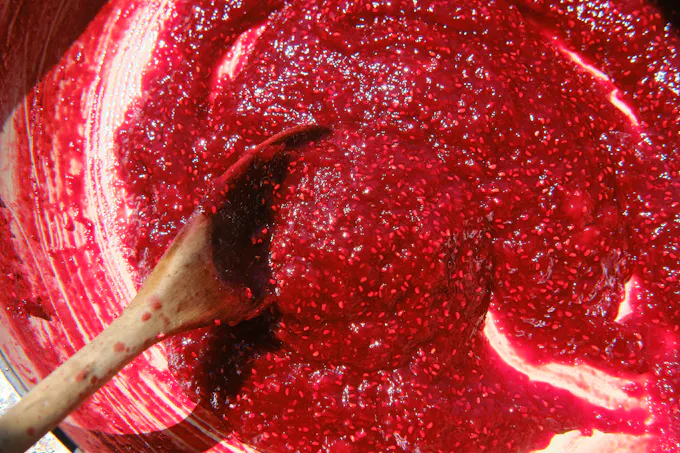
"Skillet jams are inherently laid-back, made to enjoy right away. Without the need for preserving, you can scale back the sugar and let the fruit's natural flavor really pop. This is a version from a special new cookbook, Eating at Home by Trinity Mouzon Wofford."
"One of the things I love most about skillet jams is that, because they're meant to be eaten fresh - say, within a week, refrigerated - they don't need to be shelf stable. As a result, they use just a fraction of the sugar required to preserve conventional jams."
"Fruit: You can use fresh or frozen fruit here. I've found that using frozen berries is a great way to use up any fruit accumulated in my freezer. Lemon: I like to use a Y-peeler to remove the lemon rind, then slice it thinly with a sharp knife rather than using a microplane. The zest ends up with more structure,"
"Sugar: granulated. You rub the lemon zest into the sugar with your fingertips. Salt: To balance out the sweetness a bit. This easy-breezy approach to jam-making delivers intensely bright, not overly sweetened spreads - beautiful swiped across thick slabs of sourdough."
Skillet jam is designed for immediate enjoyment rather than long-term preservation. Because it is meant to be refrigerated and eaten within about a week, it does not need to be shelf stable, so it uses far less sugar than traditional jams. Fruit can be fresh or frozen, with frozen berries offering a way to use freezer fruit. Lemon adds brightness: the rind is removed, sliced thinly, and rubbed into granulated sugar with fingertips to distribute flavor. A small amount of salt balances sweetness. The result is an intensely bright, flavorful spread that works well on thick sourdough slices.
Read at 101 Cookbooks
Unable to calculate read time
Collection
[
|
...
]