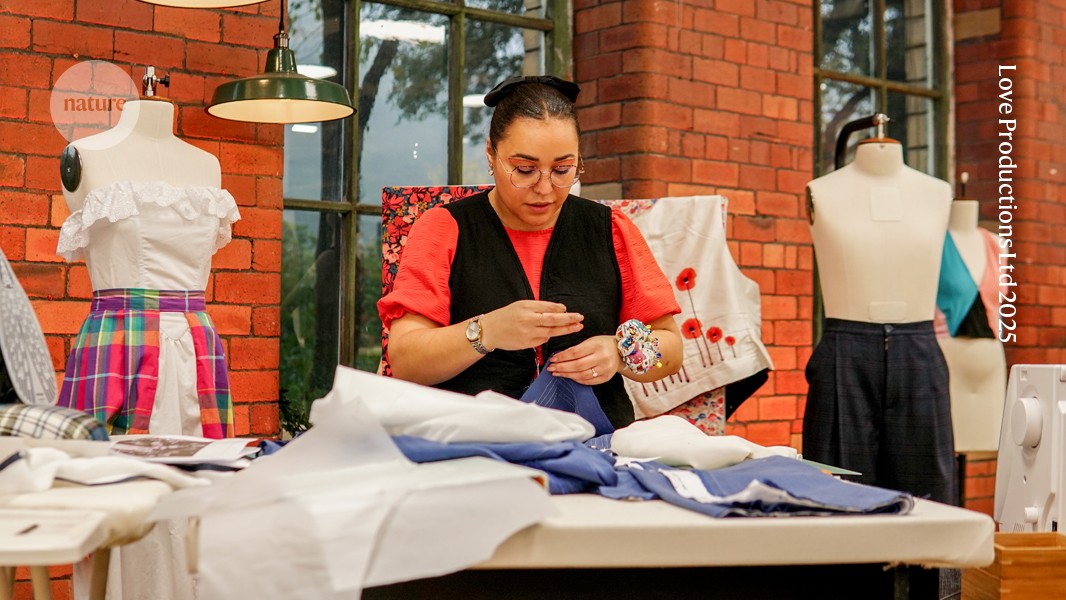
"I love how the skills you develop as a scientist can be applied to sewing and other crafts. Like science, sewing requires creativity, as well as an initial idea or concept to get going. Both are about research and experimenting, and are iterative processes, in which you apply knowledge gained from work that you and others have done previously. Despite these parallels, craftwork such as sewing and knitting is often undervalued or dismissed because it's seen as 'women's work'."
"For me, training in science and having a passion for sewing have been mutually beneficial - with each discipline supporting the other and driving my success. Growing up, sewing was always part of my background. The Great British Sewing Bee was also always a regular fixture on our family television and was a source of connection to my family after I moved out to attend university"
Scientific skills transfer directly to sewing and other crafts, with both requiring creativity, an initial concept, research, experimentation and iterative practice that builds on prior work. Craftwork such as sewing and knitting is often undervalued or dismissed because it is seen as 'women's work', yet the brain engages similarly in crafting and research. Scientific training and a passion for sewing can be mutually beneficial, with each discipline supporting the other and driving success. Sewing formed an early background and The Great British Sewing Bee provided family connection during university years. A father's practical creativity and research-driven sewing approach shaped lifelong habits and his sudden death prompted an application to the sewing bee.
Read at Nature
Unable to calculate read time
Collection
[
|
...
]