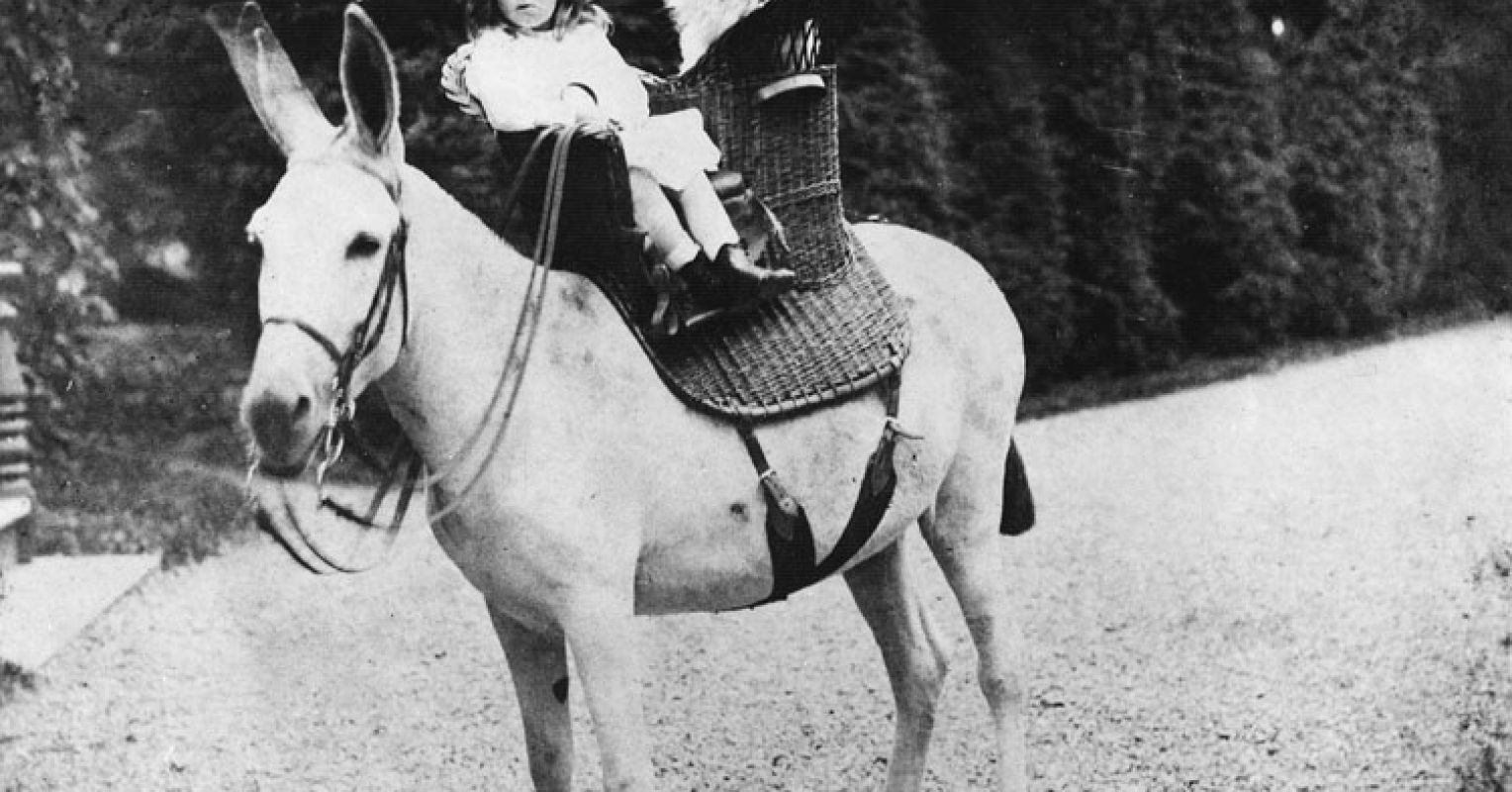
"From the Victorian era until the early 20th century, boys and girls wore dresses until around age 7, when the boys transitioned to breeches (trousers) in a rite of passage known as "breeching.""
"In parts of Europe and the United States, dresses and petticoats were considered children's clothing. Dresses were easier than pants or breeches when children's diapers were changed or when children went to the bathroom on their own. With no buttons or other fasteners to deal with, dresses were not only fashionable, they were more practical and functional than pants."
"When children started walking, they were "short-coated," meaning clothed in shorter dresses, so they could walk more easily. Several years after short-coating, some boys were breeched gradually and some were breeched all at once, with breeches replacing all of the boys' frocks in a ceremonial event similar to today's birthday party, which also included the first haircut."
A photo shows a three-year-old FDR in a white outfit with a frilly hat, socks, and patent-leather shoes, reflecting common children’s fashion. Another image shows FDR at the same age posing with his dog Budgy in a similar frilly hat, while a separate photo shows a more casual pose on a fur rug. Boys and girls typically wore dresses until about age seven, when boys transitioned to breeches through a rite of passage called breeching. Dresses and petticoats were treated as children’s clothing because they were easier to manage during diaper changes and bathroom use, with fewer fasteners than pants. Shorter dresses helped children walk, and breeching could happen gradually or all at once in a ceremonial event, often including a first haircut.
Read at Psychology Today
Unable to calculate read time
Collection
[
|
...
]