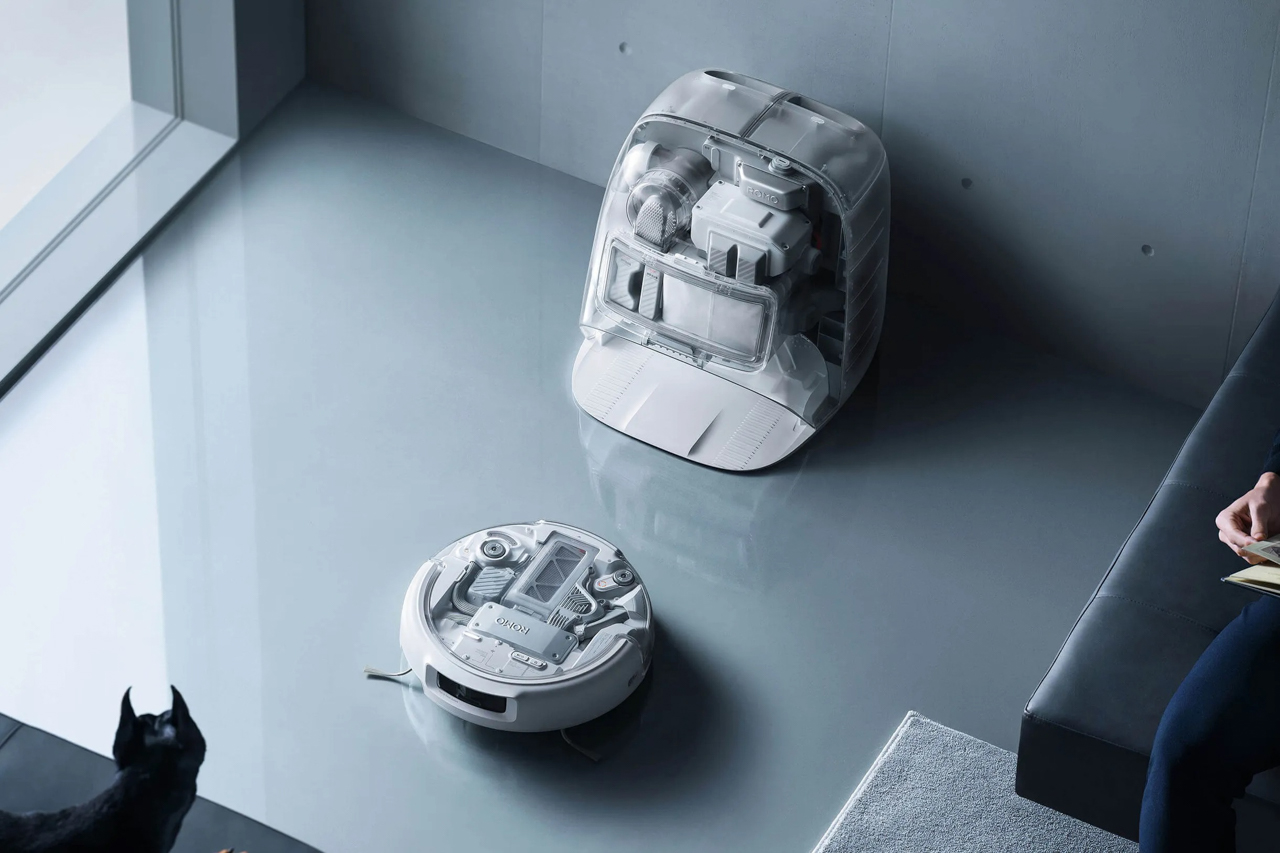
"So what's so special about its design? Well, much of it comes down to the transparent outer shell. There are actually a few models in the Romo lineup, including the DJI Romo P, Romo A, and Romo S. Both the Romo A and Romo S have a white plastic housing, but the Romo P swaps out that look for transparency. Both the docking station and the vacuum itself make use of transparency, with almost the entire docking station having a see-through outer shell and the vacuum having a clear top."
"Even cooler than the transparent design could be how well the vacuum works. DJI is new to the robotic vacuum space, so it's hard to tell if it'll be able to perform as well as the likes of Roborock, Ecovacs, and so on. But the company does have tons of experience in advanced image recognition tech, thanks to its drones. According to DJI, the vacuums can automatically create the most efficient cleaning path using some of the tech that it created for drones. Those routes are stored in the vacuum itself, so they won't be uploaded to the cloud, which could be a potential privacy issue."
DJI's Romo is a first robotic vacuum that applies the company's image-processing experience to home cleaning. The Romo lineup includes P, A, and S models; the P features a transparent outer shell while A and S use white plastic. The docking station and vacuum use transparency to expose components while keeping tanks opaque. The vacuums employ drone-derived image recognition to create efficient cleaning routes that are stored locally to limit cloud uploads. The system detects objects like spilled food and adapts by slowing movement and brush speed while increasing suction to prevent scattering debris. DJI's entry introduces design novelty and adaptive cleaning but leaves performance compared to established brands uncertain.
Read at Design Milk
Unable to calculate read time
Collection
[
|
...
]