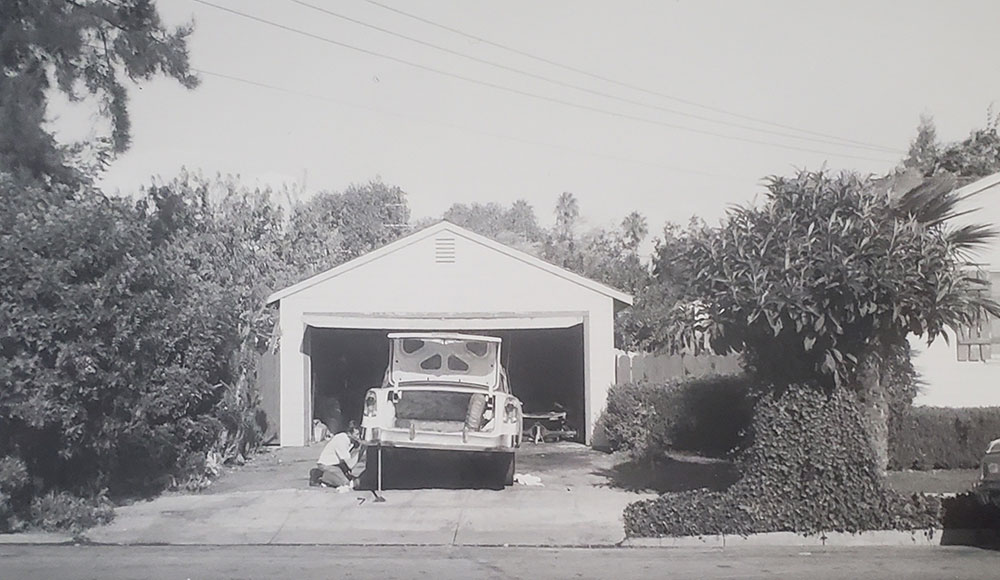
"Throughout the show we see more than just houses. We see service stations. A corner market or two. Successful working-class families and churches. Bucolic suburban happiness. Children playing on the sidewalk. The city of San Jose City slaughtered all of it. Many who lived in the project area didn't even realize the city was gunning to buy them out and obliterate their house until a Phil-Silvers-looking buffoon with a short-sleeve dress shirt and dumb slacks arrived in their front yards to take pictures. Nobody knew."
"The origins of the photo exhibit began when researchers at SJSU's Institute for Metropolitan Studies pored through the aforementioned boxes and documents, resulting in a spectacular online presentation with before and after maps, flyovers, data sets and human stories, all related to every single house San Jose's planning czars destroyed along the 280 corridor. Leila Ullmann, Maxwell Friedman, Bennett Williamson and Matthew Schroeder assembled the online presentation. Williamson then curated the exhibit in the library."
An exhibit, 'Beneath I-280: Excavating a Neighborhood Lost to San José Freeways,' reconstructs houses and five nonexistent blocks removed for the 280-87 interchange. Enlarged photographs display long-gone homes with obsolete street addresses. The exhibit presents service stations, corner markets, churches, families, and children to evoke everyday neighborhood life before demolition. Archival materials include appraisals, Caltrans Right of Way assessments, aerial maps, and other records. Researchers at SJSU's Institute for Metropolitan Studies produced an extensive online presentation with maps, flyovers, data sets, and oral histories. Curator Bennett Williamson translated that archival work into a public gallery display.
Read at Metro Silicon Valley | Silicon Valley's Leading Weekly
Unable to calculate read time
Collection
[
|
...
]