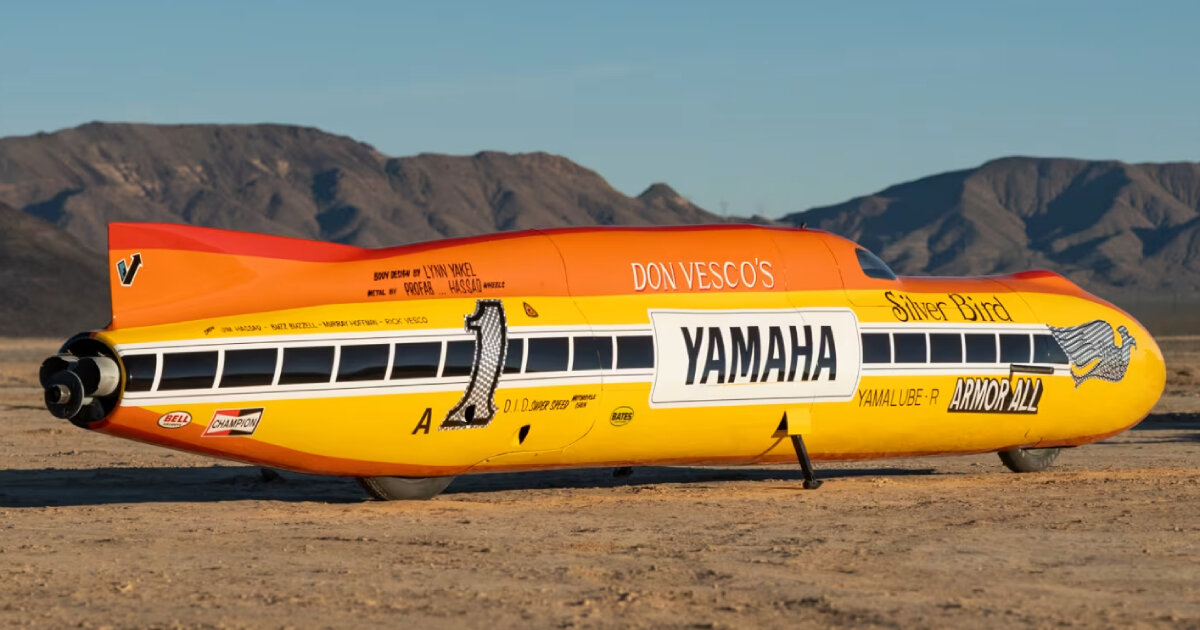
"The design of the Silver Bird was unusual for normal motorcycles because it was long, low, and fully covered in a smooth metal body, a shape called a streamliner. It resembles an aircraft without wings, and the design helped air flow easily over the bike, reducing drag and allowing higher speed. The rider sat inside the body, almost like in a small plane, and they would lie low inside, almost horizontal, like a pilot rather than a motorcyclist."
"Instead of using one engine, Don Vesco placed two in a line, one behind the other, within the aircraft-shaped racing motorcycle. Both engines had to work together perfectly because if one engine pushed harder than the other, the Silver Bird could break or crash. Chains and gears were used to connect the two engines, and the engineer carefully adjusted the throttle so both engines ran at the same time and speed, resulting in a total power that was high for a motorcycle in the 1970s."
Don Vesco created two high-powered, aircraft-shaped racing motorcycles, the Silver Bird and its upgraded sibling, the Lightning Bolt. The Silver Bird used a long, low, fully covered metal streamliner body to reduce aerodynamic drag and allow higher speed. The rider lay almost horizontal inside the body, resembling a pilot in a small plane, with almost fully covered wheels and a rounded blunt nose. Vesco powered the Silver Bird with two Yamaha TZ750 engines mounted inline, linked by chains and gears, and synchronized throttles to produce high combined power. On September 15, 1975, the Silver Bird reached an average 303 mph at Bonneville. Vesco later upgraded the design with Kawasaki engines and turbochargers.
Read at designboom | architecture & design magazine
Unable to calculate read time
Collection
[
|
...
]