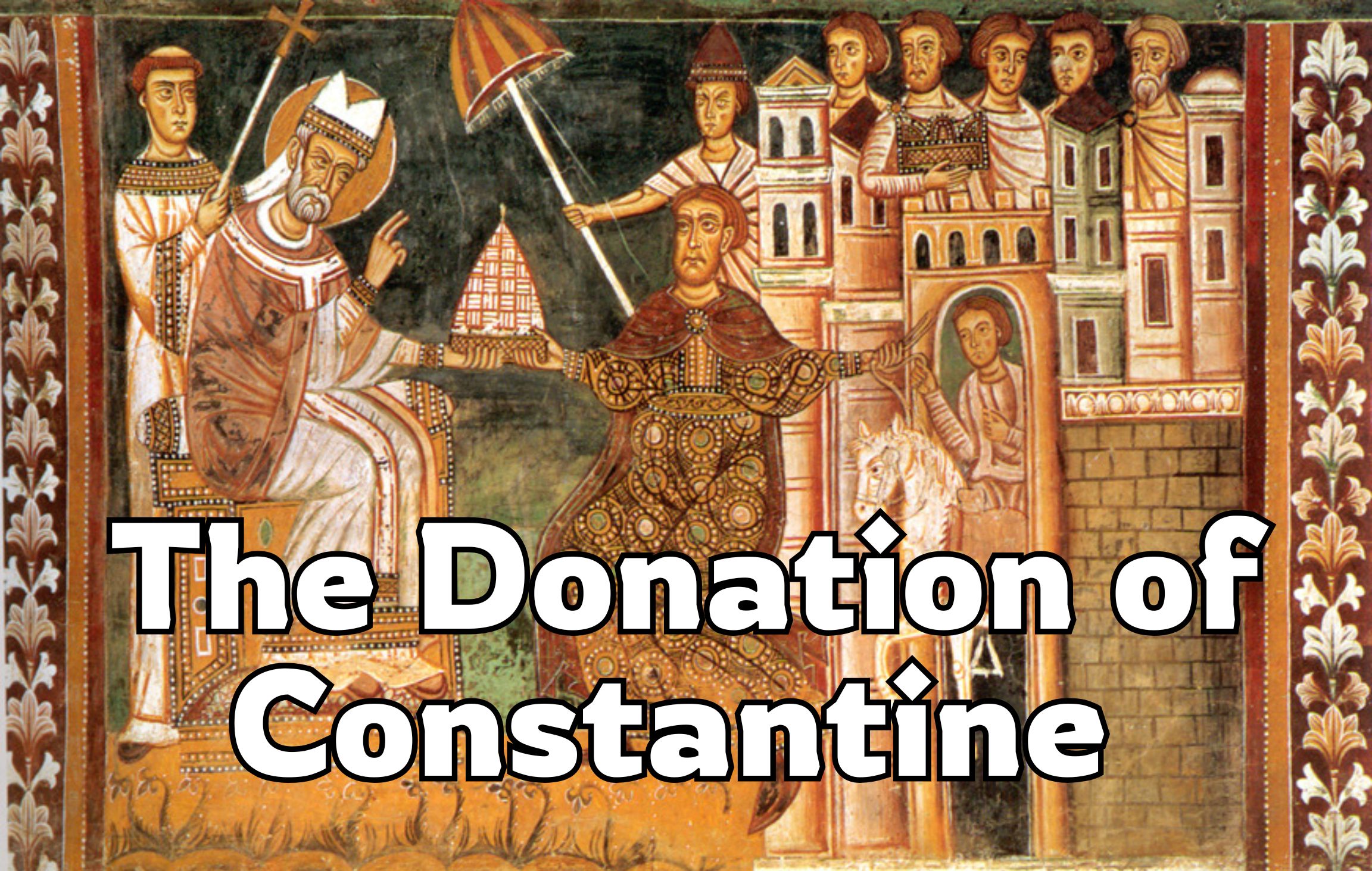
"The Donation of Constantine is one of the most famous forgeries of the Middle Ages, used for centuries to justify sweeping claims of Church authority. Yet in a medieval world where truth, power, and legitimacy were understood differently, the document's influence was far more complex than a simple act of deception. If the myth of Emperor Constantine's Donation were to be uncovered today, the headlines all over social media would be, "Fake news exposed!""
"The myth of the Donation of Constantine was spread widely throughout the medieval European world. Its claim to authenticity was backed up by a forged manuscript, allegedly drawn up and signed by the Roman emperor Constantine the Great in the fourth century. In the manuscript, Constantine bestowed authority, privileges, and possessions upon the Roman Church. It provided legitimisation for the popes of Rome's claim to near-imperial powers. The content of the Donation was invoked in the power struggles between the Church and various worldly powers,"
"In the first part of the manuscript, Constantine explains how he was introduced to Christianity by Pope Sylvester I (314-35). This account is based on the Acts of St. Sylvester (the Acta or Gesta Sylvestri), which relates how Constantine, desperate to be cured from leprosy, was instructed by Peter and Paul in a dream to turn to Pope Sylvester for help. Sylvester baptised Constantine and, by doing so, miraculously healed him."
The Donation of Constantine was a widely circulated medieval forgery claiming that Emperor Constantine granted vast authority, privileges, and properties to the Roman Church. The forged manuscript portrayed Constantine as converted and healed by Pope Sylvester I, drawing on the Acts of St. Sylvester narrative of miraculous healing after baptism. The Donation underpinned papal claims to near-imperial power and was deployed in disputes between the Church and secular rulers and between the Roman Catholic and Orthodox Churches, including arguments contributing to the East–West Schism of 1054. Medieval understandings of truth and legitimacy made the document's influence complex.
Read at Medievalists.net
Unable to calculate read time
Collection
[
|
...
]