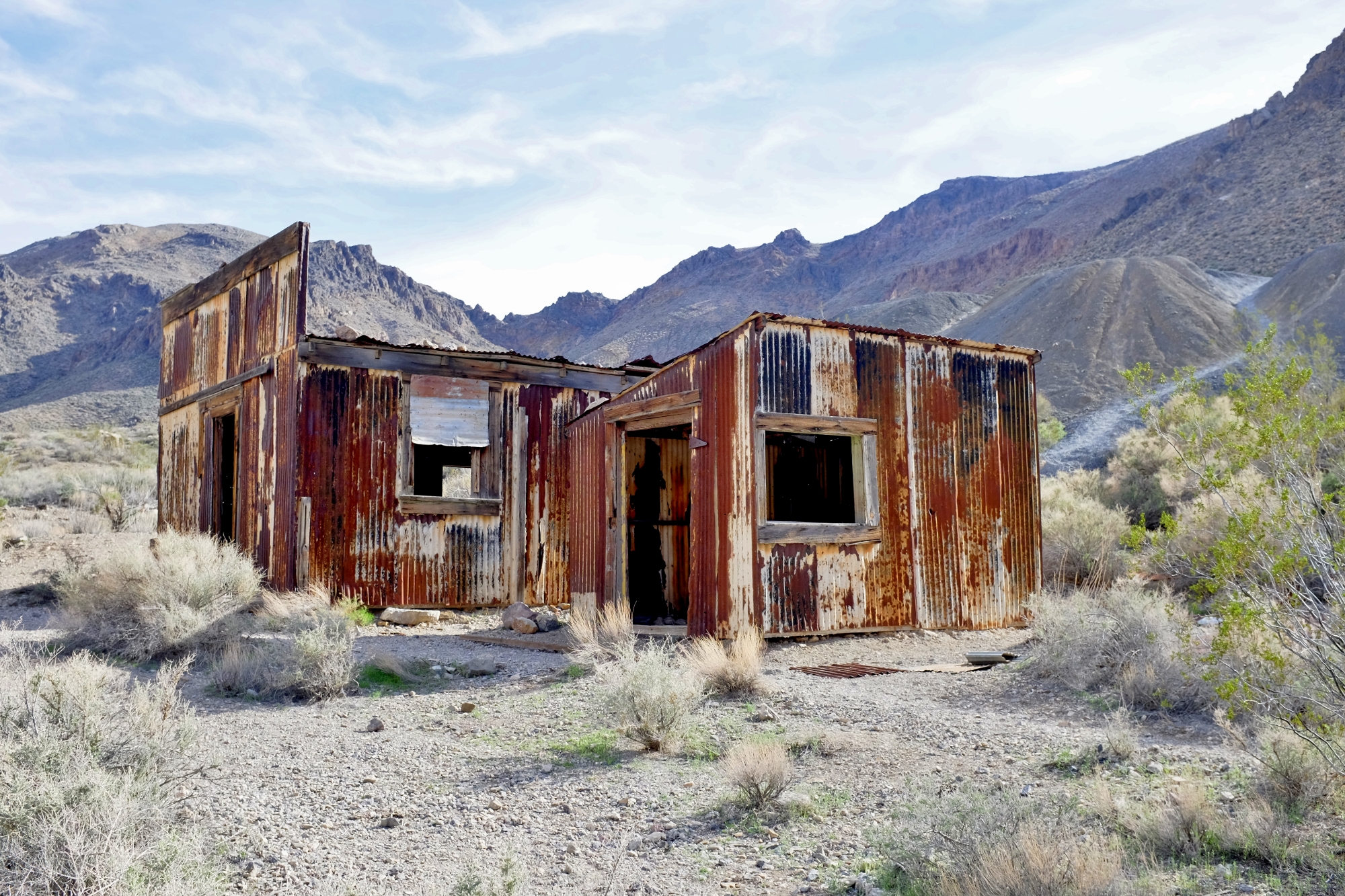
""The mining town sparked to life but briefly, like a flame from a damp match," the 1974 application for Leadfield's entry into the National Register of Historic Places read. "Julian disappeared and the inhabitants soon became disillusioned and quickly drifted away.""
"The National Park Service recommended preservation of the site on the grounds of significance in "industry" and "fraud," with the application saying the crumbling town represented "one of the get-rich-quick schemes of the wild 1920s.""
"Today, you can access the ghost town that was once Leadfield via a 27-mile dirt road through Titus Canyon, which the Park Service describes on its website as "the most popular back-country road in Death Valley National Park.""
"Of Leadfield, "All that is left today are a few shacks and a number of mines. Many of the mines are open, but enter at your own risk," the Park Service adds. "Loose rocks, rotten timbers, unexpected vertical shafts, and animals seeking shelter are potential hazards.""
Leadfield was a mining town that briefly thrived on the promise of copper and lead riches, attracting many prospectors. However, it was built on deception, as the promoter C.C. Julian misled people about the area's wealth. Within a year, the town's allure faded, and miners abandoned it, leaving behind crumbling buildings and open mines. The National Park Service recognized its historical significance related to industry and fraud, recommending preservation. Today, Leadfield can be accessed via a dirt road, but it remains a hazardous ghost town.
Read at SFGATE
Unable to calculate read time
Collection
[
|
...
]