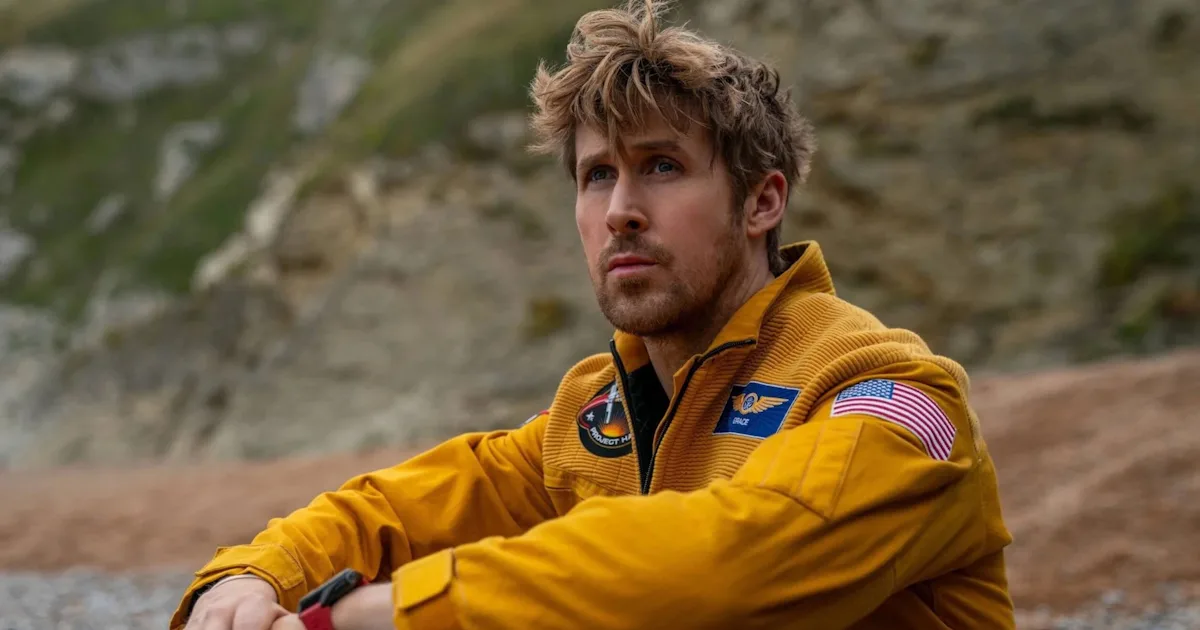
"Both the 2021 Andy Weir novel and the new film from directors Christopher Miller and Phil Lord weaponize the underdog charm of Dr. Grace to ensure that the planet-saving high stakes of the film are felt in the heart as well as the head. While is considered a work of "hard" science fiction, its success lives and dies on its humanistic themes and our love of Ryland Grace as a selfless hero."
"The very end of Project Hail Mary reveals that Ryland Grace is living on the planet Erid with his alien pal Rocky. The Eridians have built Grace an entire enclosed biodome, complete with a beach and ocean water. This is a slight change from the book in which Grace's enclosure on Erid was humbler, and he was much older."
"However, just like the ending of the book, Grace is teaching young little Eridians all about science, continuing his career as a middle school science teacher at the beginning of the novel. It's a warm, happy ending, which is an interesting contrast to the revelation that happens a bit earlier in the movie - a darker moment, which makes it clear that Grace wasn't always as brave as he appear."
Project Hail Mary's effectiveness stems from the likability and underdog charm of protagonist Ryland Grace, portrayed by Ryan Gosling. Despite being classified as hard science fiction, the story's impact derives from humanistic themes and emotional investment in Grace as a selfless hero. A significant late-film twist reframes Grace's character in a darker light, fundamentally altering audience perception. The ending reveals Grace living on planet Erid with his alien companion Rocky in a biodome environment. Unlike the novel's depiction, the film shows a more luxurious enclosure and hints at the possibility of returning the Hail Mary ship to Earth. Grace resumes his role as a middle school science teacher, instructing young Eridians, creating a warm conclusion that contrasts sharply with the earlier revelation about his true nature.
Read at Inverse
Unable to calculate read time
Collection
[
|
...
]