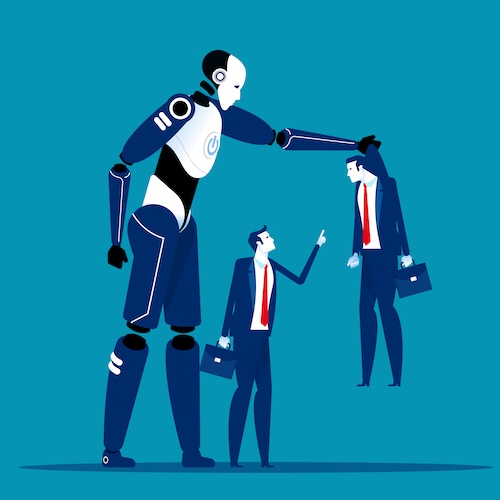
"For decades, the patent law firm business model rested on a relatively stable premise: companies needed outside counsel because patent work was specialized, labor-intensive, procedurally complex, and difficult to scale. Law firms supplied the expertise, staffing, production capacity, docket management systems, and professional judgment. Clients supplied the invention disclosures, strategic decision-making, and budgets. It was not always an elegant system, and it was certainly not always efficient, but the basic division of labor was well understood. That symbiotic relationship is now under pressure."
"Corporate clients are asking whether work being done by outside counsel is being performed as efficiently as possible and even starting to ask whether it needs to be performed by outside counsel at all. At least some in-house teams are wondering whether the same or better result can be achieved internally using AI-enabled tools. If the answer is yes, then clients can be expected to decrease reliance on outside counsel, looking to law firm attorneys for targeted support, not end-to-end project management."
"Artificial intelligence has accelerated this reassessment, but not always in the way many predicted. AI is not simply making patent work faster, cheaper, and easier. It is also creating new friction for outside counsel. A case in point is the creation of initial invention disclosures. Many clients are using AI before they have developed internal processes about what should be generated, what should be sent to outside counsel, and what outside counsel should be expected to do with the output received."
Patent law firm economics are changing as clients internalize more work, submit AI-generated disclosures, and demand predictable pricing. The traditional model relied on specialized, labor-intensive, procedurally complex work that law firms could staff, manage, and execute while clients provided invention disclosures, strategy, and budgets. Corporate clients now question whether outside counsel work is efficient and whether it is necessary at all. Some in-house teams consider using AI-enabled tools to achieve the same or better results internally. AI also introduces new friction, especially around initial invention disclosures, because clients may use AI before establishing internal processes for what to generate, what to send, and what outside counsel should do with the output. The sustainable role for outside counsel is therefore central.
#patent-law #ai-in-legal-services #law-firm-economics #invention-disclosures #client-in-house-strategy
Read at IPWatchdog.com | Patents & Intellectual Property Law
Unable to calculate read time
Collection
[
|
...
]