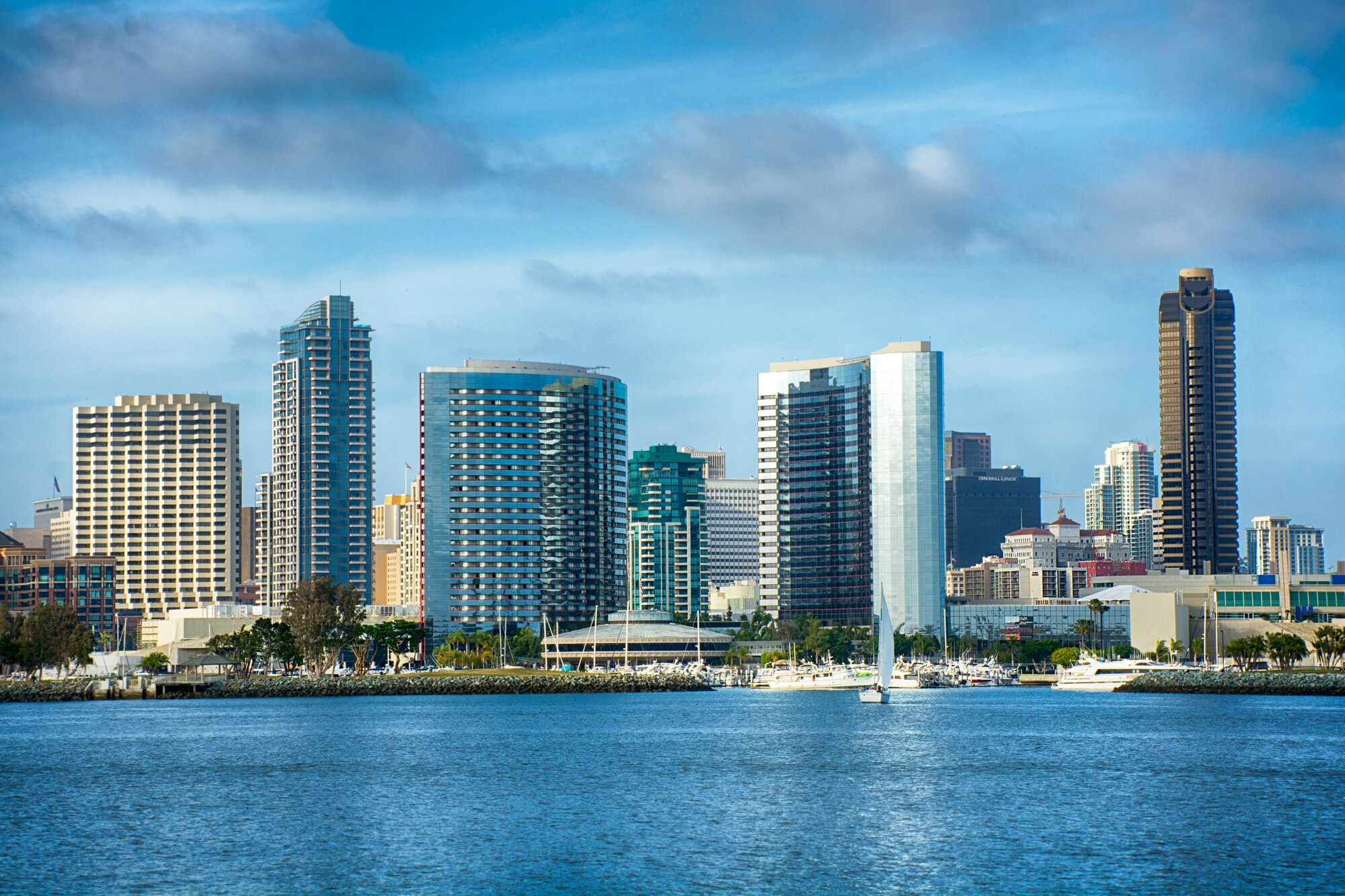
"Very close to the Mexican border, in the southwest corner of the United States, lies the city of San Diego. Its urban history began in 1769 with the arrival of a Spanish military expedition commanded by Gaspar de Portola, which marked the first permanent settlement in the territory that was known as Alta California. However, unlike the more formally urbanized administrative capitals and towns of Mexico and Central America, San Diego was conceived as a frontier outpost. Today, it has become the second-largest city in California, just after Los Angeles, and its urban grid tells a story about the Hispanic heritage that is intertwined with the contemporary cultural environment of the United States."
"To begin the conversation about San Diego, it is first necessary to briefly understand the geopolitical context of California in 1769. Back then, the region was part of the Viceroyalty of New Spain, a vast territory comprising parts of North America, Mexico, Central America, parts of the Caribbean, Venezuela, and the Philippines. By that time, cities like Mexico City, Antigua, and Comayagua had been working as administrative centers for over 200 years; in contrast, the region of Alta California was still unsettled."
"So, when the Spanish arrived, they were no longer looking to build big plazas with grand cathedrals; instead, they were trying to hold the territory against Russian expeditions and the expansion of the British colonies in the East. Thus, the founding of San Diego was ultimately utilitarian, as a way to establish presence and control in the territory."
San Diego’s urban history began in 1769 with a Spanish military expedition led by Gaspar de Portola, establishing the first permanent settlement in Alta California. The city was conceived as a frontier outpost rather than an administrative capital like Mexico City, Antigua, or Comayagua. In 1769, California was part of the Viceroyalty of New Spain, a large territory spanning parts of North America, Mexico, Central America, the Caribbean, Venezuela, and the Philippines. Alta California remained unsettled, so Spanish priorities focused on maintaining control and presence. The founding served utilitarian purposes, helping defend the region against Russian expeditions and British colonial expansion in the East. Today, San Diego is the second-largest city in California, and its urban grid reflects Hispanic heritage within a contemporary U.S. cultural environment.
Read at ArchDaily
Unable to calculate read time
Collection
[
|
...
]