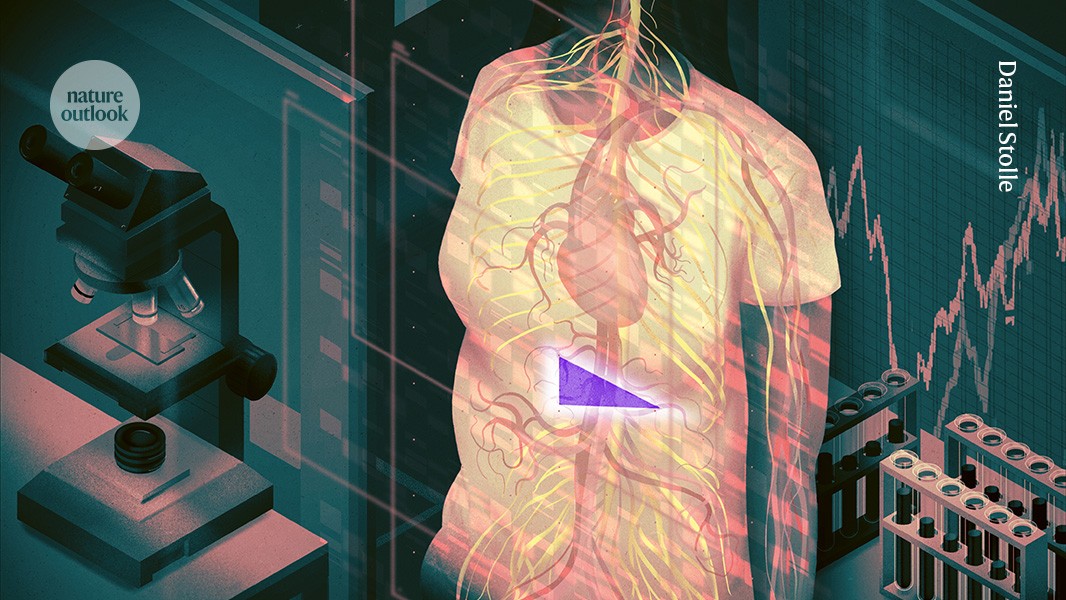
"Researchers are engaged in myriad efforts to tackle pancreatic cancer and further positive change could be on the horizon. Some of these efforts are focused on detecting the cancer before it has spread, when it might be easier to treat. These include simple blood tests that can spot proteins that are characteristic of the disease, as well as non-invasive breath tests. Other teams are trying to expand the pool of available therapies to include personalized vaccines that unleash the immune system on the proteins that drive a person's cancer."
"Scientists are also working to uncover hidden truths about how pancreatic cancer stakes a claim on the body. In the past decade or so, for instance, researchers have begun to learn how pancreatic tumours harness the nervous system to thrive in low-oxygen conditions and suppress the immune system. As researchers' understanding improves, these survival strategies could be leveraged to design therapies."
"Underlying all these endeavours are improved ways to model the disease. Pancreatic organoids - miniature versions of the organ that are cultured in a dish - are being used to explore what makes pancreatic cancer so deadly. These models can also be engineered to develop tumours that precisely match those found in individuals and that can then be used to test treatments."
Pancreatic cancer remains highly lethal but five-year survival has risen from 7% to 13% over a decade. Efforts aim to detect disease earlier using blood-based protein biomarkers and non-invasive breath tests. Therapeutic strategies include personalized vaccines to activate immune responses against tumor-specific proteins. Research reveals that pancreatic tumours exploit the nervous system to survive hypoxic conditions and to suppress immune activity, suggesting new therapeutic targets. Advanced disease modelling with patient-matched pancreatic organoids enables investigation of tumor biology and personalized treatment testing. Continued research into detection, biology, and modeling underpins cautious optimism for improved outcomes.
Read at Nature
Unable to calculate read time
Collection
[
|
...
]