"The next step is to really take this system into the real world and have someone use it in their home setting,"
"I want to make a caveat here that this hand is not as dexterous or easy to control as a natural, intact limb,"
"These prostheses are really dexterous, with high degrees of freedom,"
"Skin surface electromyography is very noisy, so improving this interface with things like internal electromyography or using neural implants can really improve the algorithms we already have,"
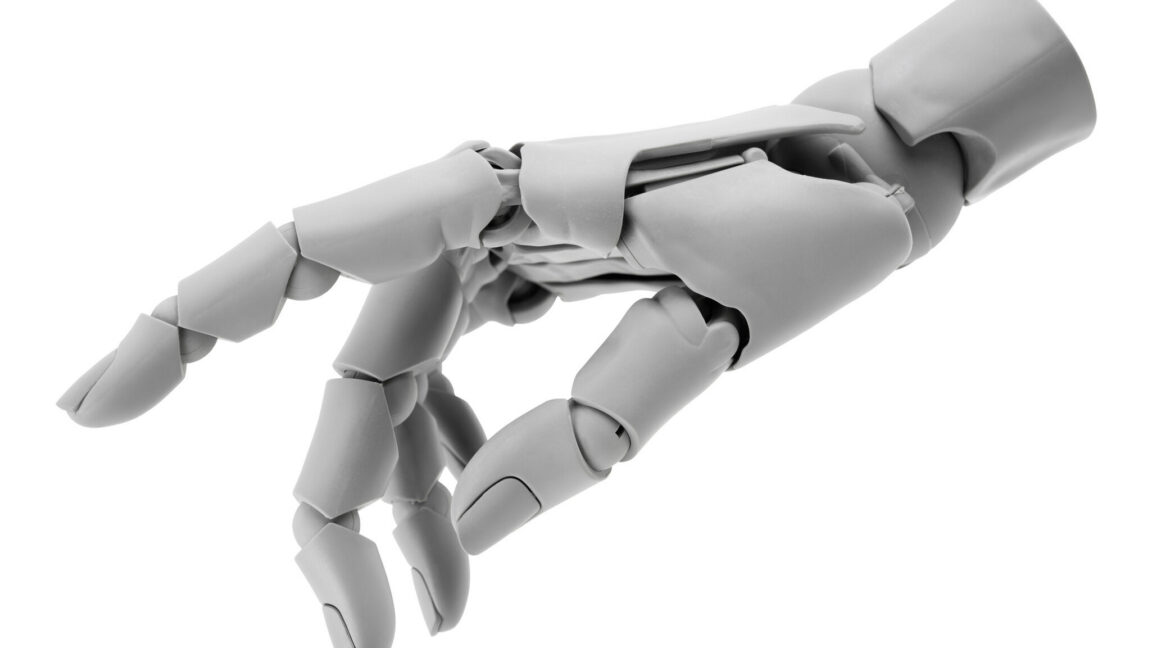
Intact and amputee participants manipulated fragile objects using an AI-powered prosthetic hand; without AI success was roughly 10–20 percent and with AI it rose to 80–90 percent. The AI also reduced users' cognitive burden, requiring less focused effort to operate the hand. Performance so far was measured in controlled laboratory conditions with selected objects and settings, and real-world in-home testing remains the next step. Current prostheses are less dexterous and harder to control than natural limbs, and control limitations stem from noisy surface electromyography; internal EMG or neural implants could improve interfaces and control algorithms.
Read at Ars Technica
Unable to calculate read time
Collection
[
|
...
]