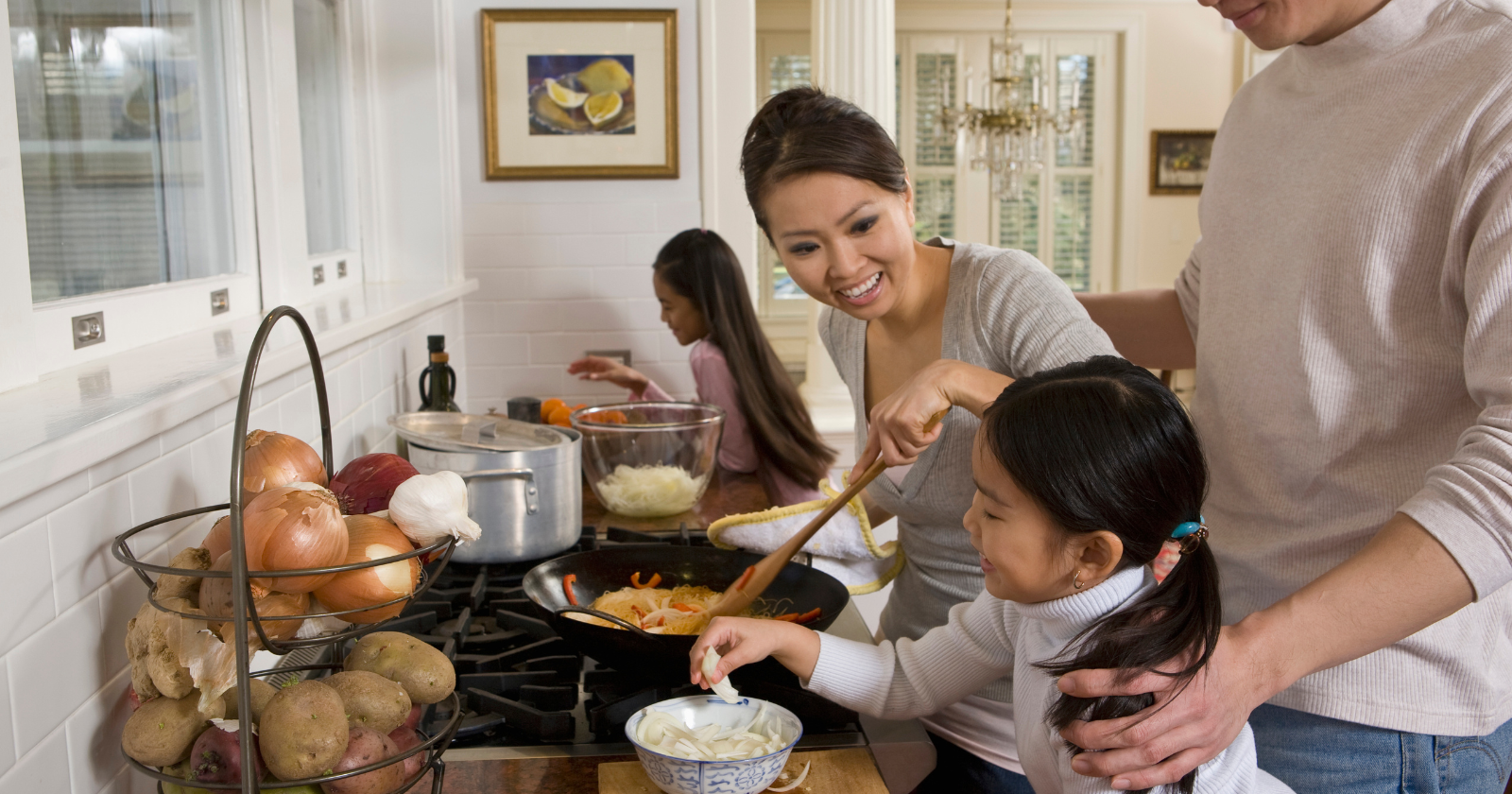
"In our rush to enroll kids in every enrichment activity imaginable, have we somehow forgotten about something fundamental? The humble family meal. Hear me out. Researchers have noted that "Children who routinely eat their meals together with their family are more likely to experience long-term physical and mental health benefits." But here's what struck me when I dove into this: it's not really about the food at all."
"Kids who regularly eat with their families show lower rates of depression, anxiety, and substance abuse. They're even less likely to develop eating disorders or engage in risky behaviors as teenagers. But why? What makes sitting around a table together so powerful? Well, think about what happens during a typical family meal. Parents ask about school. Kids complain about homework or friends. Someone shares a funny story from their day."
"Experts often encourage people to eat with their kids but they're often not talking about food. For instance, the folks at Character Lab wrote this in a Psychology Today post: "recognize that breaking bread is often less about the food itself than the connection" The family dinner table also becomes a training ground for real-world communication. Kids learn to articulate their thoughts, listen to others, and participate in the natural flow of conversation."
Routine family meals correlate with long-term physical and mental health benefits for children, including lower rates of depression, anxiety, substance abuse, eating disorders, and teen risky behaviors. Family dinners function less as food-centered events and more as sites of connection where everyday exchanges build emotional intelligence and communication skills. Typical mealtime interactions — asking about school, sharing frustrations, telling stories — teach children to articulate thoughts, listen, and engage in conversational flow. The dinner table provides a training ground for observing adult stress management, sharing successes, and resolving disagreements. Breaking bread often emphasizes connection over the food itself.
Read at Silicon Canals
Unable to calculate read time
Collection
[
|
...
]