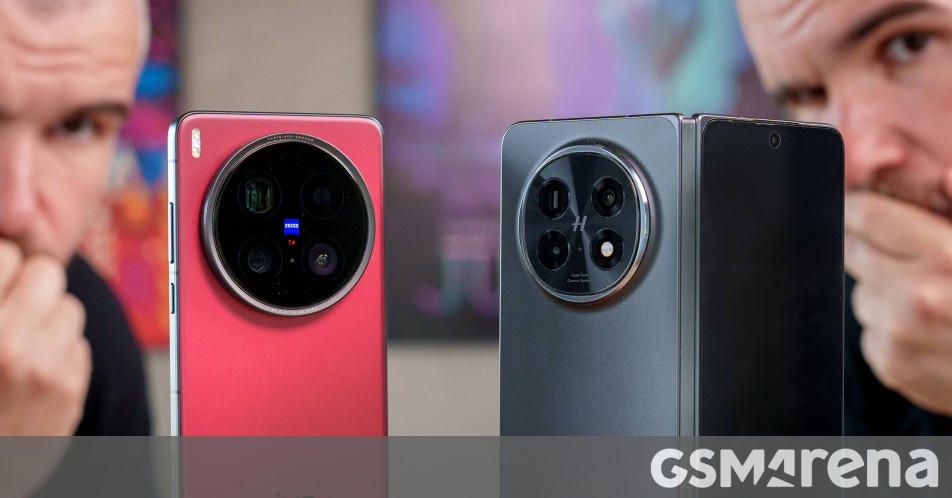
"Most of my colleagues and I choose a flagship phone as our daily driver. That choice was down to the brand and its way of doing software. There was a time when we were evenly split between the current iPhone and the current Galaxy. Then came the Pixels, which had a bunch of fans for a while. Then came a sort of Samsung domination of our pockets. But that has mostly passed too (just look at last year's top 5 phones lists)."
"Over the years, fewer of our editors and reviewers use an iPhone, fewer still use a Galaxy, as I observe a strong shift towards using (and loving) flagships from Chinese brands - Xiaomi, vivo, Honor, Oppo, and OnePlus. It started when these brands began pushing the camera hardware, first adding 1-inch sensors and more recently, revolutionizing zoom cameras. I remember when I tried the vivo X100 Ultra's 85mm zoom camera for the first time - it blew me away. It made my Galaxy S24 Ultra look pedestrian by comparison, and I soon switched over to vivo's flagship and haven't looked back."
Longtime smartphone reviewers have shifted their daily phones away from iPhone and Galaxy toward Chinese flagships such as Xiaomi, vivo, Honor, Oppo, and OnePlus. The shift accelerated when these brands improved camera hardware, introducing larger 1-inch sensors and innovative zoom systems. High-quality telephoto performance, exemplified by the vivo X100 Ultra's 85mm zoom, convinced several reviewers to change brands. Choices vary by priority: some prioritize world-class camera arrays, while others select foldables for form-factor advantages. Brand software and ecosystem used to be primary drivers, but camera capability now plays a dominant role.
Read at GSMArena.com
Unable to calculate read time
Collection
[
|
...
]