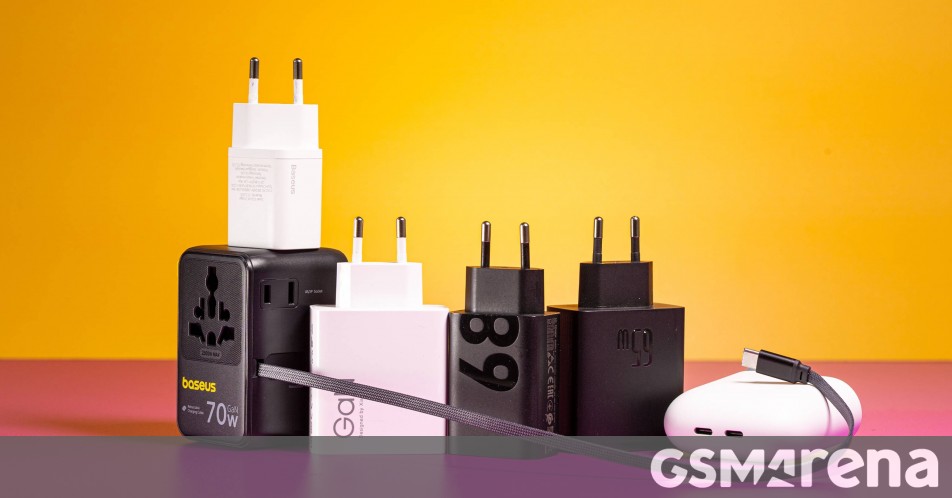
"The main problem is that the U in USB is a lie - it's universal only if you are okay with outdated data speeds and slow charging. If you want more than 480Mbps and 10W, then things are a lot more fractured. There are standards that come from the USB Implementers Forum and all phones do support them as a baseline. And that is a good place to start, but even that is not so simple as new protocols get introduced."
"We have tested phones with 200+ watt charging support and while they are quite impressive, most of you don't need that much most of the time. You might not even need a 100W charger. For example, recently we tested the OnePlus 15, which has a massive 7,300mAh battery and supports super fast 120W charging. However, that uses a proprietary standard (more on that later). We also tested it with a standard 55W USB PPS charger. Here is how that went:"
Phone chargers are no longer universally included, so users must choose chargers themselves. The U in USB is misleading because baseline USB supports outdated data speeds and limited charging power, while higher speeds and power are fragmented. USB Implementers Forum standards exist and provide a baseline that most phones support, but new protocols and proprietary maker technologies create compatibility complexity. Extremely high wattage charging is often unnecessary for typical use, and the real-world difference versus mid-range fast chargers can be small. USB-C defines the plug and cable, while USB Power Delivery defines higher-power electrical behavior.
Read at GSMArena.com
Unable to calculate read time
Collection
[
|
...
]