"Last month's Supreme Court decision in Louisiana v. Callais, effectively narrowing Section 2 of the Voting Rights Act-thus making it harder to challenge voting maps that dilute minority voting strength-shocked many who saw the VRA as set in stone. But for many who lived through, or even have studied, the Civil Rights Era, it was a reminder that the fight for equality is never over, and the voices that drove the push for civil rights should echo now more loudly than ever."
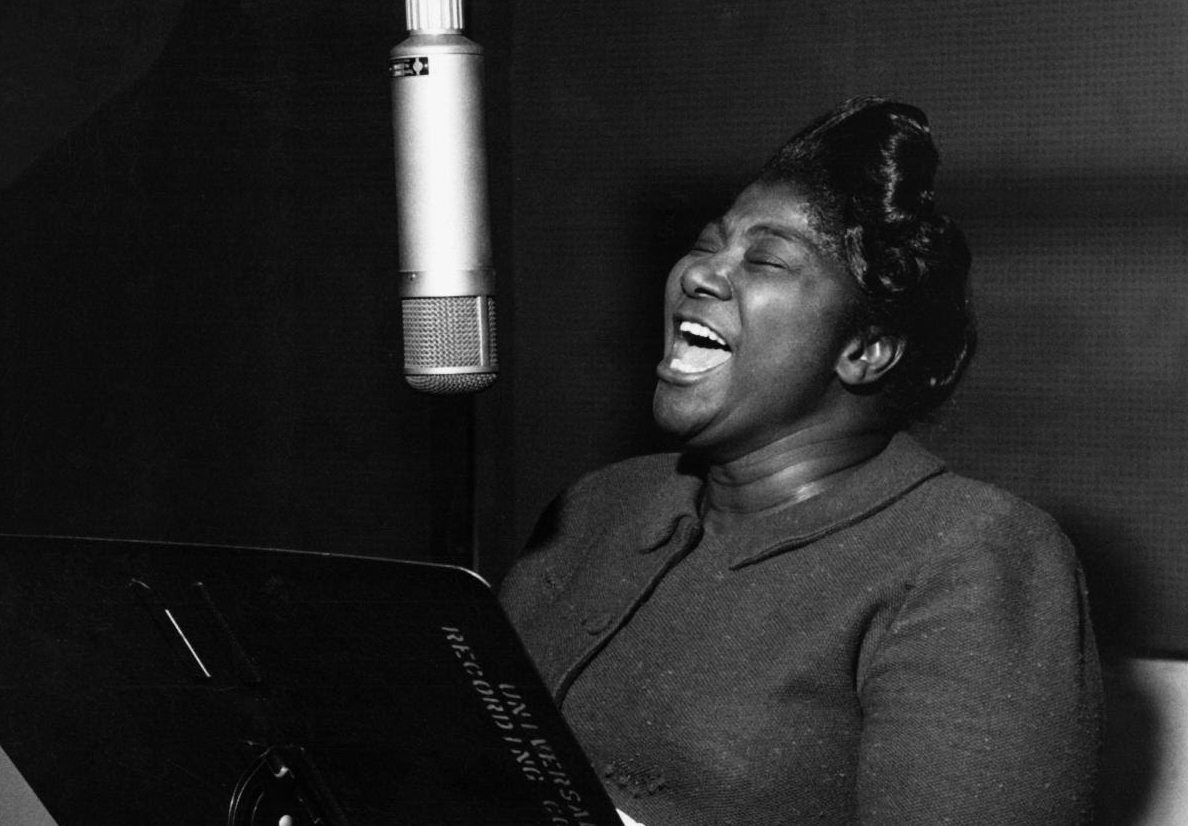
"Over 11 tracks in three parts, the record features new compositions and arrangements for the string quartet, utilizing archival audio from two moments in Jackson's history: a 1957 live performance of gospel and spirituals in her adopted hometown of Chicago, and a 1963 interview with her friend, the radio broadcaster Studs Terkel, covering Jackson's working life in the South, the prejudice she faced as a Black woman, and her involvement in Dr. Martin Luther King, Jr.'s civil right efforts."
""I was at home late one night flipping through television channels, as one does," said Kronos Quartet founder David Harrington. "I landed on C-SPAN, and there was an interview with Dr. King's lawyer and speechwriter Clarence B. Jones. He was telling the story of composing the speech that came to be known as the 'I Have A Dream' speech, how special that was, and how as he was writing it he heard Martin's voice internally, and wrote what he heard. I immediately understood, because this is what composers do: communicate the music they hear inside them.""
A Supreme Court decision in Louisiana v. Callais narrowed Voting Rights Act Section 2, making it more difficult to challenge voting maps that dilute minority voting strength. The change shocked people who viewed the VRA as settled law, while others saw it as a reminder that equality efforts continue. A new Kronos Quartet release, Glorious Mahalia, centers Mahalia Jackson’s life and music as a gospel singer and civil rights hero. The album uses new compositions and string-quartet arrangements alongside archival audio from a 1957 Chicago performance and a 1963 interview with Studs Terkel. The project also draws inspiration from a serendipitous connection between Jackson and Dr. King, including the creation story behind the “I Have A Dream” speech.
Read at 48 hills
Unable to calculate read time
Collection
[
|
...
]