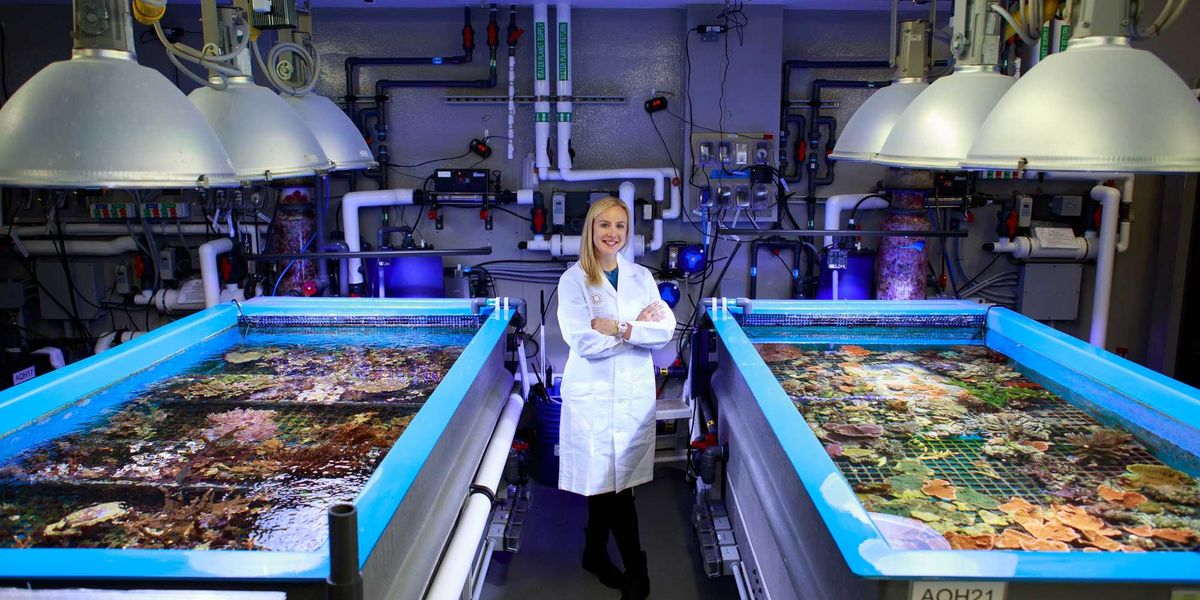
"CoRL began in 2018; and while it might seem odd to have coral reef scientists in San Franciscoa place without any nearby coral reefsthe region actually has something incredibly valuable to contribute to the fight to save imperiled reefs around the world. The coral regeneration lab at the Cal Academy(Courtesy of California Academy of Sciences) The real benefit is the incredible amount of academic and technical innovation and expertise that's housed in the Bay Area, says Dr. Elora Lopez-Nandam, senior research scientist at the Academy."
"We have collaborators at Berkeley, we have collaborators at Stanford, we have collaborators at NASA Ames. It's really elevated the level of the coral science that we can do. Although coral reefs only account for 1 percent of the ocean surface, more than 25 percent of marine species live in them at some point in their life. Coral reefs play a dynamic role in ocean health, protect coastlines, and generate billions of dollars through global tourism and fisheries."
"Since they can't move to find a mate, most coral species are broadcast spawners, meaning colonies release thousands of sperm and eggs (about the size of a sesame seed) into the water column at the same time. Spawning events typically only happen once a year. According to the National Oceanic and Atmospheric Administration (NOAA), in partnership with the International Coral Reef Initiative, bleaching-level heat stress has impacted 84 percent of the world's coral reefs, making the odds of reproductive success even lower."
"When the population density of a coral reef drops, so do the chances of a sperm and an egg finding each other; the ocean is a large place."
The California Academy of Sciences in Golden Gate Park houses the Coral Regeneration Lab (CoRL), a rare aquarium facility where coral successfully reproduce. CoRL began in 2018 and leverages the Bay Area’s academic and technical innovation to advance coral science. Coral reefs cover about 1 percent of the ocean surface but support more than 25 percent of marine species at some point in their life. Coral reefs protect coastlines and contribute billions of dollars through tourism and fisheries. Many coral species are broadcast spawners that release sperm and eggs into the water column once a year. Heat stress from bleaching has affected 84 percent of the world’s coral reefs, reducing reproductive success. Lower population density makes it harder for sperm and eggs to meet in the ocean.
#coral-reproduction #marine-conservation #aquarium-research #coral-bleaching #san-francisco-bay-area
Read at www.7x7.com
Unable to calculate read time
Collection
[
|
...
]