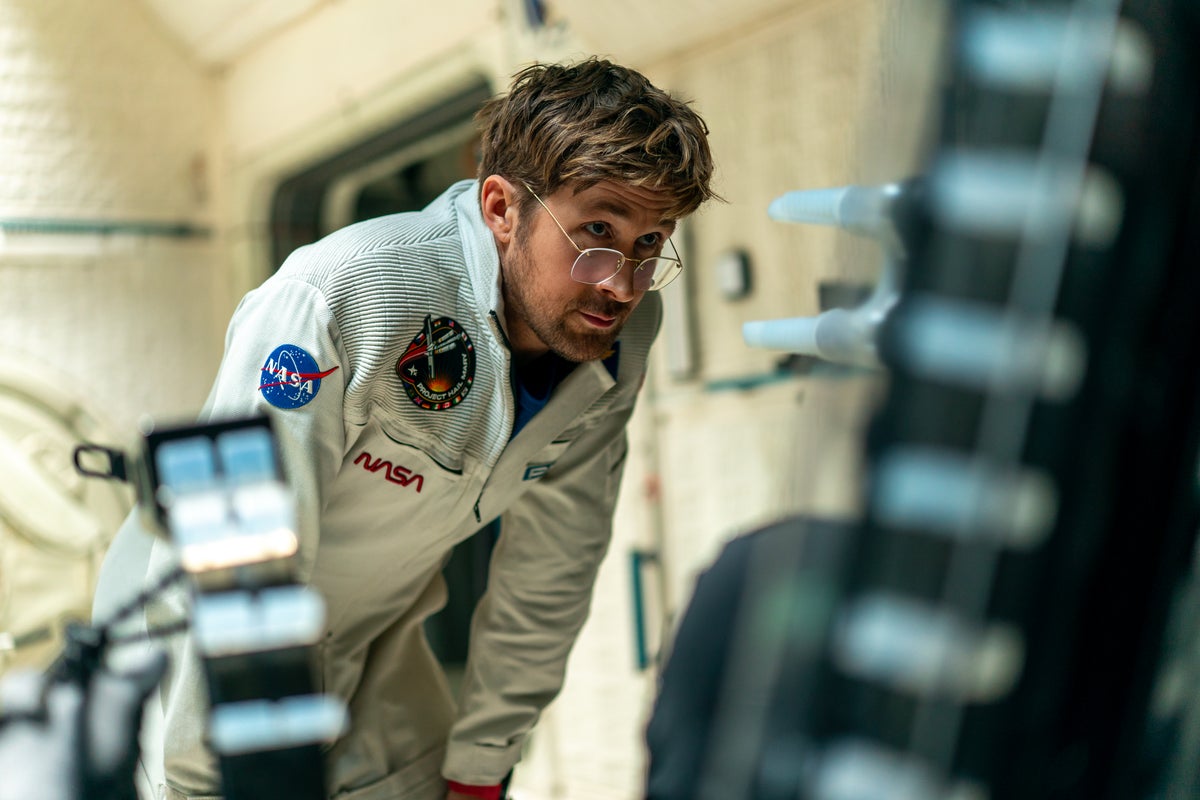
"The movie is largely based in science, from the names of the stars—Tau Ceti is very much a real star—to its depictions of artificial gravity. Aside from some fuzzy quantum physics and fictional sun-eating microbes called Astrophage, everything else just follows established physics and science."
"In the book, Grace understands his sleep condition to be something akin to a medically induced coma, or a form of suspended animation. He's hooked up to an IV and feeding tubes and receives constant medical care from an onboard robot."
"Putting someone into a pharmacological coma for long-term space travel would be tricky. It wouldn't meaningfully slow the body's metabolism, which means it might not change the body's demands for food or oxygen."
"At a certain point, the drugs become toxic. However, it would be possible to slow metabolism down in a kind of induced hibernation-like state, or synthetic torpor, as many animals do."
Ryland Grace, portrayed by Ryan Gosling, awakens on a spaceship tasked with saving the sun. The film, based on Andy Weir's novel, incorporates real scientific concepts, including artificial gravity and the star Tau Ceti. While some elements, like the fictional Astrophage, are imaginative, much of the science aligns with established physics. Grace's sleep condition resembles a medically induced coma, but experts note that achieving a pharmacological coma for long-term space travel poses challenges, including metabolism and toxicity issues. Induced hibernation could be a viable alternative for slowing metabolism.
Read at www.scientificamerican.com
Unable to calculate read time
Collection
[
|
...
]