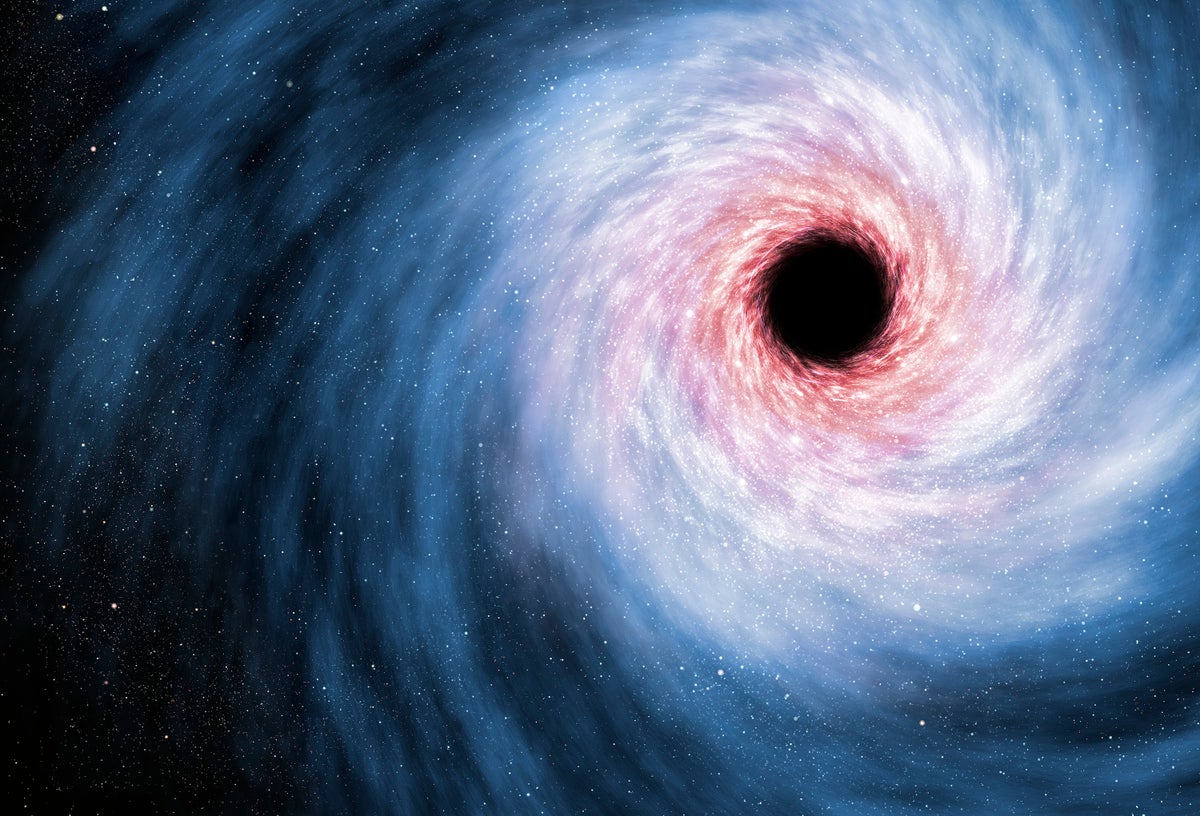
"Scientists have seen something spectacular unfolding in Andromeda, our neighboring spiral galaxy, located some 2.5 million light-years away from Earth. The spectacular part is actually what they didn't see: instead of exploding as a bright supernova, a massive star there seems to have simply vanished. This case of now you see it, now you don't isn't some cosmic magic trick; it appears to be a black hole being born, right before our far-gazing eyes."
"Astronomers know that stars of about eight solar masses or more eventually collapse under their own weight when they run out of thermonuclear fuel in their core. The overlying layers fall inward, compressing the core into a city-sized ball of neutronsa neutron starand rebounding outward from the core in star-shaking shockwaves. The star explodes as a supernova when the shockwaves reach the surface, leaving the naked neutron star behind."
A massive star in the Andromeda galaxy appears to have disappeared without producing a bright supernova, consistent with a failed supernova that directly produced a black hole. In typical core collapse, overlying stellar layers fall inward, compressing the core into a neutron star and generating shockwaves that eject the outer layers as a supernova. In the most massive stars, those shockwaves can fizzle, preventing an outward explosion and allowing gravity to drive a direct collapse to a black hole. The Andromeda case would be the closest, strongest candidate yet observed for such a black hole birth without an observable supernova.
Read at www.scientificamerican.com
Unable to calculate read time
Collection
[
|
...
]