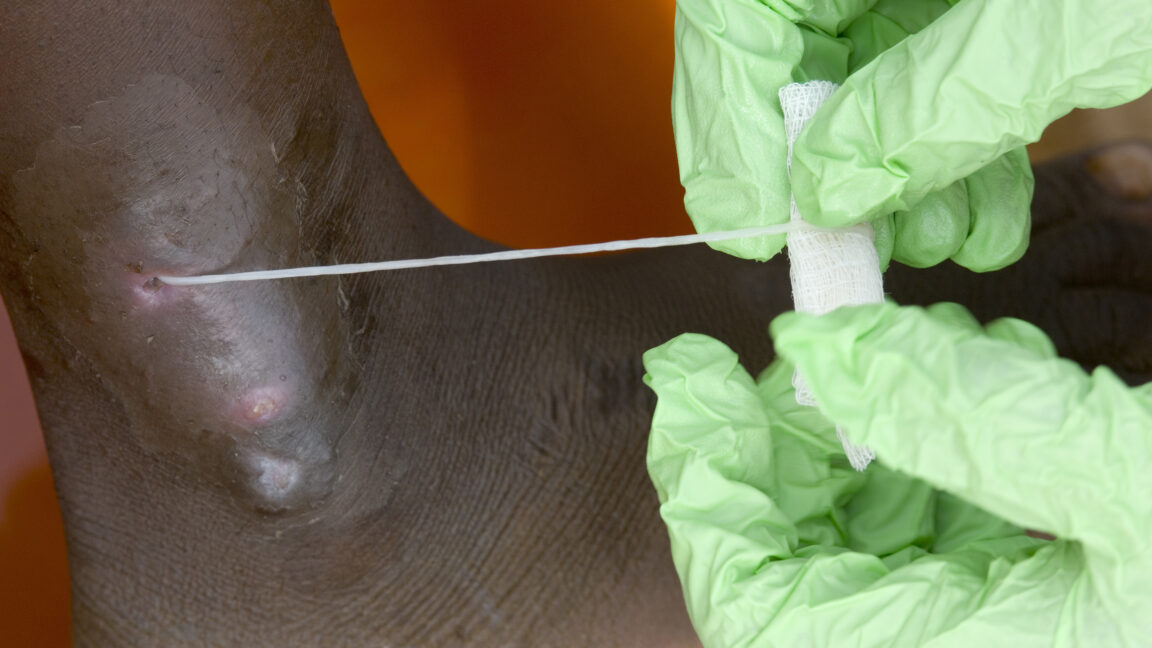
"Guinea worm ( Dracunculus medinensis) is a parasitic nematode transmitted in water. More specifically, it's found in waters that contain small crustacean copepods, which harbor the worm's larvae. If a person consumes water contaminated with Guinea worm, the parasites burrow through the intestinal tract and migrate through the body. About a year later, a spaghetti noodle-length worm emerges from a painful blister, usually in the feet or legs."
"It can take up to eight weeks for the adult worm to fully emerge. To ease the searing pain, infected people may put their blistered limbs in water, allowing the parasite to release more larvae and continue the cycle. In addition to being extremely painful, the disease (dracunculiasis) can lead to complications, such as secondary infections and sepsis, which in turn can lead to temporary or permanent disability."
"When the Guinea worm eradication program began in 1986, there were an estimated 3.5 million cases across 21 countries in Africa and Asia. To date, only six countries have not been certified by the World Health Organization as Guinea worm-free. In 2024, there were just 15 cases, and, according to the provisional tally for 2025, the number is down to just 10."
Guinea worm is a waterborne parasitic nematode transmitted via copepods that contain larvae. Ingesting contaminated water allows larvae to burrow through the intestinal tract, migrate, and about a year later an adult worm emerges from painful blisters usually on feet or legs. Emergence can take up to eight weeks, and affected people may immerse blistered limbs in water, continuing transmission. The disease causes severe pain and can lead to secondary infections, sepsis, and temporary or permanent disability. Eradication efforts began in 1986 with 3.5 million cases; the provisional 2025 tally shows only ten human cases pending confirmation.
Read at Ars Technica
Unable to calculate read time
Collection
[
|
...
]