Python
Python
[ follow ]

fromRealpython
1 day agoThe LEGB Rule & Understanding Python Scope Quiz - Real Python
In this quiz, you'll test your understanding of The LEGB Rule & Understanding Python Scope. By working through this quiz, you'll revisit how Python resolves names using the LEGB rule, what the local, enclosing, global, and built-in scopes look like in practice, and how the global and nonlocal statements let you reach across scope boundaries.
Python
Python
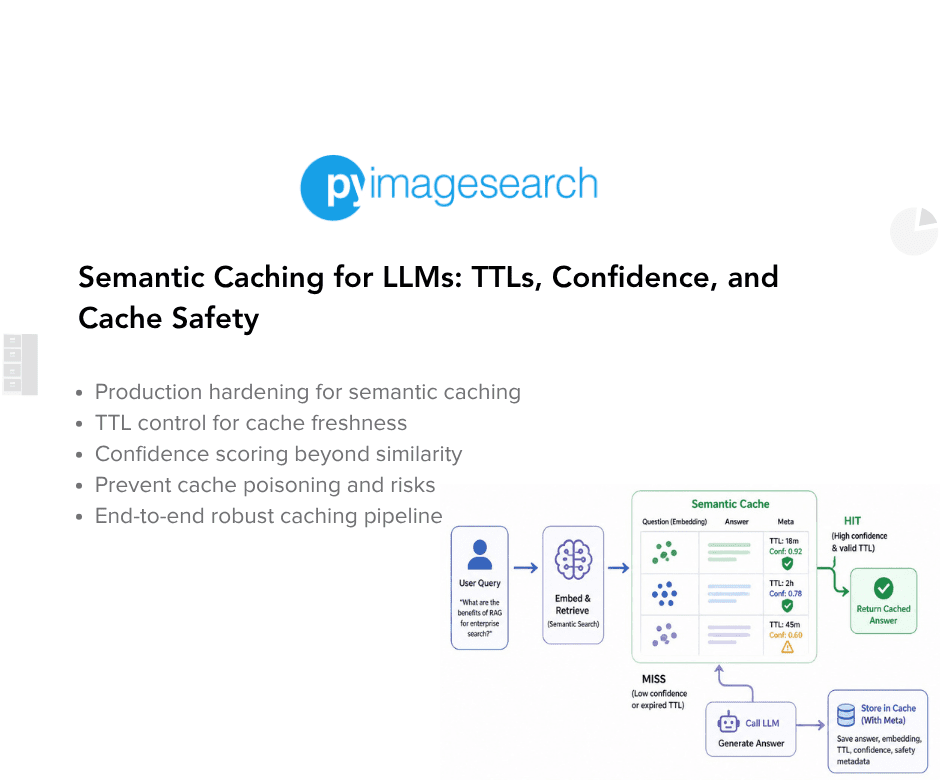
fromPyImageSearch
2 days agoBuilding and Training a Kimi-K2 Model Using DeepSeek-V3 Components - PyImageSearch
Agentic intelligence enables LLMs to perceive, plan, reason, and act through interaction, and Kimi-K2 delivers strong benchmark and leaderboard performance with architectural innovations.
fromRealpython
5 days agoMemory Management in Python Quiz - Real Python
In this quiz, you'll test your understanding of Memory Management in Python. By working through this quiz, you'll revisit how Python handles memory allocation and freeing, the role of the Global Interpreter Lock, and how CPython organizes memory using arenas, pools, and blocks.
Python
fromRealpython
5 days agoEpisode #294: Declarative Charts in Python & Discerning Iterators vs Iterables - The Real Python Podcast
Altair follows a declarative approach where you specify which columns go to which axis, the type of chart or plot, and what should be interactive. Most tools require you to write detailed boilerplate code to set up the axis and figure.
Python
Python
fromThe JetBrains Blog
6 days agoPython Unplugged on PyTV: Key Takeaways From Our Community Conference | The PyCharm Blog
Python Unplugged on PyTV successfully delivered a fully online community conference on March 4, 2026, featuring 13 talks, expert panels, and interactive content with thousands of live viewers worldwide.
fromTalkpython
6 days agoParallel Python at Any Scale with Ray
Ray was originally built for reinforcement learning research, then quietly faded as RL hit a wall. Until ChatGPT showed up. Suddenly reinforcement learning was back, as the post-training step that turns a raw language model into something genuinely useful.
Python
fromThe JetBrains Blog
2 weeks agoUsing Bag-of-Words With PyCharm | The PyCharm Blog
The bag-of-words model is a text representation technique that converts unstructured text into numerical vectors by tracking which words appear across a corpus. Rather than preserving grammar or word order, it simply represents each document as a 'bag' of its words, recording how often each one appears.
Python



fromPyImageSearch
1 month agoAgentic AI Vision System: Object Segmentation with SAM 3 and Qwen - PyImageSearch
Agentic AI systems are designed to interpret user requests, select the appropriate models or tools, evaluate intermediate outputs, and refine their decisions over multiple steps. This iterative reasoning loop enhances the segmentation process significantly.
Python
fromPycon
1 month agoStories from the PyCon US Hotels
"One story stands out to me beyond getting to know each other and sharing ideas. When I was getting ready to give my first PyCon talk in Montreal, Selena Deckelmann offered to help review my slides and listen to me practice. We spent a few hours on the floor of her hotel room prepping while her very young daughter crawled around on the floor and chewed on my PyCon badge since she was teething. It's still one of my favorite PyCon and PyLadies memories." - Carol Willing, Willing Consulting
[ Load more ]