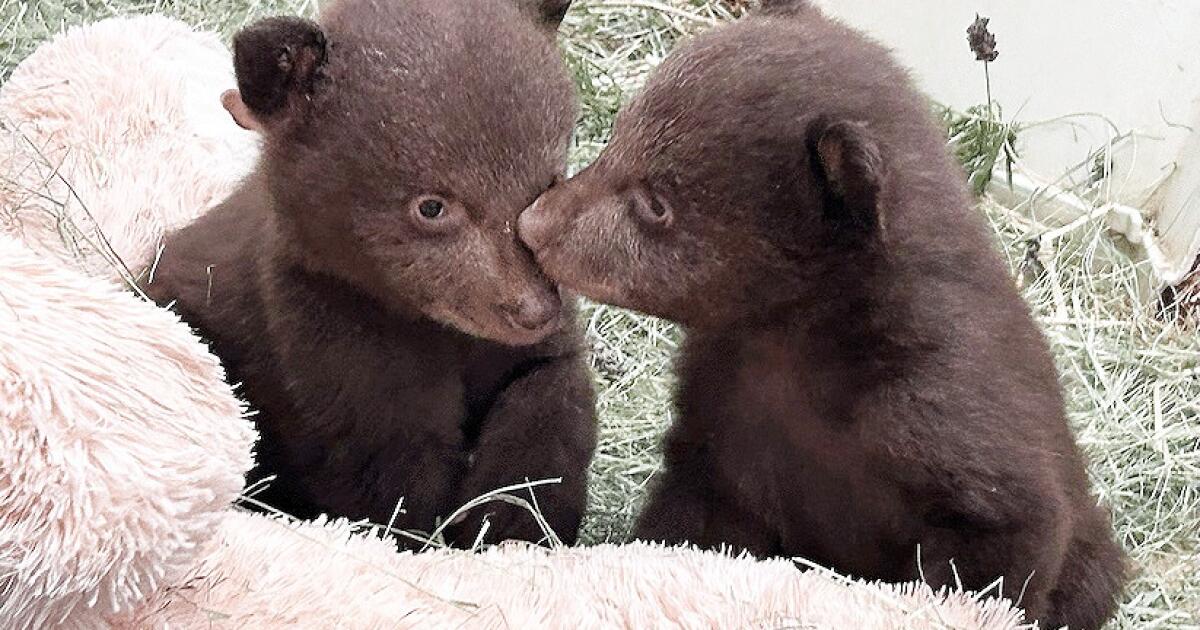
"When state wildlife officials euthanized "Blondie" the bear over the objections of local elected leaders in March, it was unclear if her two orphaned bear cubs would ever be able to live in the wild again. The tiny furry creatures weighed just 5.8 and 7.6 pounds. They required spoon-feedings four times a day. And they could not be allowed to recognize humans, as this would hinder their development of survival skills."
"But now the 4-month-old brothers have reached a promising stage in their journey toward independence, successfully transitioning into an outdoor habitat and starting to feed independently at the San Diego Humane Society's Ramona Wildlife Center. "Moving outside is a big step," said Autumn Welch, wildlife operations manager at the Humane Society, in a statement Tuesday. "The cubs are gaining confidence, exploring and learning the skills they'll need to survive on their own.""
"The San Diego Humane Society is doing everything it can to mimic how the bears would grow up in the wild. Staff started out by wearing bear masks and animal furs, then crawling into the enclosure to spoon-feed the cubs formula. Now the cubs are feasting on solid foods and love fruits and leaves from native plants, and they'll continue exploring the larger outdoor area as they grow more confident."
"The swiftness with which Blondie was killed and the seeming lack of consideration for the fate of her offspring sparked outrage as, typically, cubs would remain close to their mother for the first 18 months of their life. "The city was not a part of that conversation or decision [to euthanize]," Monrovia Mayor Becky Shevlin said in March. "We were absolutely devastated, especially when you thi"
State wildlife officials euthanized a mother bear, leaving two orphaned cubs that weighed 5.8 and 7.6 pounds. The cubs required spoon-feedings four times daily and could not be allowed to recognize humans to protect their survival development. After four months, the cubs reached a stage of independence, moving into an outdoor habitat at the San Diego Humane Society’s Ramona Wildlife Center. Staff mimicked wild upbringing by using bear masks and animal furs and feeding the cubs while crawling into the enclosure. The cubs now eat solid foods and enjoy fruits and leaves from native plants, while continuing to explore the larger outdoor area as confidence grows.
#wildlife-rehabilitation #orphaned-bear-cubs #outdoor-habitat-transition #human-wildlife-management #san-diego-humane-society
Read at Los Angeles Times
Unable to calculate read time
Collection
[
|
...
]