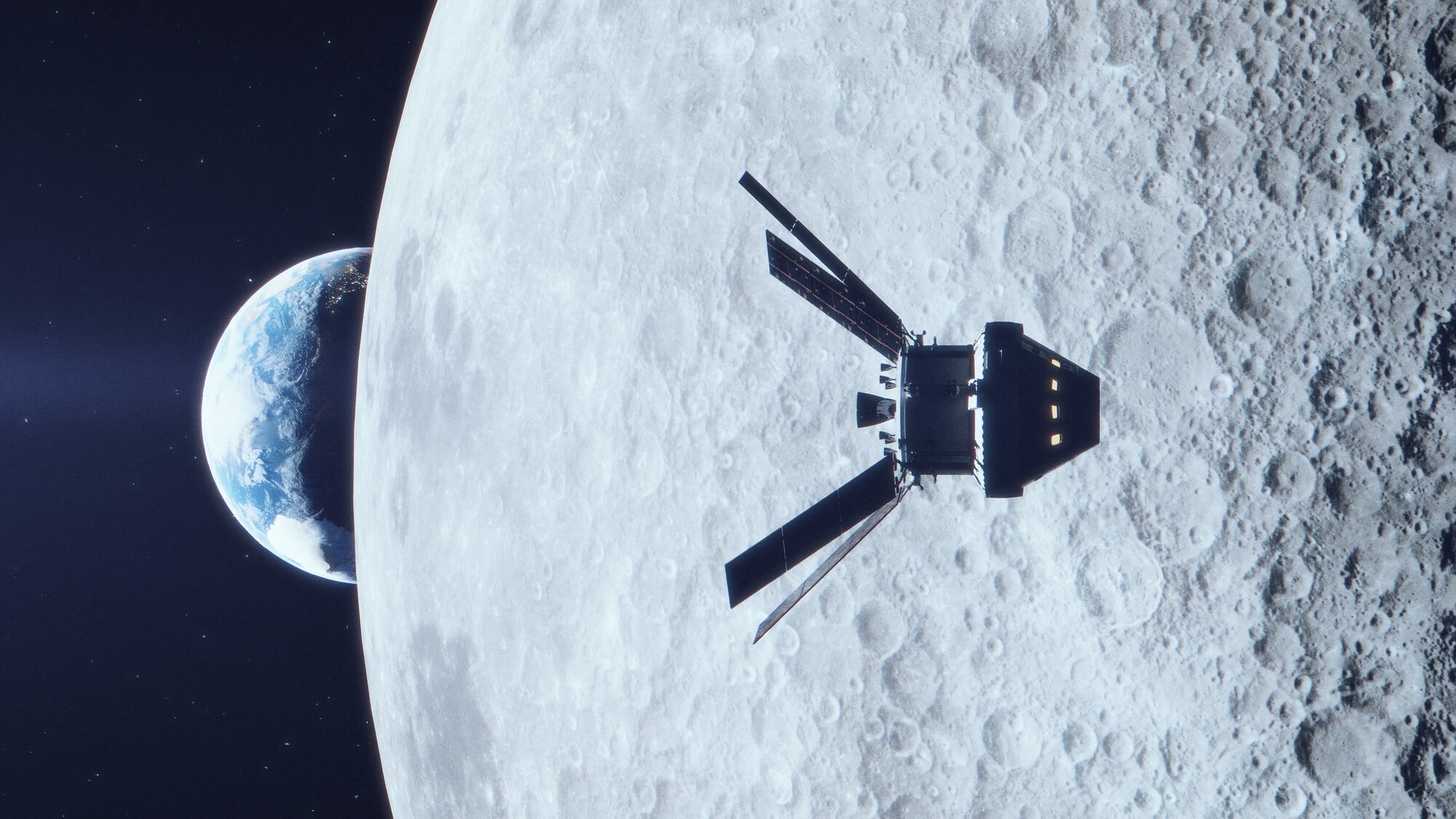
"It was July 1969, and people on planet Earth were about to witness a historical moment for humanity: the first time a human being stepped on the surface of the Moon aboard the Apollo 11 mission. After this event, NASA landed five more times on the lunar surface, with the last one being Apollo 17 in 1972. Since then, humans have not attempted to return to the Moon until this year,"
"2026, when they will launch the Orion spacecraft as part of the Artemis II Mission. Planned to set off between February and April 2026, Orion will not yet land people on the Moon, instead it will make a flyby, in order to allow testing of the software and systems. This will set the base for an actual human landing on the Moon's South Pole as part of Artemis III sometime between 2027 and 2028, eventually opening a brand new era in Extraterrestrial architectural design."
Artemis II will launch the Orion spacecraft between February and April 2026 on a 10-day, 685,000-mile (1,102,404 km) flyby mission to test software and systems without landing. The mission will carry four astronauts (three from the United States and one from Canada). Orion will consist of two parts: a crew module serving as the main living and working space, and a service module supplying essentials like potable water and air. Both parts together measure 7.3 m in height by 5.2 m in width. The flyby will pave the way for Artemis III, targeting a human landing near the Moon's South Pole between 2027 and 2028 and enabling new extraterrestrial architectural design.
Read at ArchDaily
Unable to calculate read time
Collection
[
|
...
]