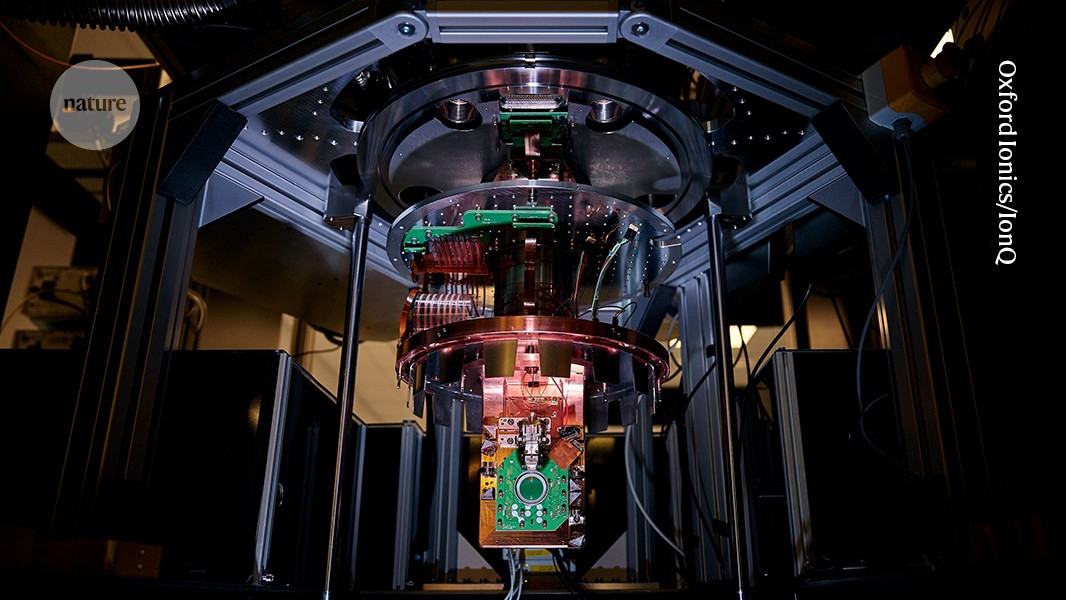
"The pace of progress in the field has picked up dramatically, especially in the past two years or so, along several fronts. Teams in academic laboratories, as well as companies ranging from small start-ups to large technology corporations, have drastically reduced the size of errors that notoriously fickle quantum devices tend to produce, by improving both the manufacturing of quantum devices and the techniques used to control them. Meanwhile, theorists better understand how to use quantum devices more efficiently."
"The latest developments are exciting to physicists because they address some of the main bottlenecks preventing development of viable quantum computers. These devices work by encoding information in qubits, which are units of information that can take on not just the values 0 or 1, like the bits in a classical computer, but also a continuum of possibilities in between. The prototypical example is the quantum spin of an electron, which is the quantum analogue of a magnetic needle"
Progress in quantum computing has accelerated, making machines capable of complex tasks plausible within a decade. Manufacturing improvements and advanced control techniques have drastically reduced qubit error rates in both academic and corporate labs. Theoretical advances allow more efficient use of noisy devices. Qubits encode information beyond classical 0/1 values, exemplified by electron spin as a quantum analogue of a magnetic needle. Gate operations manipulate qubit states but remain error-prone, motivating efforts in error reduction and mitigation. These combined hardware and algorithmic gains address major bottlenecks and shorten previously projected timelines for functional quantum computation.
Read at Nature
Unable to calculate read time
Collection
[
|
...
]