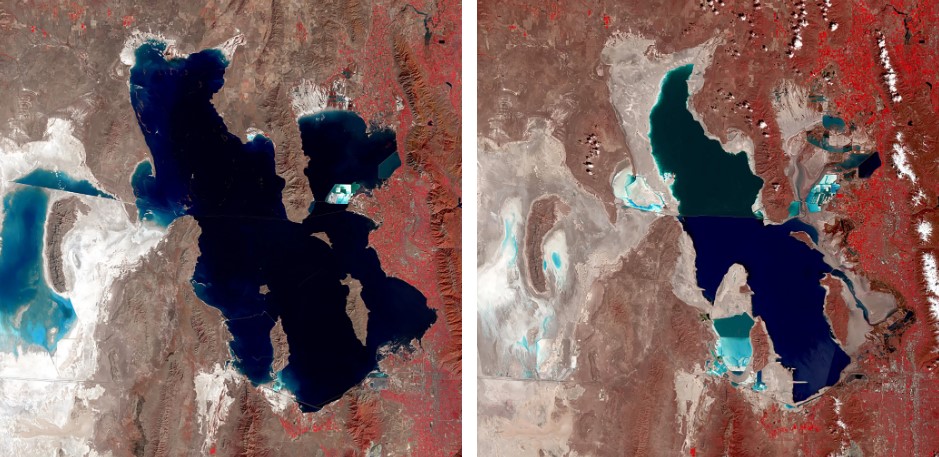
"Resorts such as Alta and Snowbird regularly see average annual snowfall totals north of 500 inches of light, dry snow. This is no coincidence, as these mammoth totals are largely thanks to a phenomenon known as the lake effect, in which cold air moving over a body of water picks up moisture from the lake's surface. That moisture is then deposited in nearby mountains as light, fluffy snow-perfect for skiing and riding (or just skiing, in Alta's case)."
"As the population of Salt Lake City and the surrounding area continues to grow, more water is required to sustain the region. As a result, large volumes of water that would normally flow into the Great Salt Lake have been diverted to support housing and agriculture, steadily lowering lake levels, according to NASA. In recent years, the decline has been dramatic. The lake's elevation is now nearly eight feet lower than it was just twelve years ago."
Utah ski resorts receive massive snowfall primarily because lake-effect processes over the Great Salt Lake deliver light, dry snow to nearby mountains. Resorts adjacent to the lake gain roughly 10% more snowfall, with some averages exceeding 500 inches annually. Growing regional water demand has diverted volumes that once flowed into the lake for housing and agriculture, causing dramatic declines in elevation, surface area, and volume. The lake now holds about a quarter of its natural volume and could effectively vanish by 2030 if trends continue. Loss of the lake would harm wildlife, worsen air quality, and reduce ski-area snowfall, prompting calls for steep water-use reductions.
Read at SnowBrains
Unable to calculate read time
Collection
[
|
...
]