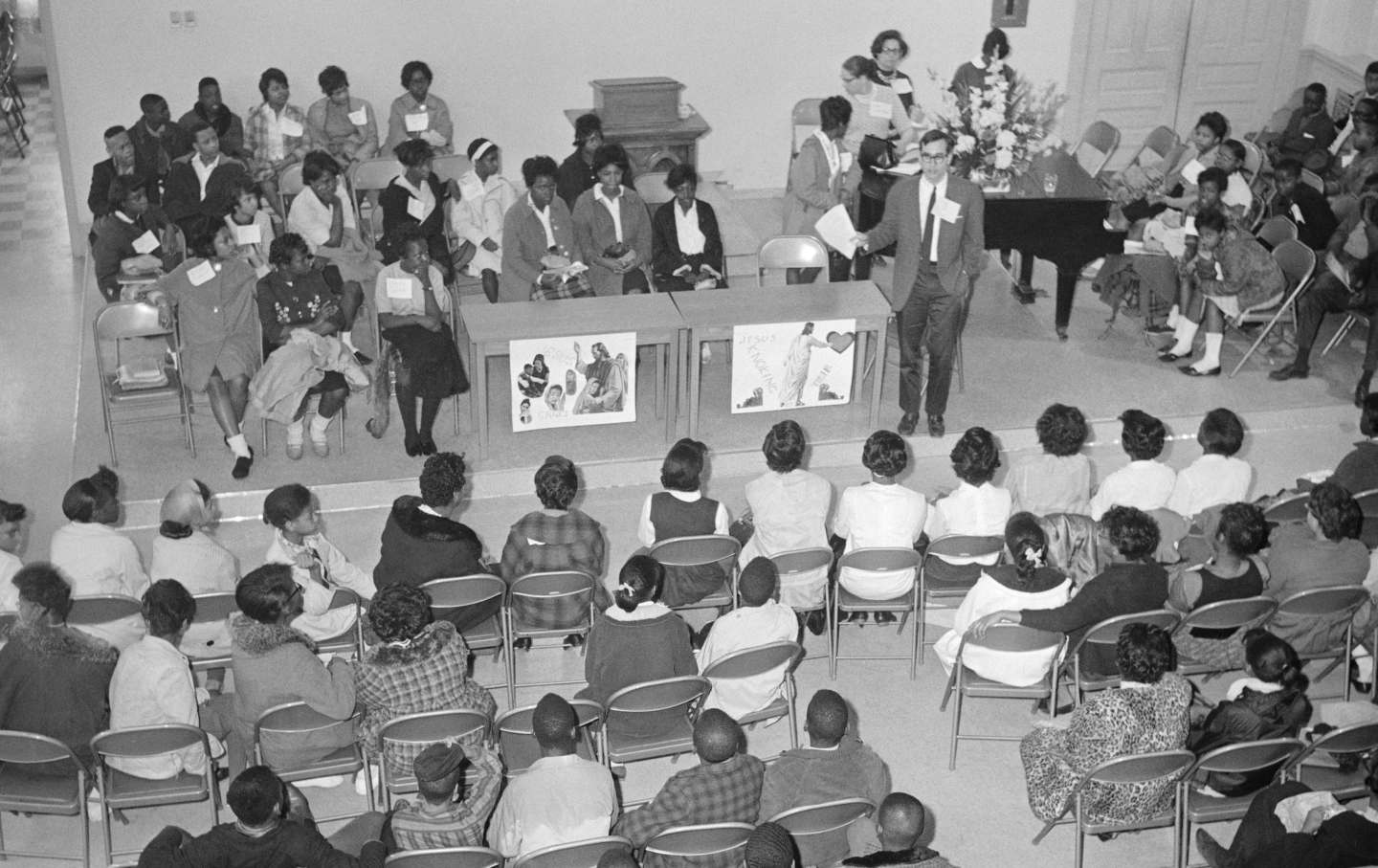
"Integration remains under siege today, as we witness the Trump administration and Trump court whitewashing history, attacking diversity programs, and cementing educational inequality; Adams's book becomes an ever more important chronicle of an enduring legal and historical quest for a more perfect union."
"When I was writing The Containment, I went back to Detroit-my hometown-and to the case that became Milliken v. Bradley. The story begins with a group of Black parents and the Detroit branch of the NAACP. One of them was Virda Bradley, who simply wanted her children to have access to equal educational opportunity in a system that had deliberately denied it."
"They brought a lawsuit challenging segregation in the public schools-insisting that what many people treated as accident or preference was, in fact, the result of government action. In doing so, they forced a conversation that the city-and the country-had not been willing to have. They put facts on the table. They made claims on the Constitution. They insisted on being heard."
"And they were joined-sometimes quietly, sometimes at real cost-by white suburban residents who were willing to imagine a more integrated metropolitan future. And then that conversation moved into a federal courtroom-where it reached a judge named Stephen Roth. Roth did not begin as a hero of civil rights. In fact, he was deeply skeptical of the plaintiffs' claims-skeptical that segregation in Detroit was anythi"
The Hillman Prize for book journalism was awarded to Michelle Adams for The Containment: Detroit, the Supreme Court, and the Battle for Racial Justice in the North. The work centers on the legal and historical struggle for racial justice and educational equality in the face of ongoing efforts to undermine integration. The story traces events in Detroit to the case that became Milliken v. Bradley, beginning with Black parents and the Detroit branch of the NAACP. Virda Bradley sought equal educational opportunity in a system that had deliberately denied it. A lawsuit challenged segregation in public schools and argued that segregation resulted from government action rather than accident or preference. The effort compelled a national conversation, placed facts and constitutional claims before the courts, and included support from some white suburban residents. The case moved into federal court before Judge Stephen Roth.
Read at The Nation
Unable to calculate read time
Collection
[
|
...
]