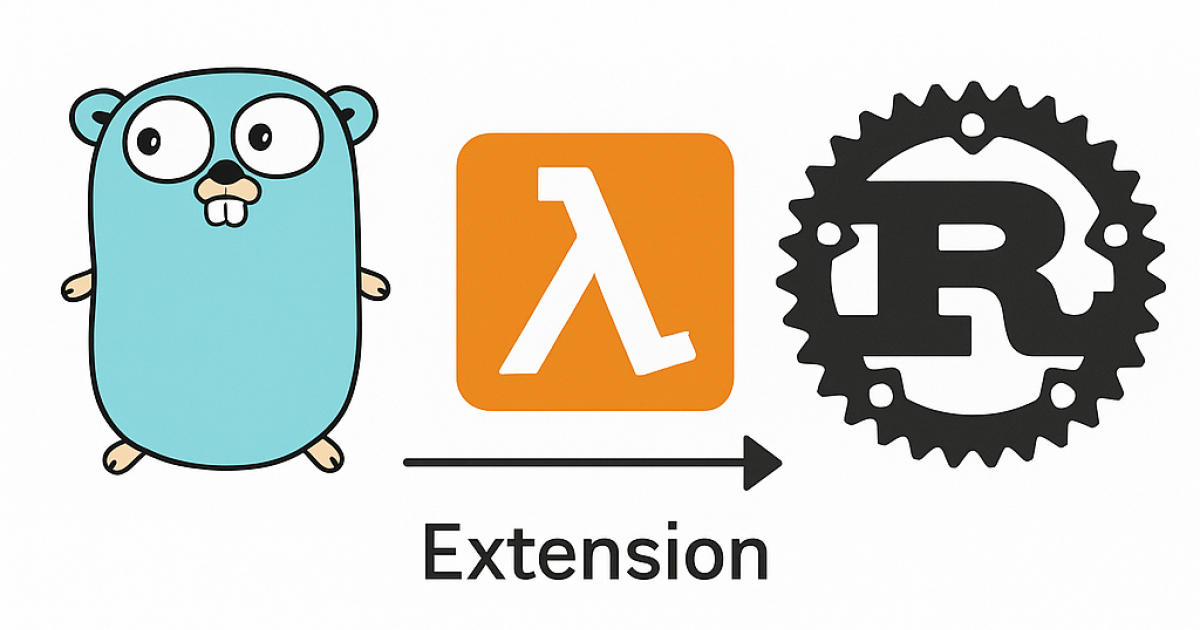
"We noticed that many other observability extensions focus too much on reducing "init duration" (the startup time). But the problem is, they often do this by cutting features or delaying tasks, which pushes that work into the "invocation time." This actually increases the overall billed duration for the user. We didn't want to do that. We wanted to optimize the entire lifecycle. Our Go-based extension was working fine, but we kept running into specific issues that needed fixing:"
"Reliability: We needed to be 100% sure that if our extension had an issue, it would never impact the customer's Lambda function. Memory Overhead: Go is good, but its Garbage Collector (GC) adds significant memory overhead. In the serverless world where you pay for every MB, this matters. Data Loss: In the old version, if sending telemetry failed, that data was simply lost. We had no retry mechanism to handle failures gracefully."
A major rewrite migrated the New Relic Lambda Extension from Go to Rust and re-architected how AWS Lambda functions are monitored. The migration reduced billed duration by approximately 40% across cold and warm starts and decreased memory usage by about 13%, while improving reliability. The previous Go implementation suffered from garbage-collector memory overhead, lack of retry on telemetry failures, and risk of impacting customer functions on extension errors. The Rust implementation leverages zero-cost abstractions and ownership guarantees to minimize runtime overhead, eliminate GC-related memory unpredictability, and prevent classes of memory and concurrency bugs.
Read at New Relic
Unable to calculate read time
Collection
[
|
...
]