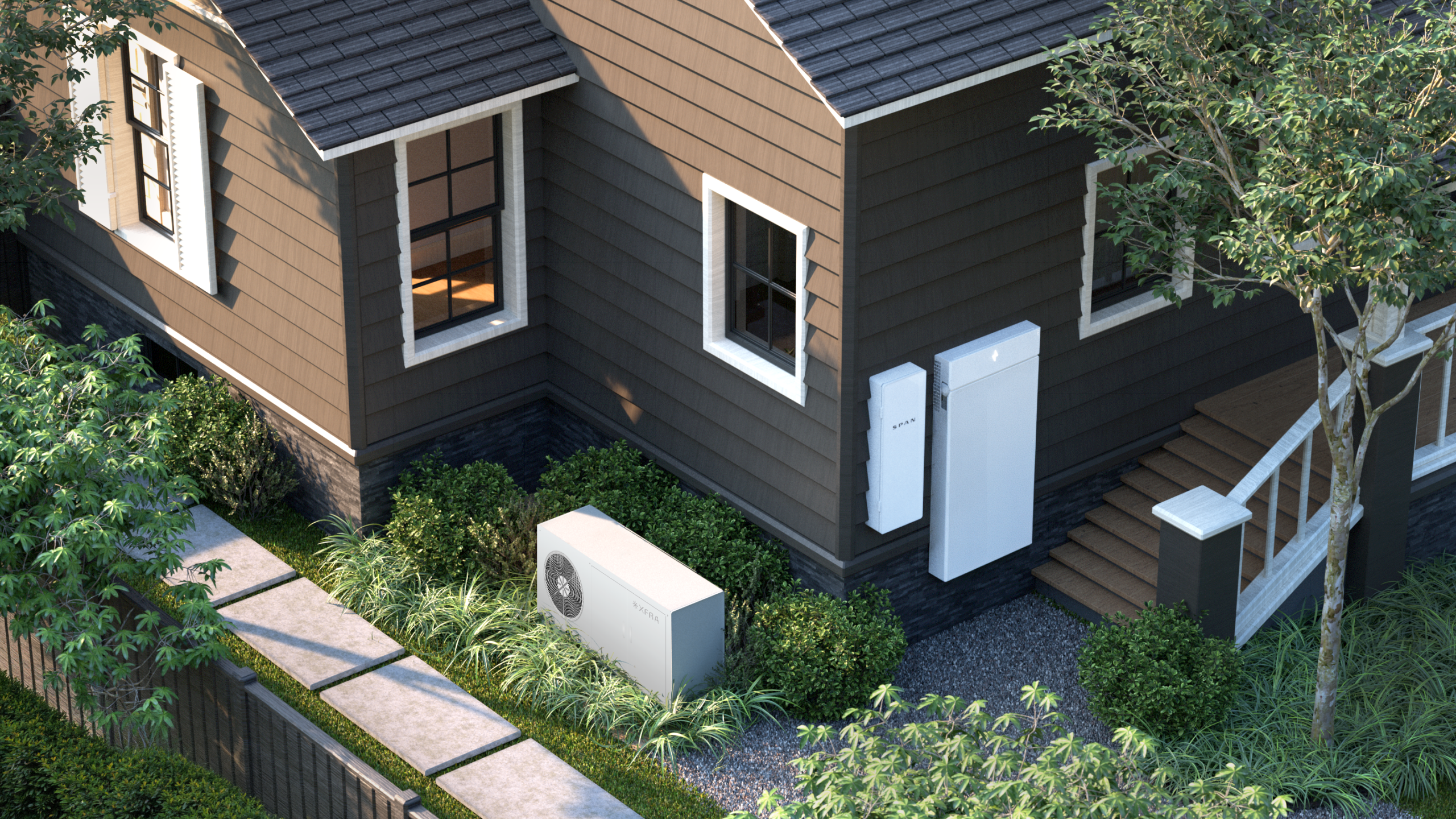
"Data centers may be coming to your neighborhood as side installations associated with new homes-and in exchange would offer subsidized electricity and Internet access along with backup batteries to homeowners. The company behind the plan has already begun pilot testing in preparation for a 100-home trial run this year."
"The "distributed data center solution" announced by the San Francisco startup SPAN would deploy thousands of XFRA nodes that contain liquid-cooled Nvidia RTX Pro 6000 Blackwell Server Edition GPUs operating with minimal noise, according to a press release. By harnessing excess power capacity among US households, SPAN aims to quickly expand the available compute for AI workloads without the costs and delays associated with trying to build warehouse-sized data centers."
""Data centers are loud, ugly, and often drive up local electricity bills," said Chris Lander, vice president of XFRA at SPAN, in correspondence with Ars. "[This] is quiet, discreet, and makes energy more affordable for the host and community.""
"Starting in 2027, SPAN plans to scale up to 80,000 XFRA nodes across the United States and provide more than 1 gigawatt of distributed compute. This network would not replace the centralized data centers being built by hyperscaler companies such as Google and Microsoft for the intensive training of AI models, but would instead be more suitable for supporting cloud gaming, content streaming, and AI inference, in which trained models are"
SPAN proposes distributed data centers installed as side units associated with new homes. The system uses thousands of XFRA nodes with liquid-cooled Nvidia RTX Pro 6000 Blackwell Server Edition GPUs designed for minimal noise. The plan aims to harness excess household power capacity to expand AI compute availability without the land, water, and cost burdens of warehouse-scale data centers. Homeowners would receive subsidized electricity and Internet access, along with backup batteries. SPAN claims lower installation costs than building large centralized facilities. A 100-home pilot is planned for this year, followed by scaling to 80,000 nodes across the United States starting in 2027, delivering over 1 gigawatt of distributed compute for inference, streaming, and cloud gaming.
#distributed-data-centers #ai-inference #residential-energy-sharing #liquid-cooled-gpus #cloud-gaming-and-streaming
Read at Ars Technica
Unable to calculate read time
Collection
[
|
...
]